

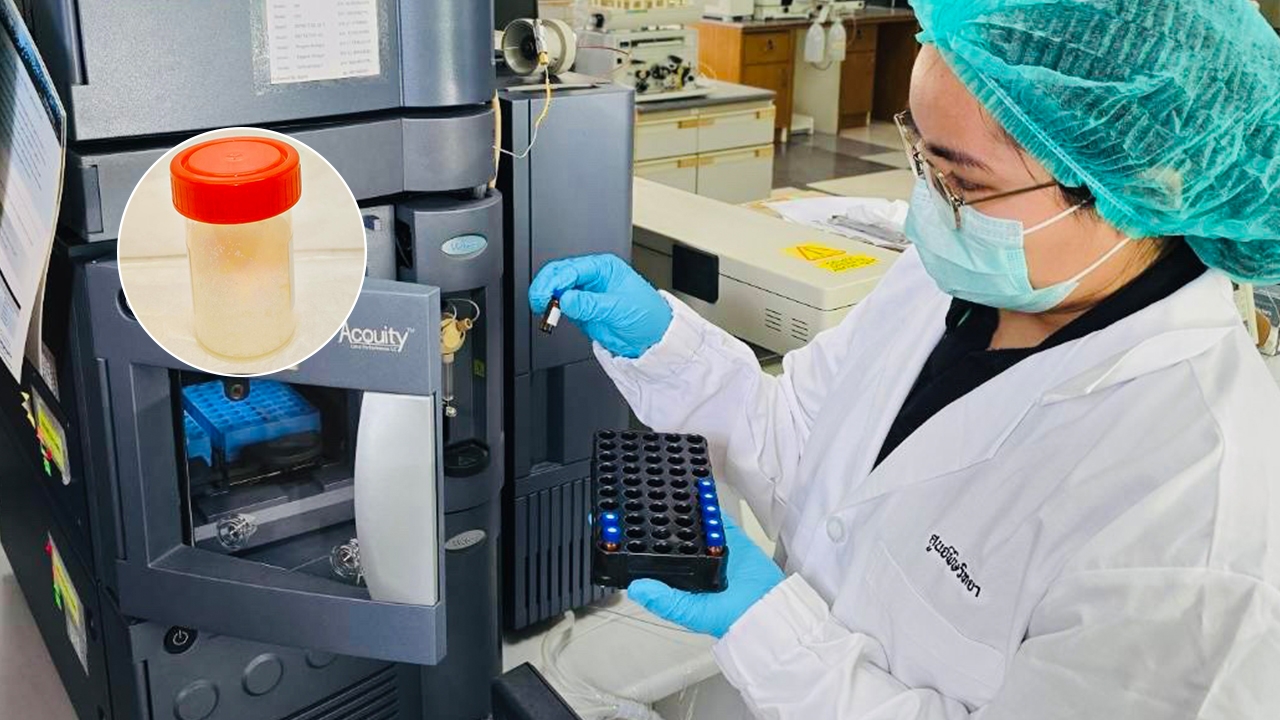
The Department of Medical Sciences confirms test results of the "mysterious powder" in Udonthani noodle soup revealed "nitrite" and stresses it is not culinary salt; misuse carries fatal risks.
On 11 June 2026, Dr. Sorawut Boonsuk, Director-General of the Department of Medical Sciences, reported progress on testing samples related to villagers who ate noodles from a shop in the Ponsawan community, Mueang District, Udonthani Province, and fell ill. The Department, through Medical Science Center 8 in Udonthani, received samples from Udonthani Hospital for urgent laboratory examination. Four samples were tested: two vomit samples from patients, one sample of pork and chicken noodle soup broth, and one sample of unidentified white powder. They screened for contamination by suspected chemicals such as nitrate, nitrite, and cyanide compounds.
Recent laboratory analysis by the Department of Medical Sciences confirmed that the white powder is nitrite with 99.2% purity. Vomit samples tested positive for both nitrite and nitrate. The noodle soup broth contained nitrite at 2,933 milligrams per liter.
Consuming about one teaspoon of this broth delivers nitrite exceeding the Acceptable Daily Intake (ADI) set by JECFA at 4.0 milligrams per person per day, posing health risks if consumed daily. Intake above one liter—or the equivalent of three bowls of noodles in one sitting—can be life-threatening.
Nitrite, also called “food preservative salt” or “prek powder,” is used in processed meat products like Chinese sausage, hot dogs, fermented pork, and pork loaf to maintain the meat's pink-red color and inhibit growth of certain bacteria.
The Director-General added that nitrite is not culinary salt and should never be used as a cooking salt substitute. High intake can affect oxygen transport in the blood, causing cyanosis, shortness of breath, dizziness, irregular heartbeat, and in severe cases, can be fatal. According to the Ministry of Public Health announcement (No. 468) in 2025, nitrite use in meat preservation is limited to no more than 80 milligrams per kilogram and must be strictly controlled under food safety standards.
Dr. Sorawut further stated that the Department of Medical Sciences is continuing detailed testing for other related contaminants. Once complete, results will be promptly shared with the public and relevant agencies to ensure food safety confidence and protect public health to the highest degree.
Finally, a reminder to operators to properly store and manage chemicals before disposal. Consumers should not keep or use unidentified substances resembling household seasonings in cooking for safety and to protect lives.