

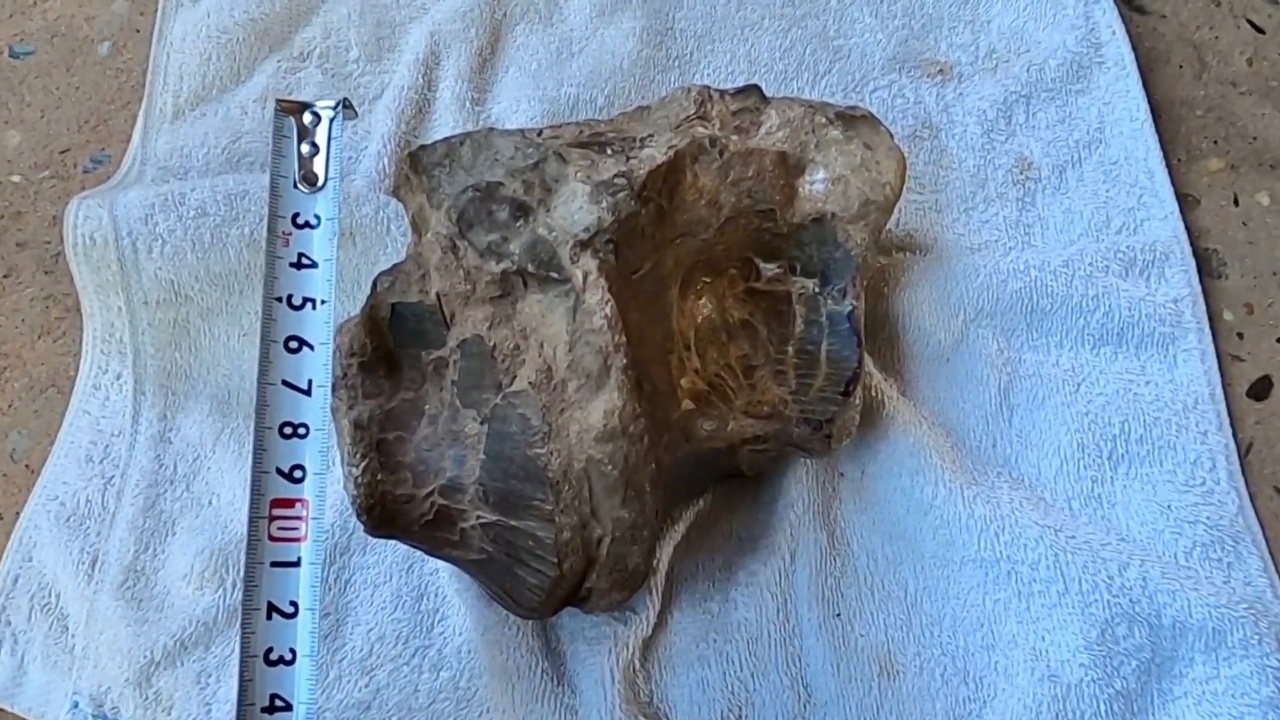
Good news has emerged. "Dinosaur fossils" have been found. At a natural tourist attraction. "Phu Pha Dang". In Sakon Nakhon Province, experts indicate it is. A "carnivorous dinosaur." Dating back about 130 million years.
On 14 June 2026 GMT+7, reporters reported that Thai paleontology received encouraging news again after a team of scholars from Sirindhorn Museum in Kalasin Province conducted field examinations of fossil fragments found at "Phu Pha Dang," a major natural tourist site in Ban Huai Hip, Tong Khop Subdistrict, Khok Si Suphan District, Sakon Nakhon Province. Preliminary analysis confirmed these were dinosaur bones about 130 million years old, likely from a carnivorous dinosaur group.

This field visit followed the case where the team from “Lui Phan Lens: The Wonders of Sakon Nakhon,” a local documentary filming group, reported the discovery of fossil bone fragments at Phu Pha Dang on 31 May 2026 GMT+7, which led to coordination with Sirindhorn Museum to have experts officially inspect the findings.
Recently, Ms. Pornpen Chantasit, director of Sirindhorn Museum, together with Mr. Phor Samret Nonkhamwong, the bone fragment discoverer, officials from Phu Pha Yoi National Park, representatives from Tong Khop Subdistrict Administrative Organization, Phu Pha Dang Tourism Volunteer Club, Sakon Nakhon Civilization Club, and community networks, jointly trekked over 3 kilometers to reach Bo Duean Ha, the site where the fossils were found.

During the field survey, the discovery site was located near a stream on Phu Pha Dang, leading researchers to hypothesize that the bone fragments might have been carried by water from their original source. There is a high possibility that other fossil fragments remain buried beneath the soil and rock layers in the same area.
Ms. Pornpen revealed that preliminary examination confirmed the bones are from a dinosaur dating to about 130 million years ago but the exact species remains unclear. Detailed paleontological study and analysis are necessary.
Going forward, Sirindhorn Museum will proceed with extracting the fossil fragments from the rock and conserving them according to scientific standards to study further details. This could lead to important discoveries about the ancient ecosystem and prehistoric life in northeastern Thailand.
Meanwhile, local network partners expressed hope that if scientific studies confirm the academic value of this fossil site, it might be developed into a paleontological learning center and a new scientific tourism attraction in Sakon Nakhon Province, enhancing tourism value, promoting natural resource conservation, and stimulating the community economy in the future.

This discovery marks another significant step for Sakon Nakhon Province, potentially leading to the identification of a new fossil site in Thailand and providing geological evidence reflecting the area's richness during prehistoric times hundreds of millions of years ago.