

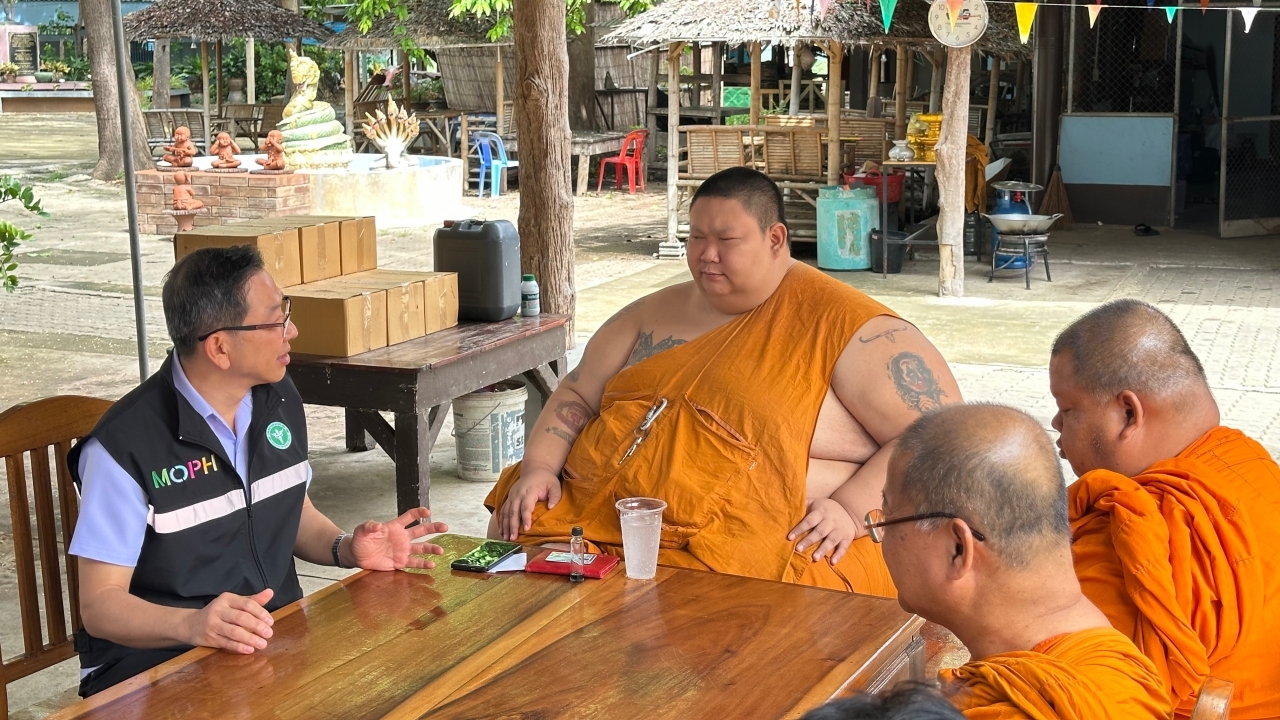
A monk weighing more than 260 kilograms in Ratchaburi has been diagnosed with severe obesity affecting his hormonal system and appetite control, prompting a rapid evaluation of his treatment plan.
The case involves 34-year-old monk Nanthawat Itthitecho, a resident at Wat Tan Pak Lad in Khung Phayom Subdistrict, Ban Pong District, Ratchaburi. His weight has reached 260 kilograms, severely impacting his health. He has lost vision in his left eye, suffers from high blood pressure, high blood cholesterol, glaucoma, and is at risk for diabetes. Additionally, he cannot perform his monastic duties normally. He has expressed a desire to undergo gastric reduction surgery to prevent becoming bedridden in the future, as previously reported.
On 22 Jun 2026 GMT+7, Dr. Wiboon Phattanabadeekorn, Director of Ban Pong Hospital, along with Dr. Apichai Sirakuljira, Director of the Sangha Hospital, medical teams from both hospitals, and public health officers from Ban Pong District visited Wat Tan Pak Lad. They met to discuss and assess monk Nanthawat’s condition and treatment options together with him, the abbot, and other concerned parties.

Dr. Wiboon Phattanabadeekorn, Director of Ban Pong Hospital, revealed that after initial discussions and assessments, monk Nanthawat is in a state of severe obesity, affecting both his physical and mental health. Obesity is not merely caused by excessive eating but is also linked to hormonal systems and appetite control mechanisms, making it difficult for many patients to manage their weight independently.
Regarding treatment, the approach must be tailored to the patient’s specific needs. Since monk Nanthawat weighs as much as 260 kilograms, medication alone may be insufficient. A multidisciplinary medical team—including internists, psychiatrists, endocrinologists, bariatric surgeons, dietitians, physical therapists, and nurses—will collaboratively develop a comprehensive treatment plan.
Dr. Wiboon added that monk Nanthawat previously received treatment at Ban Pong Hospital and managed to lose about 20 kilograms. However, after returning to normal life, his weight increased again annually. Therefore, if considering gastric reduction surgery, thorough evaluation of his physical readiness and ability to care for himself post-surgery is essential to ensure long-term treatment success. Since monk Nanthawat serves as a spiritual support for Buddhists, every treatment step must be carefully considered.
Ban Pong Hospital will coordinate with Sangha Hospital and relevant agencies to plan continuous treatment, ensuring monk Nanthawat receives proper and safe care. Although surgery can reduce weight, treatment success depends heavily on the patient’s cooperation in changing behaviors, including diet control, exercise, and consistent follow-up. Surgery is believed to offer better long-term results than medication alone.

However, caring for an obese monk presents more limitations than for the general public due to adherence to monastic discipline, including dietary rules, maintaining monastic status, and restrictions on certain exercises. Thus, the medical team must design treatment and rehabilitation plans suitable for the monastic lifestyle. They will urgently conduct detailed health assessments to determine the most appropriate treatment approach, aiming to help monk Nanthawat regain a good quality of life, reduce the risk of complications, and resume religious duties as normally as possible.