

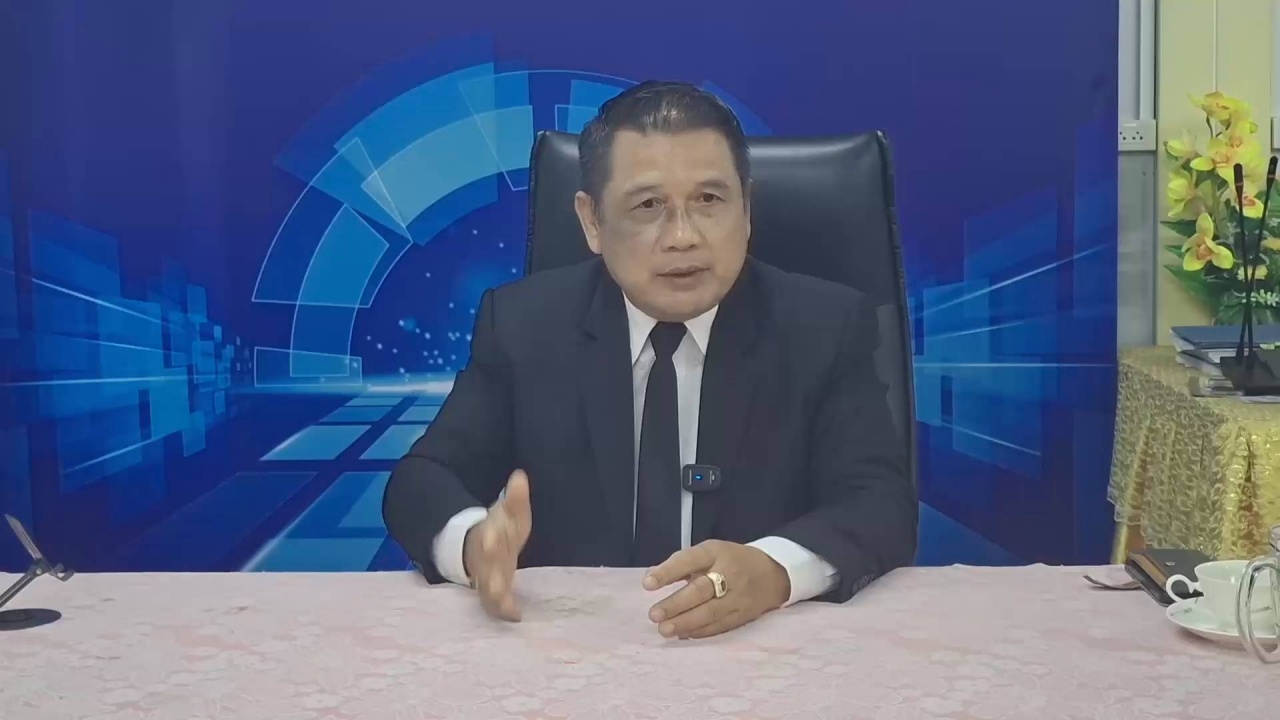
The President of the Subdistrict Administrative Organization Association of Thailand stated that the local exam fraud is a problem with the exam administration process itself, not the fault of the SAOs, municipalities, or provincial administrative organizations, which are merely the final agencies employing the successful candidates. He called for a swift investigation to identify the true masterminds.
Following the shocking scandal shaking the local civil service sector nationwide, officials from the National Anti-Corruption Commission (NACC) and the Department of Special Investigation raided a cheating ring for local government official exams at a company in Bang Yai district, Nonthaburi province. They found computers being used to alter answer sheets for applicants who paid bribes. More than 10 people, mostly government officials, were arrested. Authorities plan to expand the investigation to all involved. The scheme is believed to have operated for a long time using a front company, with an estimated turnover of up to 4.5 billion baht. Prime Minister Anutin ordered a thorough crackdown. At the Ministry of Interior, Permanent Secretary Arsit Sampantarat received orders to temporarily transfer Director-General Thirut Suphibunphon of the Department of Local Administration to ministry headquarters pending further orders, as previously reported.
Regarding this matter, on 25 June 2026 at the Subdistrict Administrative Organization Association of Thailand office in Khlong Sam subdistrict, Khlong Luang district, Pathum Thani province, Associate Professor Dr. Wirasak Hadda, President of the Subdistrict Administrative Organization Association of Thailand, said that as the representative of over 5,300 local administrative organizations nationwide, he affirms that the corruption in question is not connected to the Subdistrict Administrative Organizations (SAOs), municipalities, or Provincial Administrative Organizations (PAOs) in any way.
He stated society should not generalize that these organizations are corrupt because the competitive exam process, candidate listing, and appointments are conducted by the Department of Local Administration together with the university awarded the contract. The local administrative organizations are merely the end agencies that employ those who pass the exam.
On the issue of some paying hundreds of thousands of baht to obtain positions with a salary of only 15,000 baht, Associate Professor Dr. Wirasak explained this stems from a Thai cultural value that desires children to become civil servants, seen as stable jobs with state benefits such as medical coverage for themselves and their families and pensions after retirement. This cultural value creates a vulnerability exploited by corruption schemes, including “bait gangs” or fraudsters who deceive people into believing they can secure civil service positions for their children, causing significant financial losses for many.

Associate Professor Dr. Wirasak added that this corruption network appears to be a large, well-planned system with beneficiaries operating systematically. Authorities must conduct in-depth investigations to identify the root causes, especially regarding individuals implicated, such as “Mr. P,” and which agencies he may have worked for. He views this problem as the failure of individuals, not organizations. Local administrative organizations continue their duties serving the public as usual.
Finally, Associate Professor Dr. Wirasak proposed that personnel management authority be genuinely decentralized back to local governments, as was the case over a decade ago when local entities conducted their own exams. Although some errors occurred in only two provinces, this changed after the issuance of Head of the National Council for Peace and Order Order No. 8/2560, which centralized exam administration under the Department of Local Administration.
He also raised concerns about the lack of transparency in selecting the university to administer the exams, initially Burapha University but later replaced by Srinakharinwirot University (SWU), which ultimately led to the current problems. He emphasized that the Department of Local Administration and the exam-administering university must be held accountable for this incident and hopes that the forthcoming senior executive selection exam organized by Thammasat University will be conducted with fairness and integrity.