

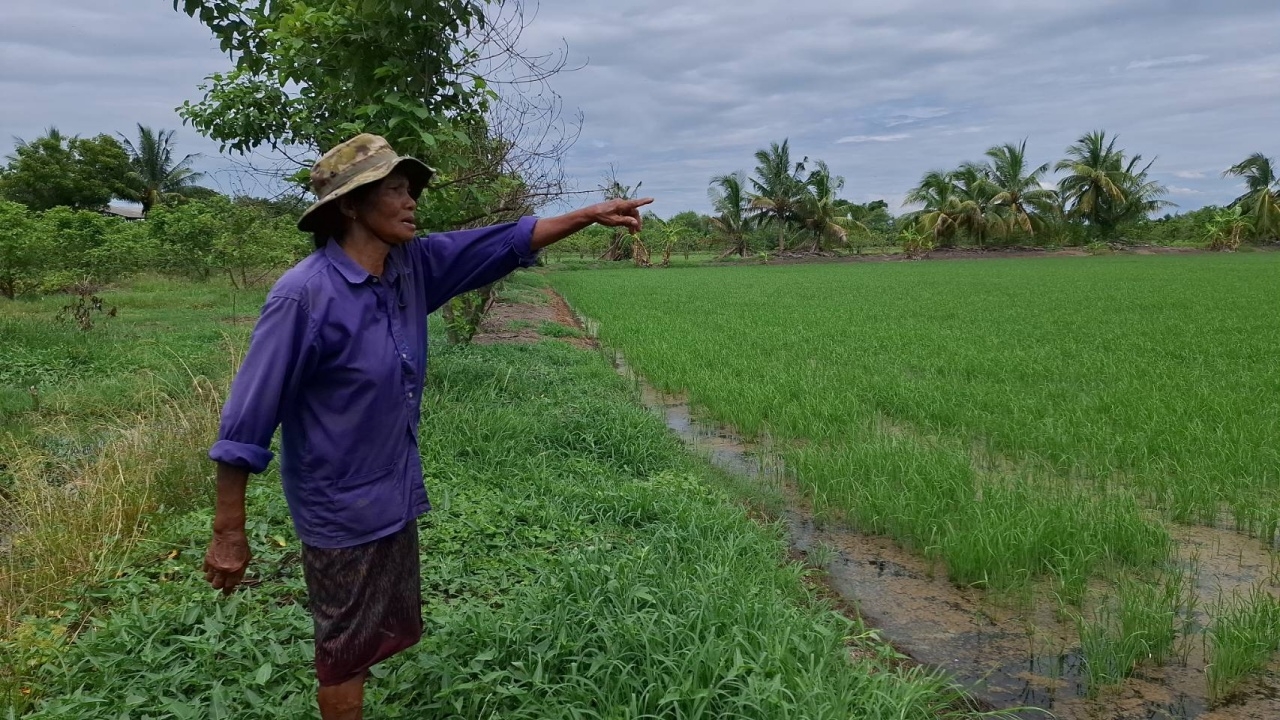
Pathum Thani farmers and gardeners complain that a factory is discharging rusty and oily water, causing rice to fail to grow and trees to die. The head of Bo Ngoen Subdistrict Administrative Organization has sent a letter to relevant agencies, while factory management has promised to complete remedial actions within 30 days.
On 1 July 2026, reporters received complaints from residents in Village No. 3, Bo Ngoen Subdistrict, Lat Lum Kaeo District, Pathum Thani Province, who work as farmers, gardeners, field workers, and fish farmers. They have been affected by the discharge of rust-colored and oily water from a nearby factory, causing damage such as the death of Kratom trees—an important economic perennial crop—with rotting trunks and bases. Coconut, mango, and lime trees barely bear fruit, rice plants remain stunted and do not produce grain, and fish have died due to oxygen depletion. The residents question how the factory was permitted to be built in Bo Ngoen Subdistrict, which is designated as a green zone. They provided video evidence to the reporters.
Subsequently, reporters visited House No. 1/5 in Village No. 3, Bo Ngoen Subdistrict, Lat Lum Kaeo District, Pathum Thani Province, to verify the facts. They met with Mr. Atichon Chueadee, 57, and Mrs. Sommai Laddayaem, 66, residents directly affected by the issue.
Mr. Atichon explained that the problem started when he and neighbors noticed water seeping from underground and surface layers during rain, causing pollution. The water appeared rusty and oily, or like metal paint, originating from the factory walls of a steel manufacturing plant built adjacent to their agricultural area. The surrounding land is used for rice farming, gardening, field crops, and fish farming, all affected—especially Mr. Atichon’s lower-lying land where he raises fish and grows vegetables and Kratom trees, a substitute crop for rice farmers facing low prices. The polluted water flows from cracks in the factory wall into rice fields before overflowing into his fish ponds, depleting oxygen and killing fish. The economic trees are dying standing.
Additionally, Mr. Atichon’s family runs a food stall, which has also been affected. Customers complained about a foul odor while dining. He urged relevant authorities to investigate, emphasizing that building a factory causing harm to residents requires corrective action. He and the villagers do not know if the water contains toxins and want responsible agencies to test it, as they have endured this situation for many years.

The situation was uncovered recently after a fire broke out in Mrs. Sommai’s rice field. Mr. Atichon removed thick dry grass near the factory wall to prevent the fire from spreading and then noticed rainwater suddenly gushing from holes in the factory wall—three holes per section apparently drilled by people. The water was rusty and oily, confirming his suspicion that this caused damage to his trees and villagers’ rice fields. He recorded video evidence with his phone and reported the matter to the media and Bo Ngoen Subdistrict Administrative Organization, as well as relevant agencies, hoping the factory would take responsibility and fix the damage. Importantly, he learned that Bo Ngoen is entirely a green zone, raising questions about how the factory was permitted to be built.
Mr. Saichon Pukngern, head of Bo Ngoen Subdistrict Administrative Organization, stated that the issue has been formally reported to the district office, district public health office, and relevant agencies. An inspection is scheduled for 6 July, during which the authorities and factory representatives will conduct a joint investigation.
Regarding factory construction in Bo Ngoen Subdistrict, if a factory is to be built, permission must be obtained from the Pathum Thani Provincial Industry Office. Bo Ngoen is entirely designated as a green zone. The provincial industry office has regulations governing whether a factory can be built, considering landmarks and workforce size. The provincial industry office grants permission, and before construction approval at the subdistrict administrative level, a city planning map must be submitted.

Concerning the factory complained about by villagers, who provided video footage of rainwater leaking from the factory wall into their area causing damage, the factory has been contacted. The factory management has promised to resolve the issue within 30 days.