

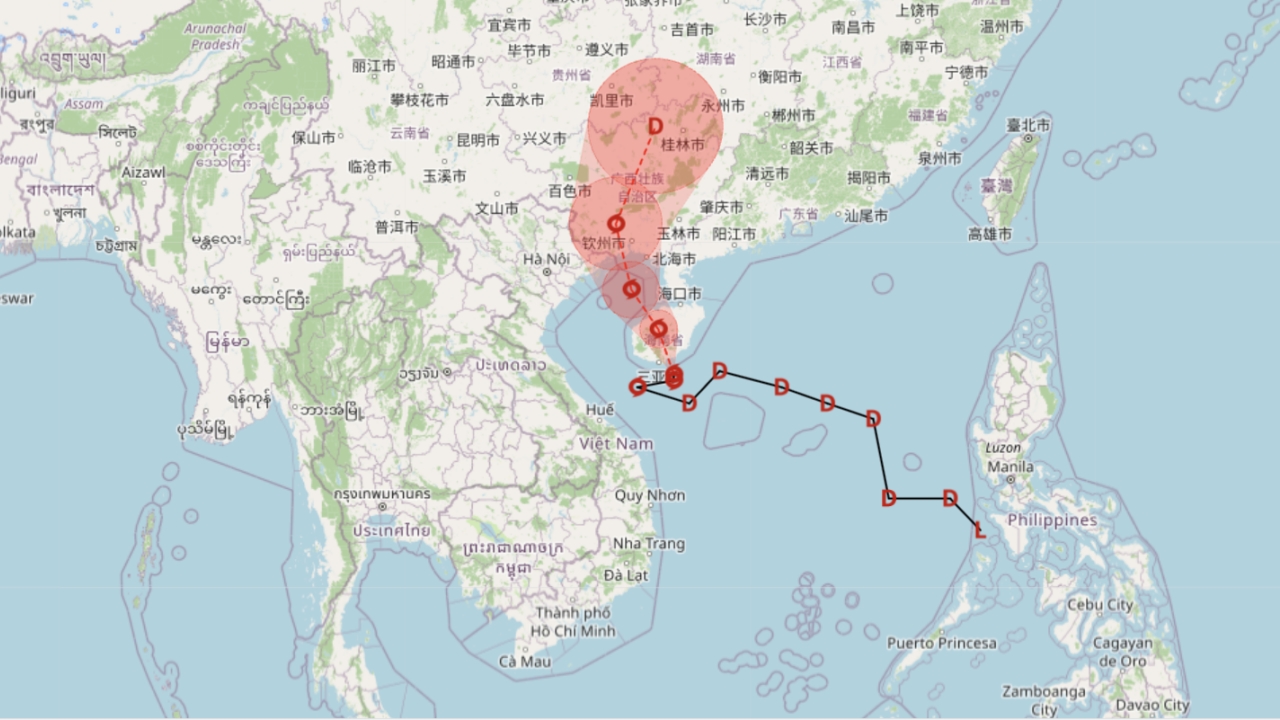
An update on Typhoon "Maysak" indicates it will make landfall on southern China between July 4-6, causing increased rainfall in many areas of Thailand. The Director-General of the Department of Disaster Prevention and Mitigation (DDPM) has urged all agencies to prepare personnel, systems, and equipment to handle potential flooding.
On 3 July 2026, the Department of Disaster Prevention and Mitigation (DDPM), through the National Disaster Warning Center, closely monitored Tropical Storm "Maysak," currently centered in the northern South China Sea with maximum winds near the center of about 74 kilometers per hour. The storm is moving north-northwest, expected to pass Hainan Island before making landfall on southern China between 4 and 6 July 2026.
For Thailand, although this storm will not move into the country nor directly impact it, it will cause increased rainfall in several areas, with some places experiencing heavy to very heavy rain. The public is advised to continuously follow official warnings and weather updates from government agencies and to follow safety recommendations. In case of disasters, emergency reports and requests for assistance can be made at the 24-hour safety hotline 1784.

Meanwhile, Mr. Theerapat Kachamat, Director-General of the Department of Disaster Prevention and Mitigation, inspected internal operations at DDPM headquarters to prepare for possible flooding risks during this period. He directed the Disaster Relief Command Center, responsible for managing, analyzing, monitoring, and assessing disaster situations nationwide, to keep personnel in the monitoring operations room vigilant. He also emphasized the importance of the 1784 safety hotline to receive information and coordinate quickly with local areas, ensuring efficient incident reporting and coordination with local agencies to provide timely assistance to the public.

Additionally, he ordered disaster prevention and mitigation centers and provincial offices to monitor local situation trends and report to the DDPM. If the situation is expected to affect the public, they must coordinate with the National Disaster Warning Center to issue Cell Broadcast alerts. They should also monitor other severe public hazards such as road accidents or other emergencies that could impact the public, ensuring safety from all perspectives.

Information provided by Facebook.Department of Disaster Prevention and Mitigation (DDPM)