

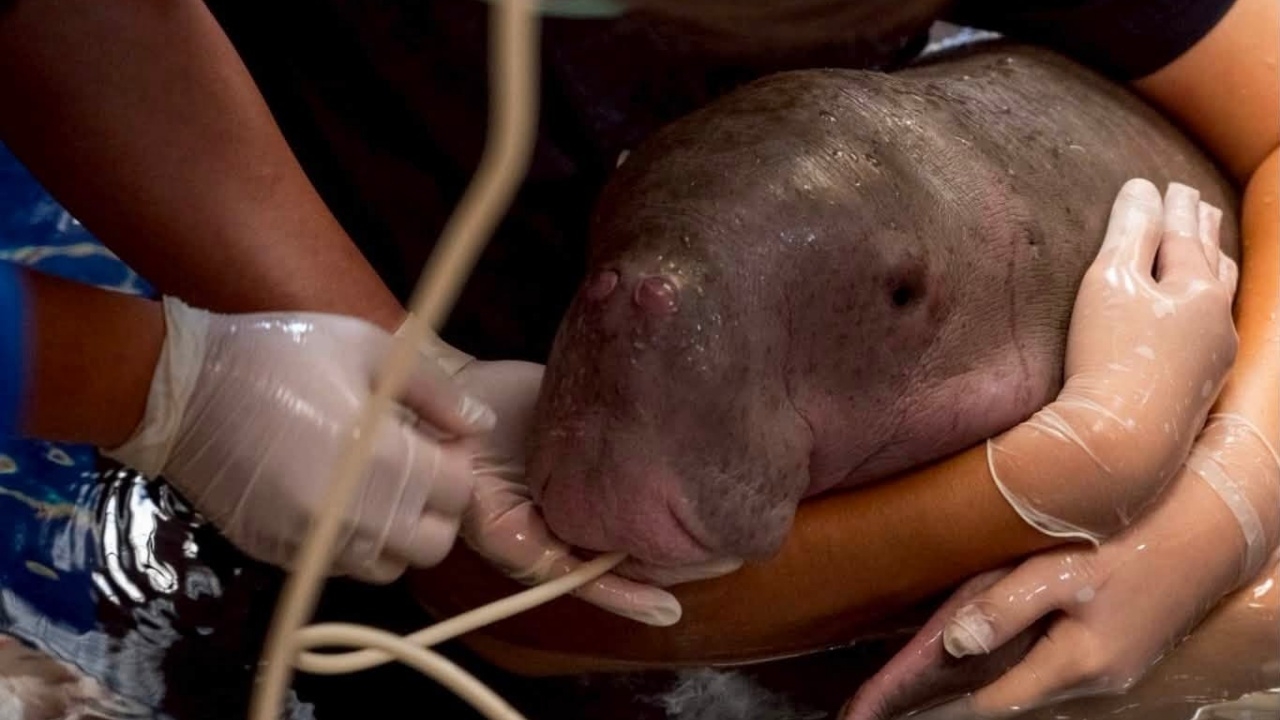
The Department of Marine and Coastal Resources has revealed the autopsy results of the carcass of a baby dugong that was separated from its group and stranded on Laem Son Beach. It is suspected to have died from shock caused by bloodstream infection and severe dehydration, resulting in acute circulatory failure.
Regarding the sad case of the baby dugong that became separated from its herd, stranded on Laem Son Beach in Ranong Province, and was rescued by local villagers before being handed over to park officials for care on 5 July 2026, the Minister of Natural Resources and Environment ordered a prompt autopsy to determine the cause and to enhance rescue efforts for rare marine animals, as previously reported.Baby dugong separated from herd dies after stranding on Laem Son Beach, Ranong Province; urgent autopsy ordered)
Recently, the Department of Marine and Coastal Resources reported autopsy findings stating that the animal's health and body condition were generally normal but tending toward thin (Body Condition Score = 2.5/5). External examination showed bruises on the side of the body, likely due to stranding. The average heart rate was 80-100 beats per minute, depending on dugong behavior. Resting respiratory rate averaged 1-3 breaths per 5 minutes, increasing to 4-5 breaths per 5 minutes during swimming. Blood sugar was low, and moderate to severe dehydration was noted. Gastrointestinal function showed bloating with significant gas accumulation, though defecation was still occurring. Feces consisted of partially digested seagrass. Veterinarians promptly diagnosed and treated the critical condition with symptomatic medications, fluid feeding, supportive drugs, and milk replacement for the calf.

The baby dugong subsequently died, and officials immediately performed a necropsy to determine the cause of death. Findings included pale heart muscle and blood clots in the heart chambers. Respiratory examination revealed pulmonary congestion and emphysema. Inside the abdominal cavity, fibrin covered parts of the intestines, suggesting prolonged severe inflammation. The stomach contained partially digested seagrass densely packed, accompanied by intestinal inflammation. Based on the autopsy results, the cause of death was concluded to be shock from septicemia and severe dehydration, leading to acute circulatory failure.
Officials collected blood and tissue samples from various organs for laboratory analysis to precisely confirm the cause of death. The study results will be used to develop knowledge and rescue protocols for rare marine animals to improve survival rates of dugongs and other endangered marine species in the future, as well as to enhance the sustainability of marine resource conservation in Thailand.
Information courtesy of FacebookDepartment of Marine and Coastal Resources