

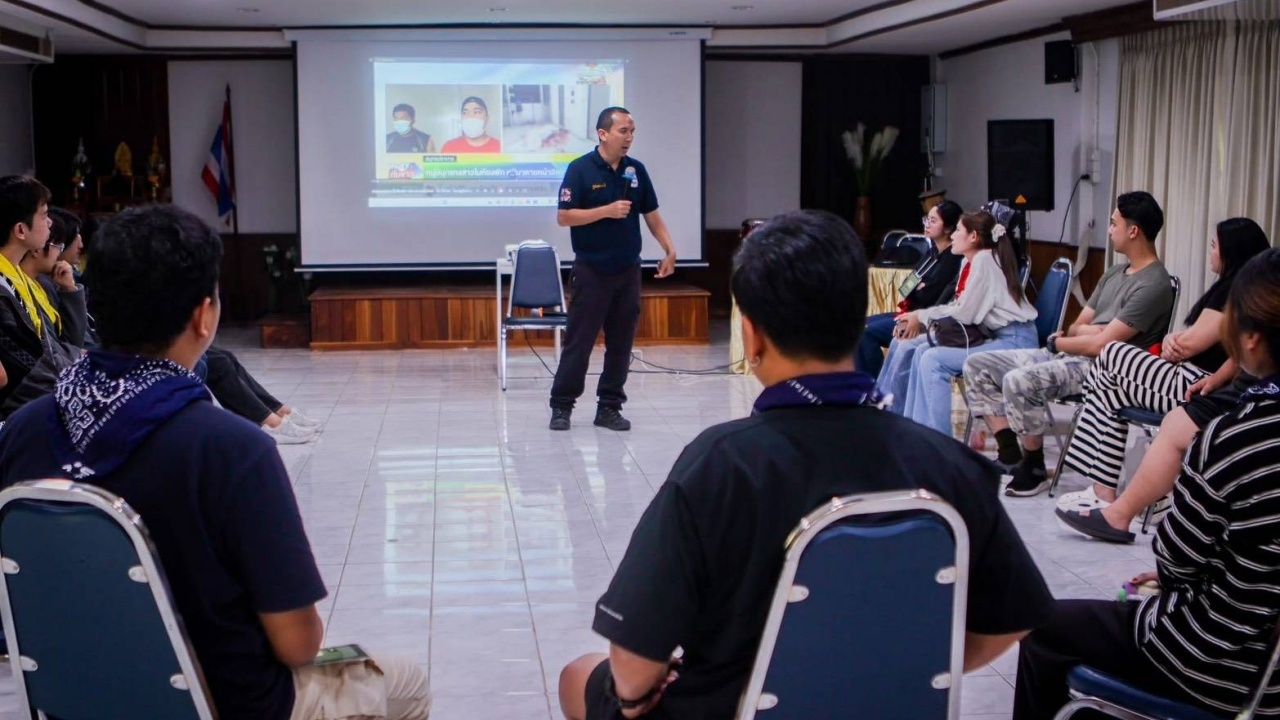
Training concludes "Safety Training 15th Edition" Enhancing skills in media literacy and monitoring for disaster and fake news response, emphasizing that "safety" is a vital skill for journalists in every situation.
On 30 July 2026, the Thai Journalists Association, in collaboration with the Safe and Creative Media Development Fund, held a practical workshop titled "News Reporting in Crisis and Public Disasters" (Safety Training 15) under the project to enhance media literacy and monitoring skills for responding to disasters and fake news. The event took place from 26 to 29 July 2026 at Khung Nam Resort in Nakhon Nayok Province, lasting four days and three nights, with 20 reporters from various organizations participating.

This 15th-year training focused on preparation before field reporting, including planning, risk assessment, and working in crisis zones such as public disasters and water-related catastrophes. It also covered language use and communication during emergencies, as well as reporting in political conflicts and other contexts.
A key highlight this year was the Swift Water Survival training course, introduced following last year's disaster in Hat Yai District, Songkhla Province. Naval experts shared knowledge and conducted practical exercises to enhance journalists’ readiness for increasingly complex high-risk situations.

Mr. Chairit Yonpiam, Vice President for Rights, Freedoms, and Media Reform and Secretary-General of the Thai Journalists Association, said the Safety Training aims to build safety skills enabling reporters to perform their duties amid all risks, ensuring their survival and continued work. He emphasized that good reporting does not involve taking reckless risks for sensational images but prioritizes personal safety, avoiding becoming victims or burdening locals and officials.
Mr. Chairit added that the Association, with over 72 years of history, is the main organization protecting media rights and freedoms. It also develops professional skills, including emergency reporting and adapting to AI technological changes, while supporting member welfare and providing scholarships for members' children.

Mr. Sathaporn Pongpipatwattana, head of the Safety Training program at the Thai Journalists Association, said the curriculum has reached its 15th edition, adapting content to current situations. This includes disaster response, swift water survival, conflict zone reporting, risk assessment, and responsible journalism. Realistic scenario simulations are used for practical training to prepare participants for possible incidents.
"All training scenarios are based on real or likely events. We intentionally expose trainees to the worst-case situations during exercises so that after overcoming the toughest challenges, they will be better equipped to survive and manage real field conditions. This helps establish safety standards for journalists reporting in risky environments," said Mr. Sathaporn.