

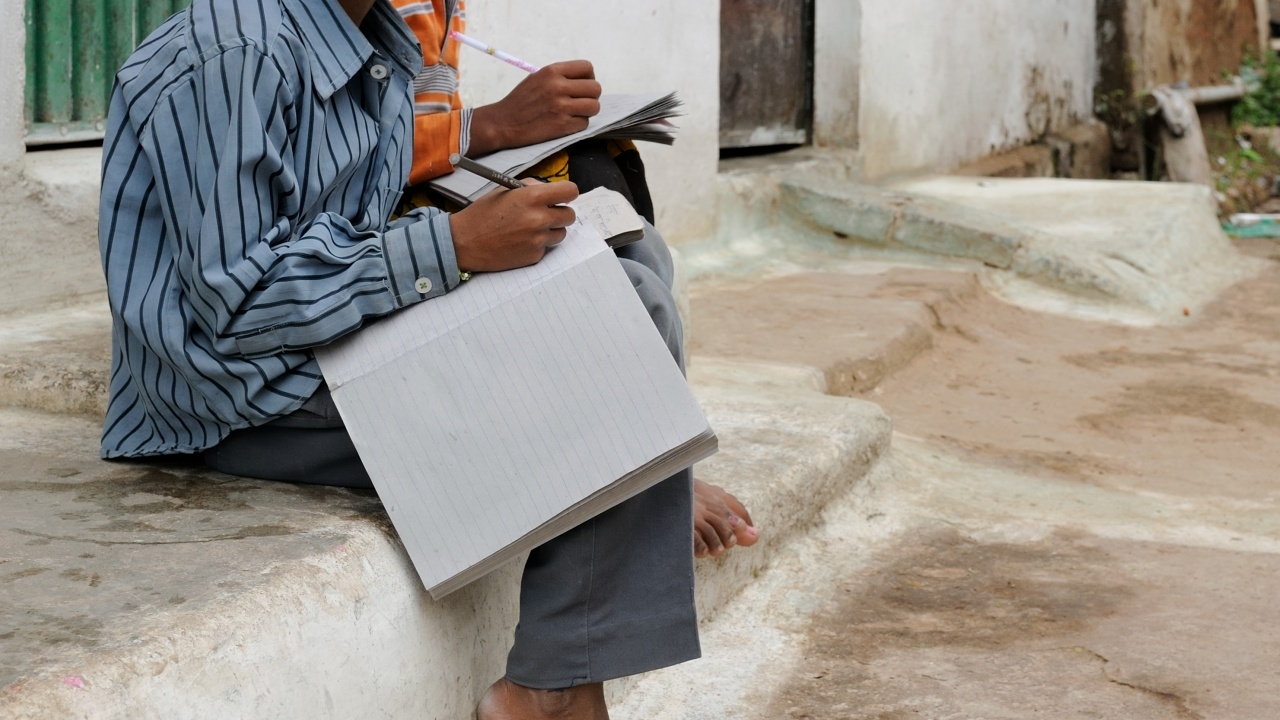
Education experts call for reconsideration and urge against budget cuts to the 'Thailand Zero Dropout Plus' program for the year 2027, pointing out the need to assist over 600,000 children who have dropped out, warning this could cause policy progress to stall.
A reporter stated that on 23 Jul 2026 GMT+7, the Subcommittee on Education, Science, Research, and Technology Transfer under the Special Committee reviewing the 2027 fiscal year budget bill approved a reduction of over 50 million baht from the budget allocated to the Thailand Zero Dropout Plus initiative by the Equitable Education Fund (EEF).
Professor Dr. Sompong Jitralub, a distinguished member of the Equitable Education Fund (EEF), said that this budget cut should not happen because it directly affects the Thailand Zero Dropout Plus project, a key government policy continued by 2-3 administrations. The main goal is to reduce the number of children dropping out, out-of-system children, vulnerable and disadvantaged children—over one million in total—to zero. Over the past 2-3 years, EEF and its network partners have effectively managed to reintegrate more than 400,000 children back into the education system, but about 600,000 children still require identification, tracking, and support.
The task of finding the remaining 600,000 children is increasingly difficult because these children have been out of the education system for over a year. Network partners may need to visit each area more than three times to provide understanding, information, guidance, and close support. In some cases, individual care plans are necessary, including helping find jobs or creating supplementary income for their families.
"So far, the EEF has provided limited funding to facilitate network partners' fieldwork and to support impoverished children who must work while studying. These partners search for children in various locations such as communities, border areas, agricultural zones like sugarcane fields, industrial factories, or hard-to-reach places."
"The network partners who search for these children are a vital workforce who go directly into the field, encountering real problems and encouraging children to return to education according to their needs and suitability. They also work to change parents’ mindsets, urging them not to lose hope and to see education as a way to improve life. They plan individualized care for each child and often must make multiple visits before achieving success. This group includes village health volunteers, sub-district chiefs, village heads, learning promotion teachers, and community leaders who know the children and their families well. They play a crucial role in changing parents’ attitudes and encouraging children to return to school appropriately," Professor Dr. Sompong said.
Professor Dr. Sompong added that this budget cut reflects a possible misunderstanding by the subcommittee of the actual work involved and the difficulties in locating each child. Although the cut amount may seem small compared to other unreasonable budget expenses, it will significantly impact and demoralize the dedicated field workers. It also creates a barrier to collaboration among network partners, potentially halting policy implementation.
"The efforts of these network partners are progressively improving the Thailand Zero Dropout Plus policy and greatly benefiting Thai society. Instead of cutting the budget, consideration should be given to restoring it or even increasing it, given the large number of children still missing from the system."
Furthermore, a report from the National Child Development Committee states that investing in poor, vulnerable, and educationally disadvantaged children yields a social return up to 17 times the investment. This is a highly valuable investment, benefiting Thai society by providing children with opportunities to upskill or reskill, obtain qualifications, secure stable careers, and grow into quality citizens. It also helps build an educational system flexible and suitable to each child's learning environment. Conversely, cutting opportunities for these children reduces the chances for others as well," Professor Dr. Sompong noted.
At the end, Professor Dr. Sompong clarified a previous misinformation, stating that contrary to his earlier claim that the government cut the EEF budget by billions of baht, the actual reduction is about 62 million baht. Most of this cut, approximately 50 million baht, concerns the Thailand Zero Dropout Plus measure as previously mentioned.