

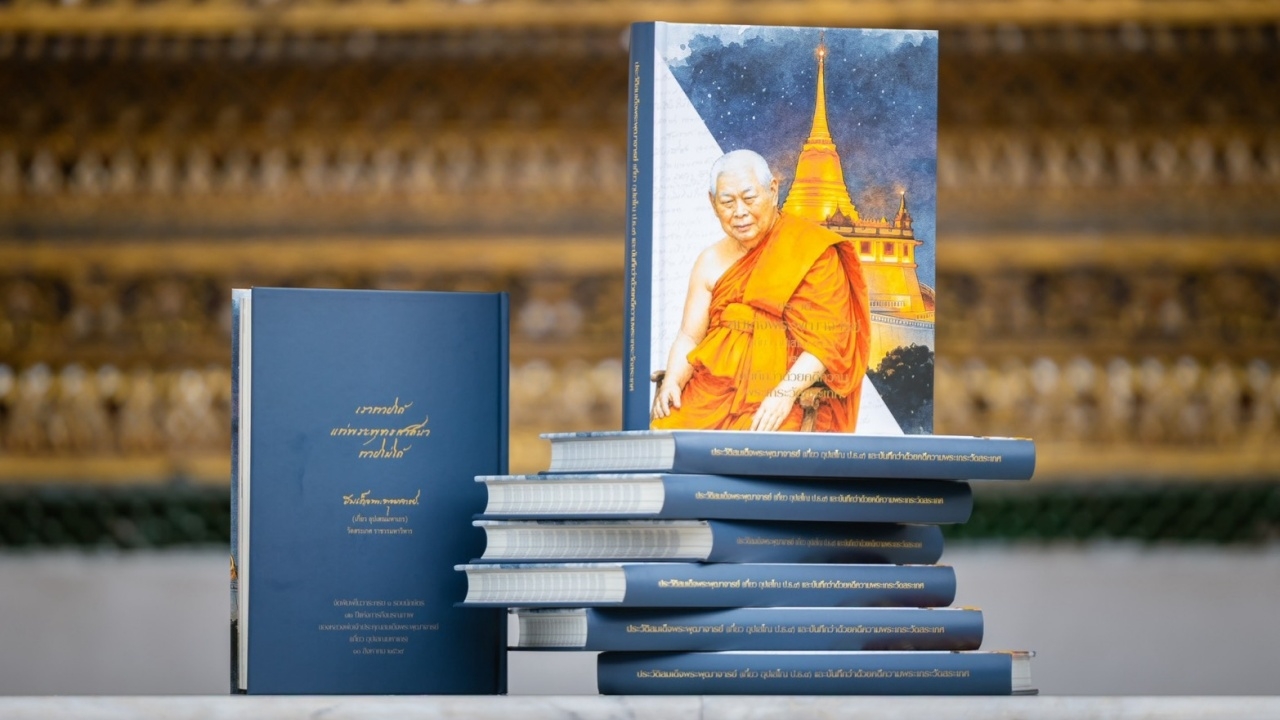
Wat Saket Ratchaworamahawihan has revealed the first images of a memorial book and records concerning the legal case involving senior monks of Wat Saket, on the occasion of the 12th anniversary of the passing of Somdet Phra Phutthachan (Kiao Uppaseno Maha Thera).
On 9 August 2026 GMT+7, Wat Saket Ratchaworamahawihan unveiled the first images of a memorial book marking the 12th anniversary of the passing of Somdet Phra Phutthachan (Kiao Uppaseno Maha Thera), a highly respected senior monk who greatly contributed to Buddhism in Thailand. He was also renowned for laying the foundation for Thai missionary work abroad, leading to Thai temples established worldwide.

To mark the 12th anniversary and entering the 13th year this year, disciples published the book "Biography of Somdet Phra Phutthachan (Kiao Uppaseno Maha Thera) and Records on the Legal Case of Wat Saket's Senior Monks" as a memorial.
This is the first time information has been disclosed about the origins of the legal case involving Wat Saket's senior monks, covering the temple's severe trials through many events over a long period, until it returned to normalcy as it is today.
Additionally, the book reveals the final instructions of Somdet Phra Phutthachan (Kiao), a will from his preceptor, warning disciples not to be negligent before his passing.
"When I am no longer here, great dangers will arise for us. Do not be careless. I will not be able to see what happens then because I will have passed away," he warned.
Somdet Phra Phutthachan (Kiao Uppaseno Maha Thera, Pali Grade 9) was the former acting Supreme Patriarch and former abbot of Wat Saket Ratchaworamahawihan. He passed away on 10 August 2013 CE. By 2026 CE, it marks the 13th year since his passing.

From the perspective of his disciples, Somdet Phra Phutthachan (Kiao) was revered beyond measure. He deeply loved the three main institutions: the nation, Buddhism, and the monarchy. This devotion was recorded in his will to serve as a guiding principle for future generations.
He was a senior monk known for great compassion, embodying the qualities described in the Sumangala Vilasini commentary as "Uttanamukhi"—one with a smiling face, welcoming, and naturally kind without affectation. He possessed all four Brahmavihara virtues: loving-kindness, compassion, sympathetic joy, and equanimity.
He was attentive to the well-being of every monk and novice at Wat Saket, knowing precisely who lived in which room—small or large—and which of the 17 monastic groups they belonged to, fully understanding the temple's layout.
He cared deeply about education, including studies in Dhamma, Pali, and general academics. His frequent teaching emphasized that all monks and novices must study diligently and truly understand, keeping pace with the world.
During the Buddhist Lent festival, Somdet Phra Phutthachan lectured novice monks on Fridays, covering general knowledge but focusing on the Tipitaka, including the Abhidhamma Pitaka. He taught about mind, mental factors, form, and Nirvana in an engaging way that made the complex scriptures enjoyable to learn.
He was diligent about temple affairs, both routine and special events. Before important days, he would inquire who would deliver sermons, lead chants, teach Pali lessons, or attend ceremonies, checking on monks’ activities and health, and instructing assistants to oversee matters and manage expenses.

At Wat Saket, daily chanting occurs three times: morning at 08:30, evening at 17:15, and night at 21:00. Somdet Phra Phutthachan personally led the night chanting. Even when traveling for religious duties domestically or abroad, he returned in time for the 21:00 chanting. When unable to sit in the main seat, he sat on a chair below. He continued this practice until illness prevented him from attending.
He had an excellent memory, recalling stories, places, and people precisely—not just names, but their ancestors and family histories accurately as well.
Moreover, he was highly responsible both personally and for the broader Buddhist community. He was a contemporary monk with a visionary outlook. Further details about his life will be presented in the biography section of this book.
