

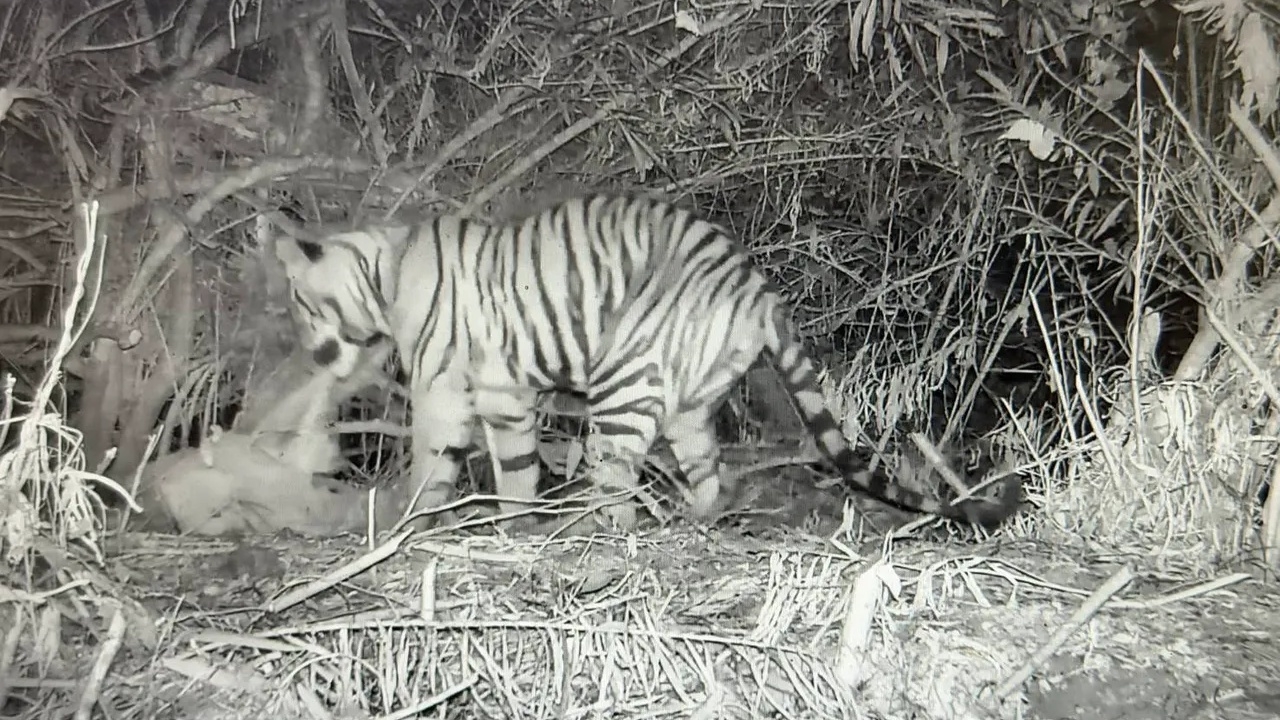
The Department of National Parks clarifies questions regarding the death of Huai Kha Khaeng ranger Sakgrin Wichajan, explaining why no signs of struggle or blood drops were found on the bed or at the body discovery site, and confirms that autopsy results indicate a cervical spine fracture caused by an animal attack.
On 9 August 2026, the Facebook page "Department of National Parks, Wildlife and Plant Conservation" posted a statement saying Clarification of the facts regarding doubts about the death of Sakgrin Wichajan.
Following widespread dissemination and comments on social media about the death of Sakgrin Wichajan, including doubts about the nature of the marks and behavior of the wild animal, and speculation that Sakgrin might not have been attacked by wildlife, the agency wishes to clarify information to foster proper understanding as follows.
1. Regarding the drag marks suspected not to be from a wild animal,
Upon examination and assessment by a tiger research team, the marks found correspond with those caused by a tiger's behavior of dragging prey along the ground.
Therefore, these marks can be explained by tiger behavior and do not indicate that wildlife was not involved.
2. Regarding the absence of struggle marks and blood drops on the bed and at the body site,
There are doubts as to why, if the attack was by a tiger, no signs of struggle or blood drops were found where Sakgrin slept or where his body was found.
In this matter, tiger researchers state that generally tiger hunting involves stalking and leaping on prey to bring it down, which often leaves struggle marks between tiger and prey.
However, tiger behavior also includes scavenging or stealing medium or small prey, typically by biting and quickly dragging or moving the prey away from the area.
In Sakgrin's case, the marks found align with this possibility, and it is hypothesized that if the victim was in a deep sleep and unaware when the tiger approached, no struggle would occur, and thus no blood or struggle marks would be found on the bed.
3. Regarding doubts that Sakgrin might not have been attacked by wildlife,
This issue can be verified from forensic data and related documents, with key information as follows.
The autopsy results from Sawanpracharak Hospital state the cause of death as follows:
The autopsy by police at Lan Sak police station indicated the cause of death was due to an animal attack.
Sakgrin Wichajan's death certificate states the cause of death as cervical spine fracture due to animal attack.
Based on the above information, the public is urged to consider evidence from forensic science, official investigations, and scientific data on tiger behavior together.
The agency confirms that this clarification aims to promote accurate understanding and reduce misinformation spread on social media, relying primarily on evidence and findings from relevant authorities.
Information from the Facebook page of the Department of National Parks, Wildlife and Plant Conservation