

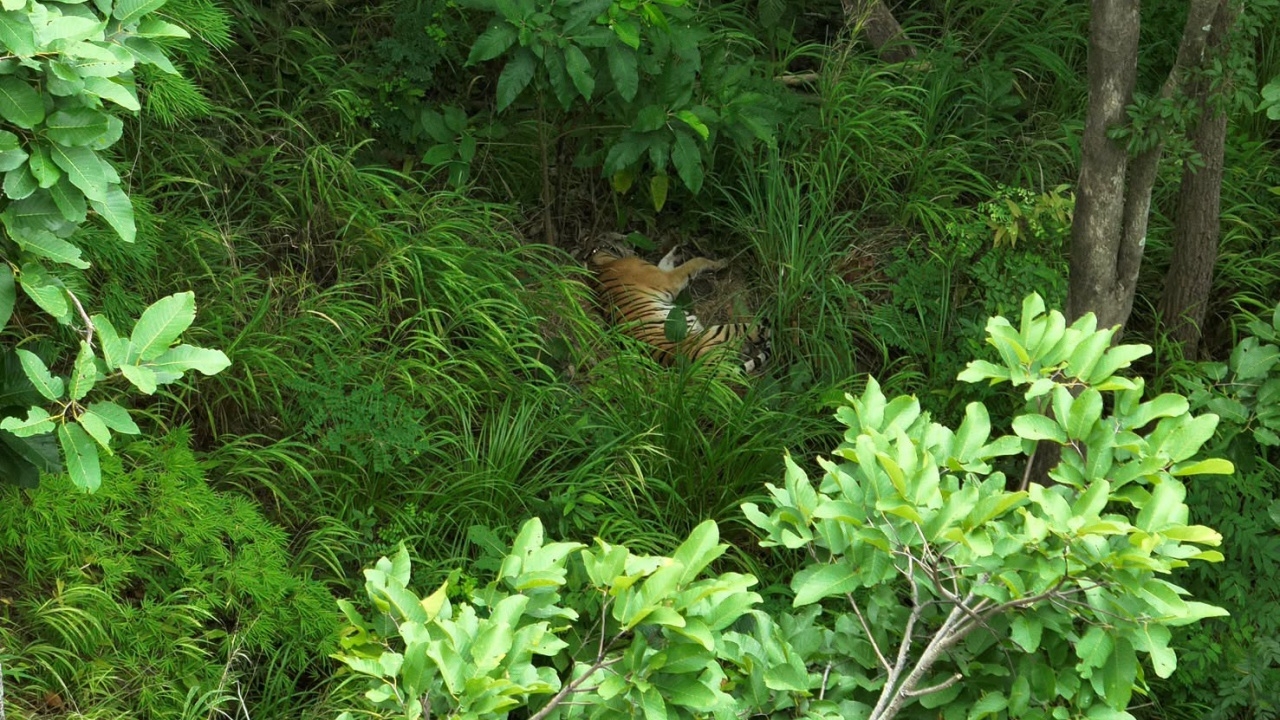
Protected Area Office 12 clarifies the case "Tiger Pin" has appeared near communities, affirming it is not aggressive behavior aimed at harming humans but an instinctive adaptation of an elderly animal seeking safe space and food in its late life stage. They emphasize close monitoring for community and wildlife safety.
On 13 Aug 2026, the Facebook page of the Department of National Parks, Wildlife and Plant Conservation posted a statement sayingProtected Area Office 12 (Nakhon Sawan)revealed updates on tracking the behavior of "Tiger Pin," or ID HKT236F, an approximately 13-year-old elderly female tiger moving around the border area of Khlong Lan National Park, near Khlong Phlu village, Khlong Nam Lai Subdistrict, Khlong Lan District, Kamphaeng Phet Province.
Officials have mobilized to closely monitor her behavior using satellite collar technology, thermal detection drones, and proactive 24-hour patrols. They have also explained the situation to local communities to prevent conflicts and ensure the safety of both residents and this elderly tiger.
Tiger Pin is a key tiger in the Western Forest research database, with researchers capturing images since 2017 and fitting her with a tracking collar in December that year. Over the years, she lived naturally across connected forest areas between Huai Kha Khaeng Wildlife Sanctuary, Mae Wong National Park, and Khlong Lan National Park to grow and raise offspring. However, now in old age, her physical agility and strength have declined, altering her hunting behavior. She adapts by traveling familiar routes and seeking small meals along forest edges.
Previously, officials took Tiger Pin into care at Huai Kha Khaeng Wildlife Breeding Station for over three months for thorough health checks and environmental adjustment before releasing her back into deeper, more remote forest areas in June 2026 to support her natural lifestyle.

Ms. Chayaporn Amradit, Director of Protected Area Office 12, stated, "Tiger Pin's appearance near communities is not aggressive behavior or an instinct to harm humans, but an elderly wild animal's adaptation seeking safe space and small meals in her final life stage. The Department of National Parks prioritizes the safety of local residents and livestock alongside the scientific care of wildlife welfare."
Protected Area Office 12 has instructed local agencies to intensify public awareness, urging livestock owners to securely confine animals at night. They have established a coordination center with community leaders for 24-hour incident reporting. Should Tiger Pin approach the community beyond safe limits, officials are prepared to implement control and relocation measures promptly to ensure peaceful and safe coexistence.
Information courtesy of the Facebook page of the Department of National Parks, Wildlife and Plant Conservation