

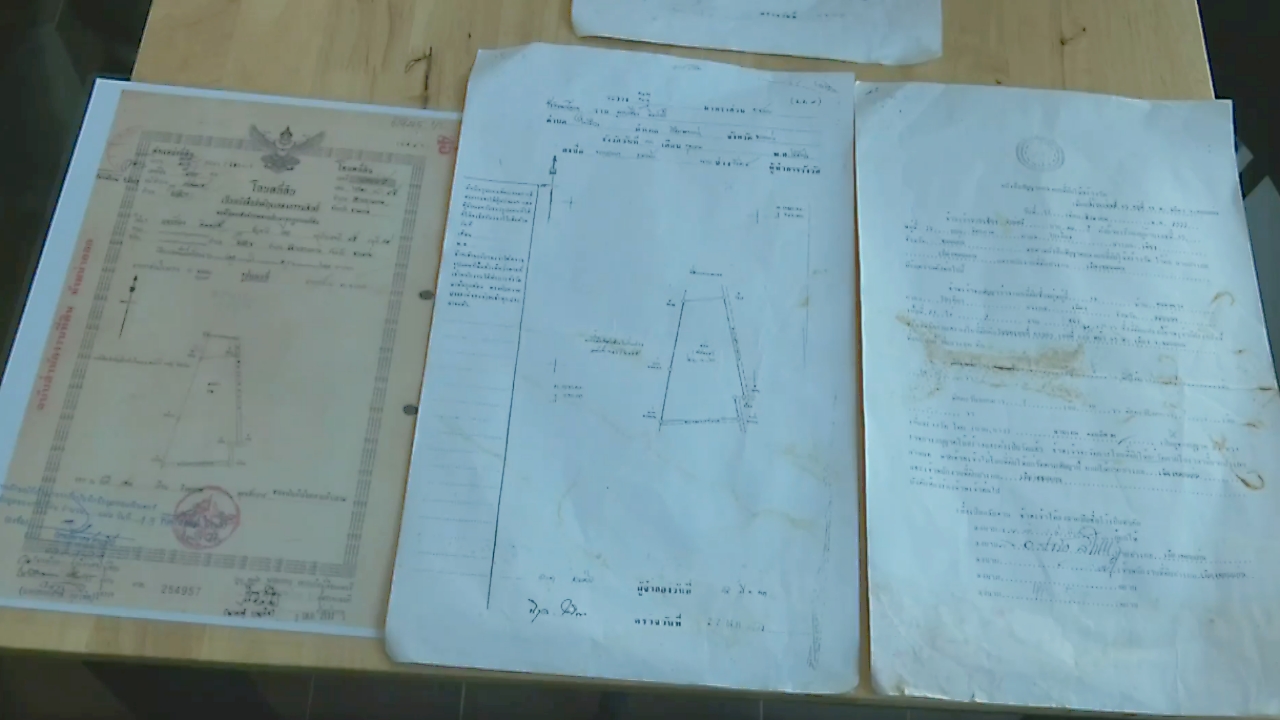
Khon Kaen land officials clarified the issue of heirs requesting replacement title deeds, pointing out that if the original deeds are not actually lost, it amounts to false reporting. They advised the temple to present the original deeds in opposition, enabling immediate cancellation of the replacement deed application. Afterwards, officials will be assigned to proceed with legal action.
At 3:30 p.m. on 13 August 2026, a reporter received a statement from Mr. Pongsawat Chai Ton Thueak, Khon Kaen provincial land officer, explaining the case of heirs requesting replacement deeds. He said it was false reporting because the heirs managing the inheritance of Mrs. Bua Khai submitted a request for replacement deeds, claiming the original title deeds were lost. They provided two witnesses as required, confirming the loss, along with a police report. However, after appearing on the show "Hon Krasae," they admitted the deeds were with the monk, the abbot, and not lost.
This constitutes false reporting since statements were made to land officials. Under their authority, they must file a complaint for false reporting with the police. Whether it is truly false depends on investigation: if Mrs. Bua Khai genuinely believed the deeds were lost, there is no intent to deceive. But if she knew the deeds were not lost and still reported so, it qualifies as false reporting to authorities.
The land officer added there are three victims in this case: the land office, the police officers who received the lost deed report, and the temple entitled under the court's judgment. The temple is also a victim because the applicant claimed the deed was lost when it was actually with the abbot and not missing.
As for when the false reporting case will be filed, it depends on the abbot presenting the original deed to oppose the request. Currently, the process of accepting applications for replacement deeds is still open for objections. If the abbot can show the original deed in person to the land officer proving it is genuine and not lost,
the land officer will order cancellation of the replacement deed request as it does not meet the conditions. Replacement deeds are only issued for lost or damaged deeds. Since it is not lost, it does not qualify. Then the assigned officer who received the replacement deed request will file a complaint to proceed with legal action.
Regarding name changes and ownership transfers on the title deed, the land office has not yet been contacted by the temple side. It is known that a lawyer will come tomorrow to proceed. However, the land office contests the lawyer's claim that the ministerial regulations allow cancellation and immediate transfer to the temple using the Supreme Court's previous judgment, which the lawyer believes permits immediate transfer.
According to land law procedures, this is not yet possible. The matter must be submitted for approval by the provincial governor under Section 84. There is still disagreement and a need for clarification. Section 84 of the Land Code states that if a temple acquired land before the Land Code's enforcement in 1954, up to 50 rai, no ministerial approval is needed. Currently, the minister has delegated this authority to the governor.
However, if the land was acquired after the Land Code came into force, whether over or under 50 rai, ministerial approval is required, also delegated to the governor. The temple's lawyer still misunderstands this requirement.
Therefore, initially, if the lawyer comes tomorrow to proceed, the Khon Kaen land office will accept the request. If the differing views persist, the land office will refer the matter to the central land department. Regarding the replacement deed, if the temple opposes and proves the deed is not lost, the land office can cancel the replacement issuance immediately. For the temple's transfer request, they can submit the application and it will be reviewed according to the land department's procedures.