

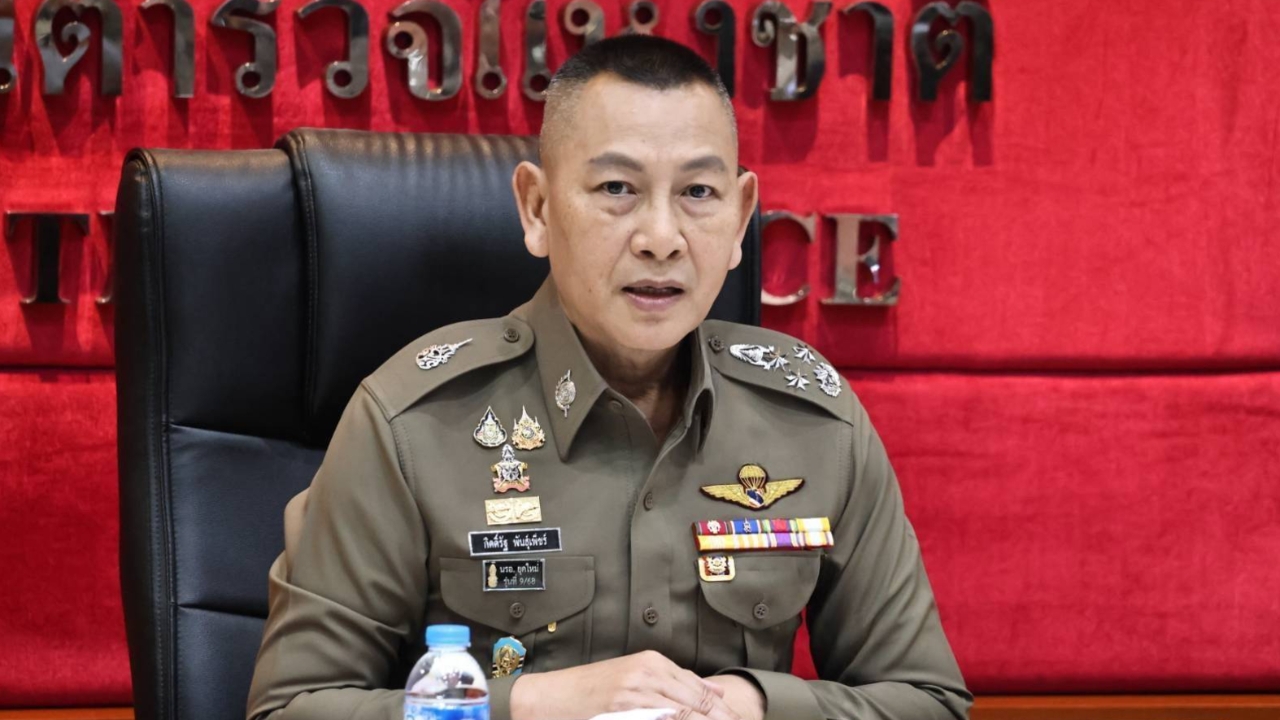
The National Police Chief has urgently ordered police nationwide to prepare for disaster situations, mobilizing personnel, vehicles, boats, and drones to assist residents in risk areas, and establishing the Police Command Center (ศปก.ตร.) to manage the situation 24 hours a day in response to flash floods and flash flooding.
On 19 Aug 2026 GMT+7, Police General Kittirat Phanpetch, National Police Chief, issued the highest priority confidential radio directive to police units nationwide to prepare for disaster response following warnings of flash floods, flash flooding, short-term waterlogging, and heavy to very heavy rainfall in multiple areas.
The order emphasized police duties to maintain public order, safeguard lives and property, manage traffic systems, and urgently support personnel, equipment, tools, and vehicles to assist the public, integrating efforts with provincial, district, local administrative organizations, and related agencies.
Provincial Police Regions 1 through 9 and provincial police offices are designated as primary forces on the ground, preparing emergency response teams and disaster volunteer personnel, and allocating manpower, equipment, vehicles, boats, and unmanned aerial vehicles (drones) to support the command center for rapid assistance and evacuation of people from risk zones, as well as supplying water, food, medicines, and maintaining safety in affected areas.
Additionally, field kitchens and temporary shelters must be prepared, along with implementing protective measures to safeguard government offices, police residences, official documents, weapons, ammunition, detainees, and government property from damage caused by the disaster.
Highway police and local police are tasked with managing traffic on main and alternative routes, facilitating the safe movement of people to hospitals, medical facilities, or safe zones, while marine police are to ready boats and water rescue equipment for immediate deployment to risk areas.
The Forensic Science Division (สพฐ.ตร.) is preparing identity verification and forensic teams; tourist police and central investigation police will support forces in their respective areas, while the Police Aviation Division is preparing aircraft and pilots for rescue missions.
Meanwhile, the National Police spokesperson and police stations nationwide must expedite public communications to raise awareness, inform about routes and risk zones, and continuously record photos and videos of rescue operations for ongoing publicity.
The National Police Chief also ordered the Police Command Center (ศปก.ตร.) to operate as a 24-hour command and information coordination hub, with all units required to be ready for action and report situation updates to superiors every 4–6 hours until the situation resolves.
He further instructed police in affected areas to deploy disaster volunteer teams to assist in alleviating distress, restoring areas after the crisis, and conducting detailed damage assessments of police stations, residences, and government property.
The National Police Chief assigned the Deputy National Police Chief responsible for overall supervision, emphasizing that all units must prioritize "assisting and rapidly evacuating affected people from risk areas" as a critical mission, while keeping communication channels open continuously to enable timely control and management of the situation.