

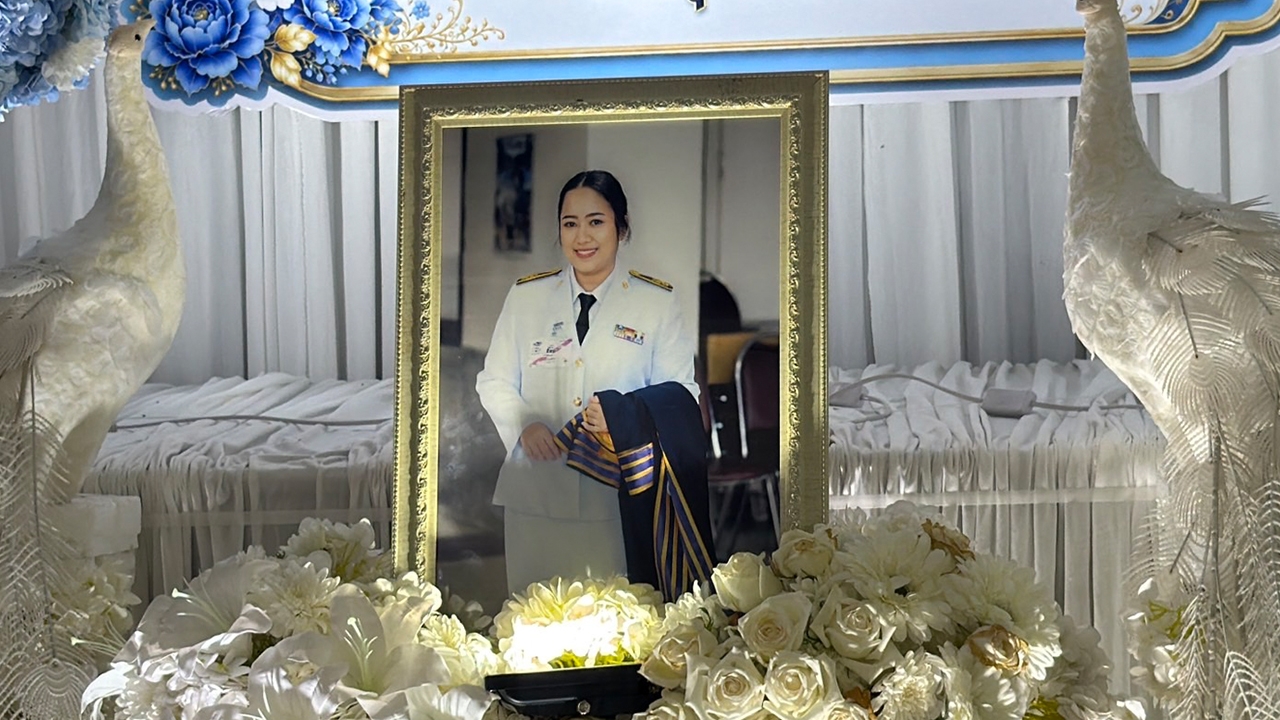
Mourning “Nong Aor,” a staff member at Kamphaeng Phet Rajabhat University, who died suddenly. Relatives and friends question the transfer process after a more than 6-hour wait. The hospital clarified the timeline, affirming full effort was made, and revealed it is experiencing a heavy workload problem due to medical staff shortages. They noted the case is rare, occurring only in 1 out of 1,000 cases.
On 22 August 2026, criticism and doubts arose about the patient transfer standards after Ms. Wirapat Kawilaphan, known as Nong Aor, aged 37, a staff member at Kamphaeng Phet Rajabhat University, died suddenly from pulmonary embolism at Kamphaeng Phet Hospital on 17 August 2026. Her family received the body for funeral rites at their home in Village No. 4, Pradang Subdistrict, Wang Chao District, Tak Province, amid mourning from relatives and colleagues.
Relatives and colleagues said that although they understood the critical condition, they remained concerned about the transfer and care process before her condition became critical, questioning whether it was excessively delayed. On 16 August 2026, the patient experienced breathing difficulties and was treated at a private hospital in Mueang Kamphaeng. Then on 17 August 2026 at 11:30 a.m., the private hospital transferred her to Kamphaeng Phet Hospital, noting pulmonary embolism in the referral. The patient waited over 6 hours in the emergency room, during which she became dizzy and severely breathless. Emergency doctors then rushed to resuscitate and treat her, but she passed away peacefully at 6:24 p.m.
Ms. Somjit Kawilaphan, 64, the deceased’s mother, expressed concerns that the private hospital in Mueang Kamphaeng transferred her daughter to Kamphaeng Phet Hospital early in the morning but she had to wait 5-6 hours before treatment. She felt the treatment process was too slow and wanted answers as to why care was delayed while her daughter waited, ultimately leading to her death. She emphasized that a human life is not like a written error that can be erased and requested greater fairness and responsibility from the hospital.
Ms. Laddawan Kaewsai, 36, a physical education lecturer at the Faculty of Education and friend of the deceased who posted about the event on social media, said she stayed with the patient at Kamphaeng Phet Hospital and monitored her condition. She shared that she was in contact with the patient in the emergency room, still waiting for treatment. Although the patient received oxygen and blood, she wanted to know the timeline of care before this and why there was an unreasonable delay.
In her social media post, she expressed regret, feeling that if she had urged the doctors to pay more attention, her friend might not have died. She noted the private hospital’s diagnosis was clear enough to start immediate treatment, not wait 5-6 hours. During the wait, she consulted a doctor friend about pulmonary embolism and learned it is a dangerous condition that can cause sudden death. The emergency doctors apparently had not decided on a treatment approach until the patient’s condition became critical and CPR was performed. She did not know what treatments had been administered during the emergency stay. The patient had kept chatting with her throughout, and continuous treatment from the private hospital’s referral might have prevented her death.
Ms. Kalyarat Malasri, 39, an educational specialist and senior colleague of the deceased, said: “When the body was taken from the hospital, staff explained to relatives the resuscitation and medications given. I had no objections to the resuscitation but was concerned about the long wait before treatment. It raises questions whether the patient was treated or simply left waiting until her condition worsened and she died. The deceased had previously been treated at Kamphaeng Phet Hospital for abnormal vaginal bleeding. Family and colleagues are troubled by the long treatment time and why the private hospital’s diagnosis was not promptly followed. If clot-dissolving drugs had been given, treatment might have been successful. I understand there may have been other more critical cases then, but we seek answers and CCTV footage of the treatment process to ease our distress.”

Later, relatives and colleagues went to Kamphaeng Phet Hospital to inquire in detail about the treatment process. Dr. Sompheng Chokchalermwong, Deputy Director of Medical Services at Kamphaeng Phet Hospital, along with a medical team, welcomed them, expressed condolences, and explained the treatment timeline in order.
On 16 August 2026, the patient experienced fainting, breathlessness, and difficulty breathing, prompting treatment at a private hospital in Mueang Kamphaeng. Tests showed blood oxygen dropped to 88%, ECG indicated a rapid heartbeat at 125 beats per minute, and Troponin I blood test was positive (0.501 ng/mL), suggesting pulmonary embolism, alongside anemia due to abnormal vaginal bleeding.
The patient was referred to Kamphaeng Phet Hospital under her insurance rights on 17 August 2026 at 11:32 a.m. In the emergency room, vital signs were taken: body temperature 37.0°C, blood pressure 117/82 mmHg, heart rate 118 bpm, respiratory rate 22 breaths per minute, and initial oxygen saturation 91%. Blood tests and chest X-rays were performed. Treatment included oxygen via mask and nasal cannula, intravenous fluids, and blood reserved for anemia treatment. Consultation with an obstetrics-gynecology specialist was arranged.
At 5:17 p.m., the OB-GYN performed an abdominal ultrasound revealing uterine fibroids but no abdominal fluid. The diagnosis was uterine fibroids with anemia. Treatment included 1 unit of blood at the emergency room, iron supplements, pain relief, and medication to stop vaginal bleeding.
At 5:30 p.m., while urinating on the bed, the patient became dizzy, fainted, and convulsed for about 30 seconds, sweating, cold, and breathless. Blood pressure was 128/100 mmHg, pulse 90 bpm, and finger glucose 94 mg%. Oxygen was increased to 15 LPM via mask and nasal cannula. Oxygen saturation was measured, and an urgent CT scan was requested. The patient’s breathing worsened to 30 breaths per minute. Doctors considered intubation. The patient’s consciousness declined, blood pressure was unmeasurable, pulse rose to 135 bpm. Vasopressor drugs were administered, and ICU transfer was coordinated, but the patient’s heart stopped.
At 6:13 p.m., CPR was performed with cardiac stimulant drugs until the heart resumed beating.
A cardiologist was consulted and a heart ultrasound confirmed pulmonary embolism. Clot-dissolving medication was immediately administered intravenously.
At 6:24 p.m., the patient’s heart stopped again. CPR and cardiac stimulants were continued until 7:53 p.m., when the patient was declared dead. Doctors explained the prognosis and resuscitation efforts to relatives and coordinated with forensic specialists for an autopsy, which confirmed blood clots in both lungs.
The hospital affirmed that all medical personnel performed their duties to the best of their ability in patient care. However, the hospital is currently facing a heavy workload due to medical staff shortages, a systemic issue being urgently addressed. This case is rare, occurring in only 1 out of 1,000 patients. The hospital will seek ways to provide compensation and support to the deceased’s family according to legal procedures.

During the meeting to explain the situation to the deceased’s relatives, the atmosphere was tense. The family was dissatisfied with the hospital’s explanation of the emergency room treatment process at Kamphaeng Phet Hospital and left the room immediately. Only a group of university professors and colleagues remained, all still grieving the loss of their beloved staff member.
The deceased’s cremation is scheduled for tomorrow, 22 August 2026, at Tongteng Temple, Pradang Subdistrict, Wang Chao District, Tak Province.