

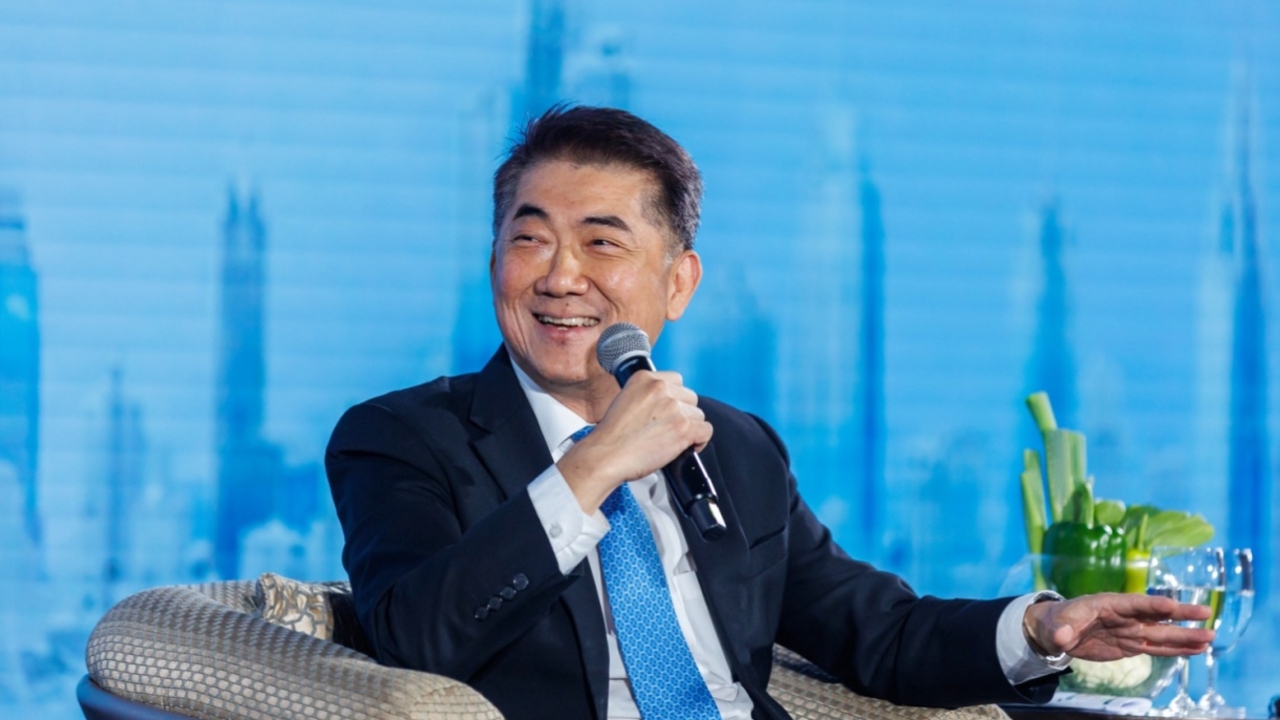
Prasit Boonduangprasert, CEO of CPF, shared his vision at THAIRATH FORUM 2026 on navigating a volatile global battlefield, emphasizing risk diversification and adaptability.
On 31 Aug 2026 GMT+7, at the significant panel discussion organized by Thairath Group, THAIRATH FORUM 2026: THAILAND IN THE NEW GLOBAL ORDER gathered national government and business leaders to exchange strategic perspectives under the theme “Transforming Thailand’s Economic Strategy” for survival and growth amid the new global order.
The event featured Prasit Boonduangprasert, Director, Executive Vice Chairman, and CEO of Charoen Pokphand Foods (CPF), who presented on “The Volatile Global Battlefield: New Game Moves and Global Portfolio Management,” addressing direct challenges from global turbulence and high uncertainty in the new world order, especially unpredictable U.S. policies under Donald Trump’s era, China’s competition, and numerous trade barriers from Europe.
When asked about CPF’s export and production bases spanning multiple continents, and how CPF adjusts export market weightings and overseas investments amid intensified superpower trade conflicts and tariffs, and how CPF balances growth between Western and Asian markets now,
Prasit Boonduangprasert, Director, Executive Vice Chairman, and CEO of CPF, revealed that CPF’s business structure is defensive stock regardless of crises. The company also spreads risks widely, with investments, factories, and farms across 17 countries and several other nations serving as export bases. Currently, the main base is Thailand, exporting to 40-50 countries worldwide, which provides solid diversification.

Looking ahead, CPF sees changes but continues to focus investment mainly in familiar Asian markets due to the need for deep cultural understanding in business relationships. CPF is also studying expansion into various European countries and is beginning to explore Africa, though that remains at an early stage given the distance.
CPF believes the world is undergoing significant change. Personally, I think the world moved from free trade to polarization and then toward self-reliance (uncertainty). However, the latter two trends might be less visible to Thais since we live in a country with a fairly strong agro-industrial base, unlike many countries facing food security issues, such as Singapore, Hong Kong, and Saudi Arabia, which have limited production bases.
Within the food-related industries, CPF is concerned about livestock and meat sectors and food security, questioning whether production in Thailand and other countries will be sufficient to sustain survival through self-production.
Saudi Arabia serves as an excellent example; it used to rely heavily on imports but now can produce some items domestically and even export them.
Nevertheless, with well-planned risk diversification, the impact from changes may not be severe since we can adjust easily.