

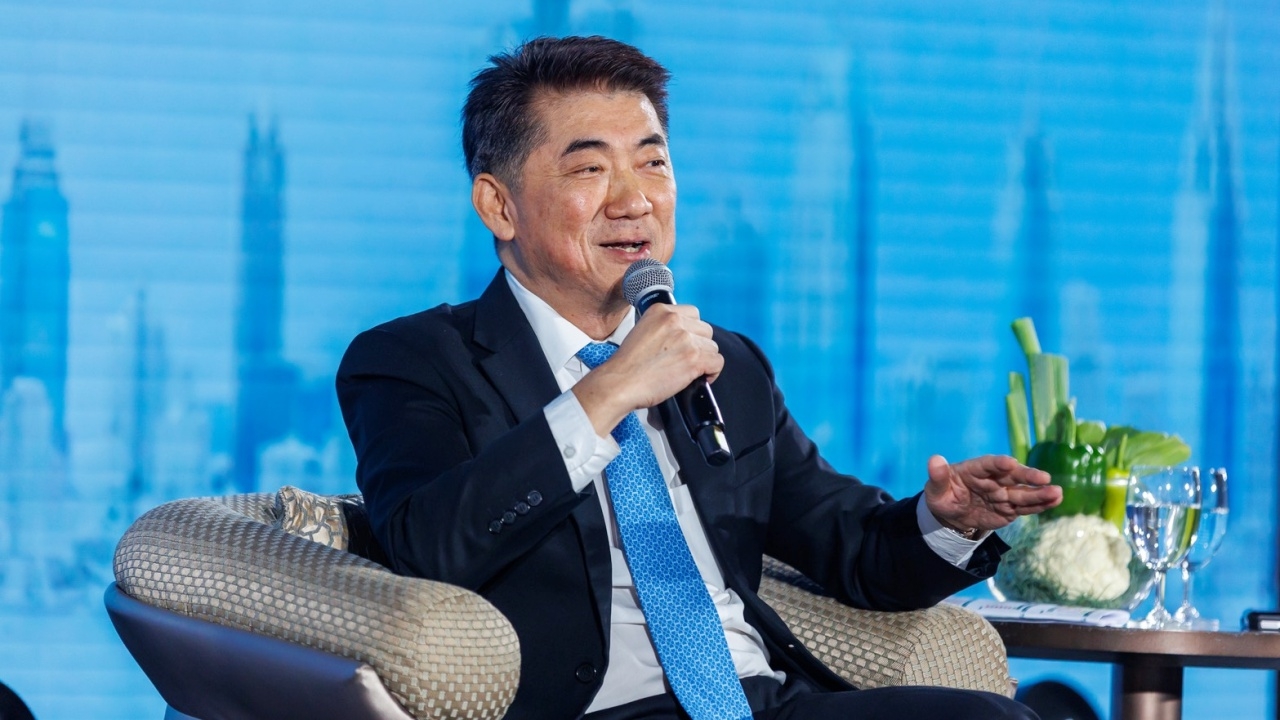
THAIRATH FORUM 2026: "Prasit Boonduangprasert" CPF's CEO revealed the components of a good business model and highlighted approaches to support SMEs to advance together and maintain stable income.
31 Aug 2026 GMT+7 "Thairath Group" held its major annual Dinner Talk, "THAIRATH FORUM 2026," under the theme "Thailand in the New Global Order" at Eastin Grand Hotel Phayathai to explore ways to build bargaining power and boost Thailand's competitiveness through four national and business leaders.
Following a keynote by Prof. (Special) Dr. Surakiart Sathirathai, President of Chulalongkorn University Council and former Deputy Prime Minister, titled "Thailand’s Blueprint for the New Global Order: Direction, Path, and Survival of Thailand under the New World Order," sharing perspectives on the new geopolitical landscape amid trade wars, trade barriers, and competition in energy and technology.
Next came a Panel Talk on "The New Global Order: Impact and Opportunities Amongst Superpowers’ Struggle," featuring insights from major Thai private sector leaders with global revenue bases.
The third topic discussed was the direction of capital, technology, and how to propel Thailand forward without leaving anyone behind. To succeed globally, large organizations need modern tools while also supporting the domestic business ecosystem, including SMEs, to survive together.
When the moderator asked, "With rising technology costs and changing standards making it harder for small Thai farmers to adapt, how does CPF manage the ecosystem from upstream to downstream to ensure community-level businesses and SMEs continue progressing with stable income alongside CPF itself?"

Prasit Boonduangprasert, CEO of Charoen Pokphand Foods Public Company Limited (CPF), explained that the best business model, which CPF practices, involves the food sector consisting of three pillars:
1. Integrated system: You must have a fully integrated system from upstream, midstream, to downstream. For CPF, this is Feed-Farm-Food. Integration was harder before, but now technology aids this process through automation, especially AI and data, which are crucial.
2. Global network: The food sector must secure global markets. CPF itself has done so, and the country must develop global market access.
3. Food nutrition and biotechnology.

We combine these three models to drive the food industry. CPF views itself as a food leader with a duty to continuously ensure food security.
However, we cannot do this alone. CPF works with over 5,000 suppliers, including 3,600 SMEs. If they cannot survive, neither can we. Thus, we launched the Partner to Grow project, initially during COVID-19, to support them financially by paying faster—doubling payment speed over two years until completion.
Regarding environmental issues, we assist SMEs through ESG programs, inviting them to training. For those interested in environmental concerns and dust reduction, we send engineering teams to provide free six-month consultations, gradually expanding support. We also give purchasing advantages to SMEs in the program. Additionally, we implement anti-corruption practices, believing long-term SME development requires this. We hold partner awards scoring environmental cooperation alongside ESG adherence.