

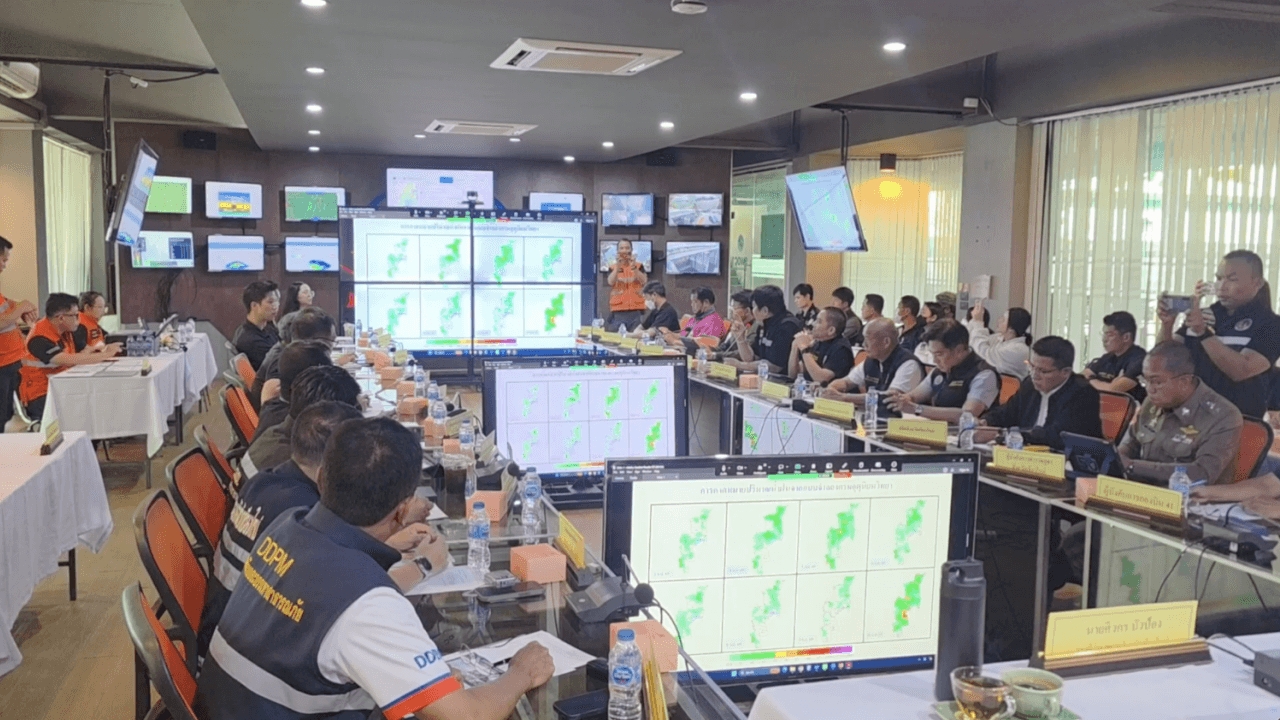
Chiang Mai Province is coordinating with agencies to monitor heavy rainfall from 4 to 7 September 2026, with potential flash floods and flash floods. Special attention is focused on "Omkoi District" where soil moisture has reached 249 millimeters, posing a landslide risk.
On 4 September 2026, at the Intelligent Water Operations Center meeting room, the Royal Irrigation Department Region 1 held a Chiang Mai provincial command center meeting on floods, flash floods, and landslides to monitor water situations and prepare for possible flood events in the area.
Following reports from the Northern Meteorological Center that from 4 to 7 September 2026 the northern region will experience heavy to very heavy rain in some areas due to the monsoon trough passing over northern and upper northeastern regions, there is a risk of flash floods and flash floods, especially in hillside areas near waterways and lowlands.

Lieutenant Sai Rung Kluenkiew, Director of Hydrology Division 1 in Chiang Mai, reported that Omkoi District requires special monitoring as soil moisture levels have reached 249 millimeters, indicating high soil saturation. This calls for increased caution against landslides and mudslides. All districts are urged to closely track soil moisture levels.
Mr. Siwakorn Buapong, Deputy Governor of Chiang Mai, stated that in areas without phone signal or unable to receive alerts via Cell Broadcast, local leaders must quickly inform residents through other means, such as public address systems or loudspeaker announcements. Areas without electricity should have transistor radios to receive official warnings to ensure residents receive timely information.
He also assigned district chiefs to check areas lacking or with weak phone signals and coordinate with the province and telecommunication providers to resolve these issues, especially during periods of heavy rain and landslide risk.

The Deputy Governor further emphasized that local administrative organizations should conduct training on rain gauge usage for residents and field workers so they can quickly measure and report rainfall levels to the province. This data is vital for assessing situations and issuing timely public warnings, benefiting all sectors in disaster monitoring and preparedness.
Additionally, all agencies have been instructed to maintain readiness of personnel, vehicles, and rescue equipment at all times, prioritizing the safety of staff, especially when entering areas at risk of flash floods and landslides, to ensure rapid, effective, and safe assistance to the public.
