

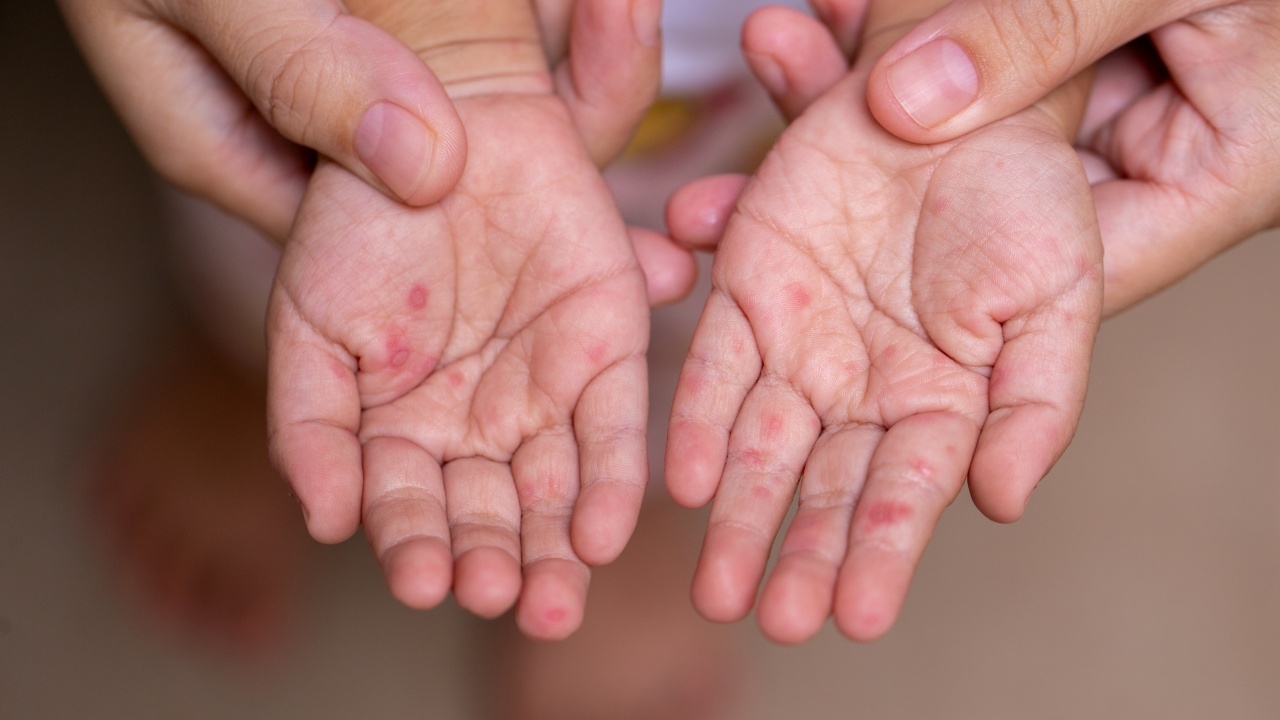
The Department of Disease Control emphasizes monitoring hand, foot, and mouth disease which commonly occurs in young children during the rainy season and school openings. It advises educational institutions to tighten child screening and urges parents to carefully observe symptoms.
On 4 September 2026, Dr. Montien Kanasawat, Director-General of the Department of Disease Control, stated that hand, foot, and mouth disease remains a concern among young children. During the rainy season, cases tend to increase and outbreaks often occur in schools and childcare centers across various areas. Since children frequently engage in close-contact activities and share objects, this raises the risk of disease spread. Therefore, schools and parents are urged to closely monitor and strictly follow disease prevention and control measures.
According to data from the Digital Disease Surveillance system (DDS) of the Epidemiology Division, from 1 January to 1 September 2026, there were 53,362 cumulative cases and 1 death, with a fatality rate of 0.002 per 100,000 population. The three age groups with the highest case numbers are 0–4 years, 5–9 years, and 10–14 years, respectively. Among these, 5,408 patients required hospitalization. Overall, the 2026 situation shows fewer cases compared to the previous year.

Dr. Montien added that key symptoms of hand, foot, and mouth disease include fever accompanied by mouth ulcers or red spots, such as on the tongue, palate, or inside the cheeks, and rashes or clear blisters on the palms, soles, trunk, or buttocks. Young children may be irritable, refuse to eat or drink milk, drool, or complain of mouth pain. Parents should carefully observe their children's symptoms, especially before sending them to school or daycare.
If such symptoms appear, it is likely the child has hand, foot, and mouth disease and should be taken to a doctor for diagnosis and treatment. Children should rest at home and avoid attending school or places with other children to prevent spreading the infection. If severe symptoms arise, such as high fever, minimal food or water intake, lethargy, seizures, frequent vomiting, or labored breathing, immediate medical care is essential as these may indicate serious complications like encephalitis or myocarditis, which can be life-threatening.
Dr. Direk Khamphaen, Deputy Director-General of the Department of Disease Control, provided the following advice for schools and childcare centers:
1. Screen children daily before classes by checking for fever, rashes, blisters, and mouth ulcers or red spots.
2. If a child is ill, promptly notify parents to pick up the child and seek medical care, and inform local health officials. If two or more cases occur in the same classroom within one week, close that classroom for at least one day for cleaning and intensify screening for another week.
3. Regularly clean classrooms, restrooms, toys, learning materials, and shared surfaces using appropriate cleaning agents such as detergent, dish soap, soap, or diluted sodium hypochlorite (bleach) following label instructions and safety precautions.
4. Provide sufficient handwashing stations with soap and promote proper hygiene practices among children and caregivers, emphasizing handwashing with soap and water before meals and after using the restroom.
5. Avoid sharing personal items such as drinking glasses, spoons, handkerchiefs, towels, or bath towels.
6. Continuously monitor the situation. If multiple cases or clusters appear in schools, coordinate with local health authorities for assessment, outbreak investigation, and appropriate control measures. Parents should also watch for symptoms in their children.
If children have fever with mouth pain, ulcers or red spots in the mouth, decreased appetite or fluid intake, or rashes or blisters on hands, feet, around the buttocks, or other body areas, they should stay home and see a doctor. Sick children should stay home for five school days or until fully recovered, avoiding places where children gather to prevent spreading the infection.
The Department of Disease Control urges schools, parents, teachers, and caregivers to collaborate continuously in monitoring and preventing hand, foot, and mouth disease by regularly screening and observing children’s symptoms, promoting good hygiene especially frequent handwashing with soap, and cleaning shared items and areas frequently.
When a child is sick, isolate them from others and keep them home until symptoms improve. If severe symptoms occur, seek immediate medical care to reduce risks of serious complications, limit transmission, and prevent outbreaks in schools. For further information, contact the Department of Disease Control hotline at 1422.