

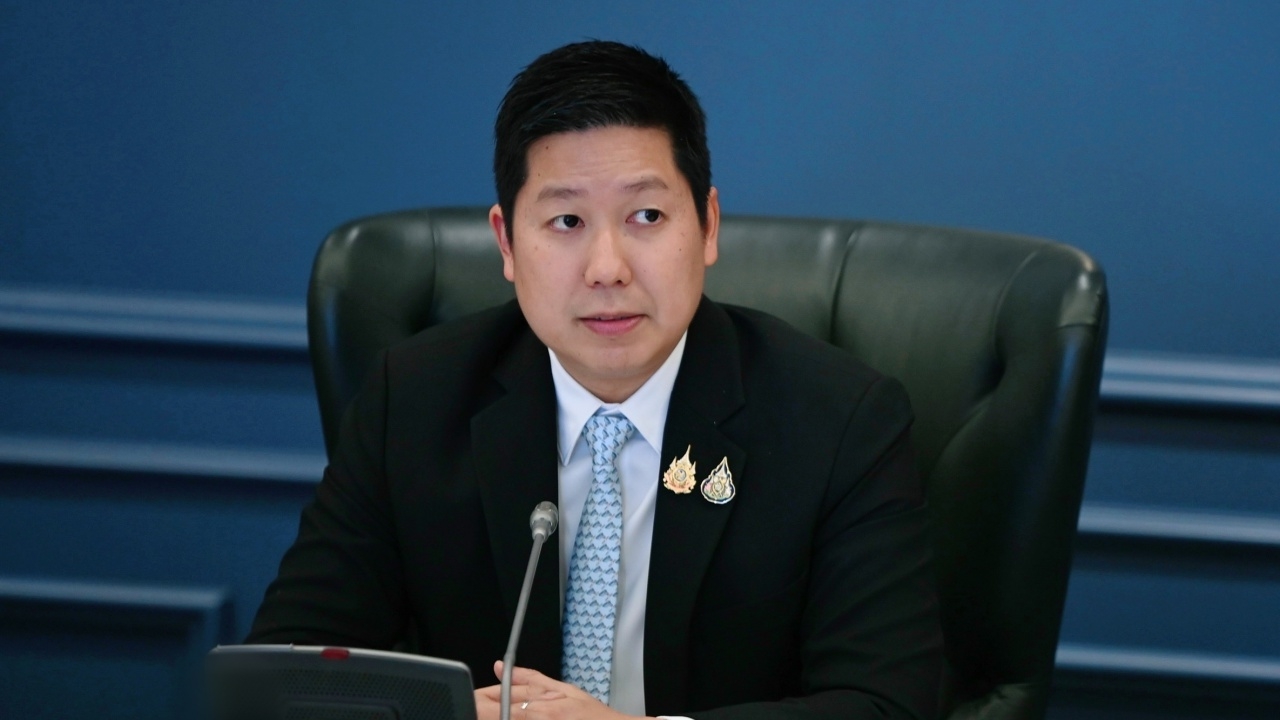
Worawong is concerned that Thailand may face increased U.S. tariffs and urges Supachai to clearly confirm whether the deal has been closed. He points out that Thailand is paying a 12.5% tariff but questions why a 19% figure has been mentioned.
On 8 September 2026, Worawong Rangmangkul, former Deputy Minister of Commerce, said conflicting information emerged from government sources within two days. He called on the Commerce Minister to clearly state whether the deal with the U.S. has been finalized, and whether the announced "not exceeding 19%" tariff is different from the 12.5% Thailand currently pays.
Worawong said that during Prime Minister Phathongtharn Shinawatra's government, Thailand signed a free trade agreement with the European Free Trade Association (EFTA) on 23 January 2025 and the Thailand-Bhutan FTA on 3 April 2025. Meanwhile, negotiations with the U.S. led to a tariff reduction from 36% to 19%, announced on 1 August 2025.
Thailand's tariff rates in the U.S. market have changed legal bases several times within a year. Originally, Thailand was subject to a 36% retaliatory tariff under the U.S. IEEPA law, later reduced to 19%. This was achieved by the previous negotiation team during Prime Minister Phathongtharn Shinawatra's government, which included former Deputy Prime Minister and Finance Minister Pichai Chunhawat and former Commerce Minister Pichai Naripthaphan.

Worawong believes credit should be given to the economic and negotiation teams of that government, who played a key role in negotiating with the U.S. and successfully reducing tariffs from 36% to 19%, a rate better than that received by many regional competitors at the time.
On 20 February 2026, the U.S. Supreme Court ruled 6-3 that the IEEPA law did not grant the president authority to impose customs tariffs, nullifying the entire retaliatory tariff regime. The U.S. then applied a temporary 10% tariff under Section 122 on all countries, which lasted 150 days and ended on 24 July 2026.
On the same day, the U.S. Trade Representative announced Section 301 tariffs on 60 trading partners. Thailand was subjected to a 12.5% tariff, while Cambodia, Indonesia, and Malaysia were set at 10%, meaning Thai exporters face approximately 2.5 percentage points higher tax costs.
"Within two days, the public heard two conflicting stories: one saying the deal was closed, the other saying it wasn't. The question is whether we have the same information and who is responsible for communicating with the public and markets, since investors and businesses rely on this information," Worawong said.
The Bhumjaithai Party's Facebook page announced a successful trade deal closure with the U.S. on 5 September 2026, stating, "From 36% to 19%! Deputy Prime Minister Supachai showcases closing the U.S. deal, securing key ART provisions to maintain Thai product competitiveness." However, on 7 September 2026, the Commerce Ministry spokesperson clarified that the "deal closure" reports might cause misunderstanding, affirming that negotiations have progressed well with positive signals but the final tariff rate remains pending.
Worawong highlights the urgent need for the government to explain the discrepancy between the current 12.5% tariff Thailand pays and the "not exceeding 19%" figure communicated as a negotiation result.
"If 12.5% is the additional tariff Thailand currently pays and the initial goal was to negotiate down to 10%, then what exactly was negotiated? Why is the figure 'not exceeding 19%' being mentioned, which is higher than the tariff Thailand already pays? Why is Thailand facing an additional 6.5% import tax? If these are different measures, the government should clarify. But if it's the same rate, it must explain how the negotiation team ended up with a higher tariff," he said.
Another overlooked issue, Worawong said, is the impact of the agreement on the trade balance and current account, especially if the terms lead to faster growth in imports from the U.S. compared to Thai exports, a key factor in macroeconomic stability.
"We should not only focus on how much the tariff was reduced but also ask what Thailand gains in return, how much imports will increase, how much money will flow out, and ultimately how the trade and current account balances will be affected."

He emphasized, "I am not opposing negotiations with the U.S., but the government should disclose what Thailand gains, what the U.S. gains, and what Thailand must exchange. Thailand must also urgently address concerns about transshipment to assure the U.S. that Thailand is not a transit point for goods from other countries."
According to second-quarter 2026 data, Thailand had a trade deficit of 35.35 billion U.S. dollars (approximately 1.23 trillion baht) in the first seven months, the worst in over 30 years. The current account deficit in Q2 reached 17.7 billion U.S. dollars (about 575 billion baht), marking the highest quarterly deficit on record.