

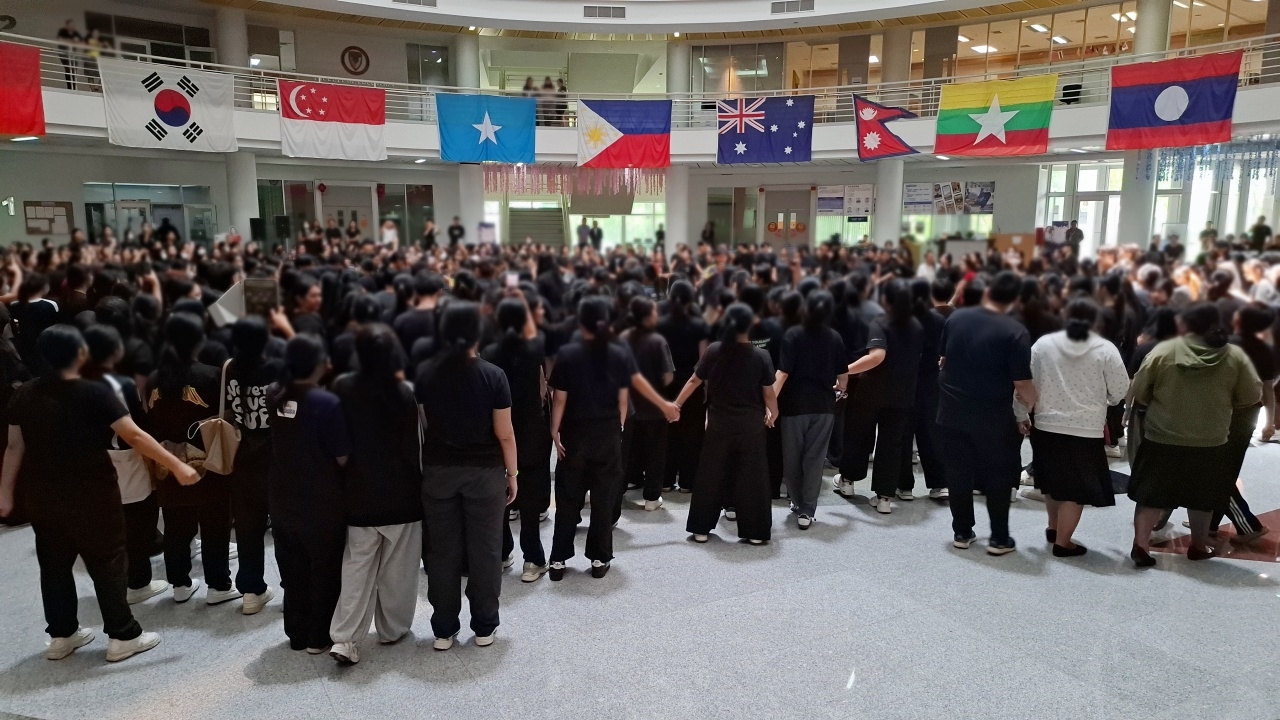
More than 600 nursing students from a prominent university rallied to demand answers about the removal of their dean. They pressed the administration to clarify the issue of appointing a dean who is not Thai, fearing it might affect their professional license. They also called for solutions to dormitory problems including elevators, water, and electricity. The vice president has provided explanations.
On 11 Sep 2026 GMT+7, reporters reported that on the morning of 10 Sep 2026 GMT+7, over 600 nursing students dressed in black gathered in the lobby of Shinawatra University, Bang Toei Subdistrict, Sam Khok District, Pathum Thani Province. They demanded clarity from administrators after the dean was replaced, fearing it could affect course accreditation and their eligibility to take the professional license exam. They were aware that the new dean might be a foreigner and requested an apology from a deputy dean who had spoken harshly to the student group.
At the same time, they raised concerns about dormitory living conditions, including frequent elevator malfunctions, discolored tap water, and recurring electrical issues. These problems disrupted students' convenience and comfort. They urged the university to urgently address these issues and ensure safety. Police officers from Sam Khok Police Station, security police, local leaders, village heads, and volunteer defense guards were present to maintain order during the gathering.
Initially, nursing students from Shinawatra University explained that over 600 students from years 1 to 4 had gathered to urge university administrators to clarify the facts about the replacement of Assistant Professor Nualyai Phisachat, the vice president and dean of the nursing faculty. This change has caused anxiety about their education's future, course accreditation, and the right to take the professional nursing license examination.
Beyond administrative and professional accreditation issues, they also asked the university to address quality-of-life problems on campus, especially in student dormitories, where many reside. They wanted the administration to promptly manage and effectively resolve infrastructure problems within the buildings.

They highlighted the dormitory elevator system, which often breaks down, inconveniencing students, especially those living on higher floors. Sometimes students had to wait a long time to use the elevator, causing distress and raising safety concerns.
They also pointed out issues with the dormitory's tap water system, which affected daily life activities like bathing, washing, and using basic utilities. Students requested the university inspect and fix the water system to ensure continuous and adequate service.
Electrical system problems were another concern students wanted the administration to address. These issues disrupted daily living in the dormitories, so they called for a thorough inspection of electrical systems and equipment and for preventive measures to avoid recurrence.
Students stated that dormitories are where they spend most of their time, so these facilities should be safe and fully functional. Nursing students, who have heavy academic and practical training commitments, need a suitable living environment that does not add to their burdens.
Additionally, student representatives requested that university administrators personally inspect the dormitory issues, listen directly to student complaints, and develop clear timelines for fixes, including elevator repairs, water system improvements, electrical inspections, and overall utility maintenance within the buildings.
Regarding the administrative changes, the student group continued to demand clear explanations from the university about the reasons and management plans, particularly concerning course accreditation and eligibility to take the professional nursing license exam, which are crucial for all students' futures.
Assistant Professor Nualyai revealed that nursing students at the institution have the right to take the professional licensing exam through the Nursing Council and have official certification in writing from the council. She confirmed that accreditation processes will proceed according to established procedures.
However, students still want the university to issue an official statement to reassure them about their education, practical training, course accreditation, and access to licensing exams—especially fourth-year students nearing graduation and preparing to enter the profession.
Student representatives emphasized that the gathering was not intended to cause disruption but was a legitimate exercise of their rights to urge the university to listen and seriously address issues related to faculty management, educational rights, and dormitory living conditions.
Another important matter raised was that all students demanded that a certain vice president, who had spoken harshly to nursing students, come forward to explain or apologize. The students shouted their demand, warning they would continue to gather there if this was not done.

Later, Associate Professor Dr. Ratburut Khumsap, vice president of Shinawatra University, clarified the rumors about the nursing dean change. He confirmed it was not a sudden dismissal or expulsion but a role adjustment. The dean was reassigned as an advisor and remains a regular faculty member without salary reduction. The change was due to the dean expressing work-related stress, and administrators adjusted the role to reduce pressure. This was a normal administrative restructuring done with prior discussion, and it would not affect student learning.
Regarding students’ concerns about the new dean’s qualifications and degree accreditation, the vice president clarified a key point: the new dean must be Thai. He denied rumors about appointing a Chinese dean and confirmed that according to the institution and Nursing Council rules, the dean must be Thai. The selection process is underway among 80–88 nursing faculty members to ensure continuity.
As for course accreditation and documentation, these follow standard procedures and do not depend on individuals. The new dean can immediately sign approvals and certifications after appointment, and the university has informed the Ministry of Higher Education, Science, Research and Innovation and the Nursing Council accordingly. The university assures students that all processes meet standards and the Nursing Council’s recognition is guaranteed.
Reporters also noted that the gathering began around 09:00 on 10 Sep 2026 GMT+7 and included discussions and negotiations with student representatives. After more than four hours, a resolution and mutual understanding were reached, satisfying the students who then returned to classes around 13:30. This peaceful protest lasted over four hours.