

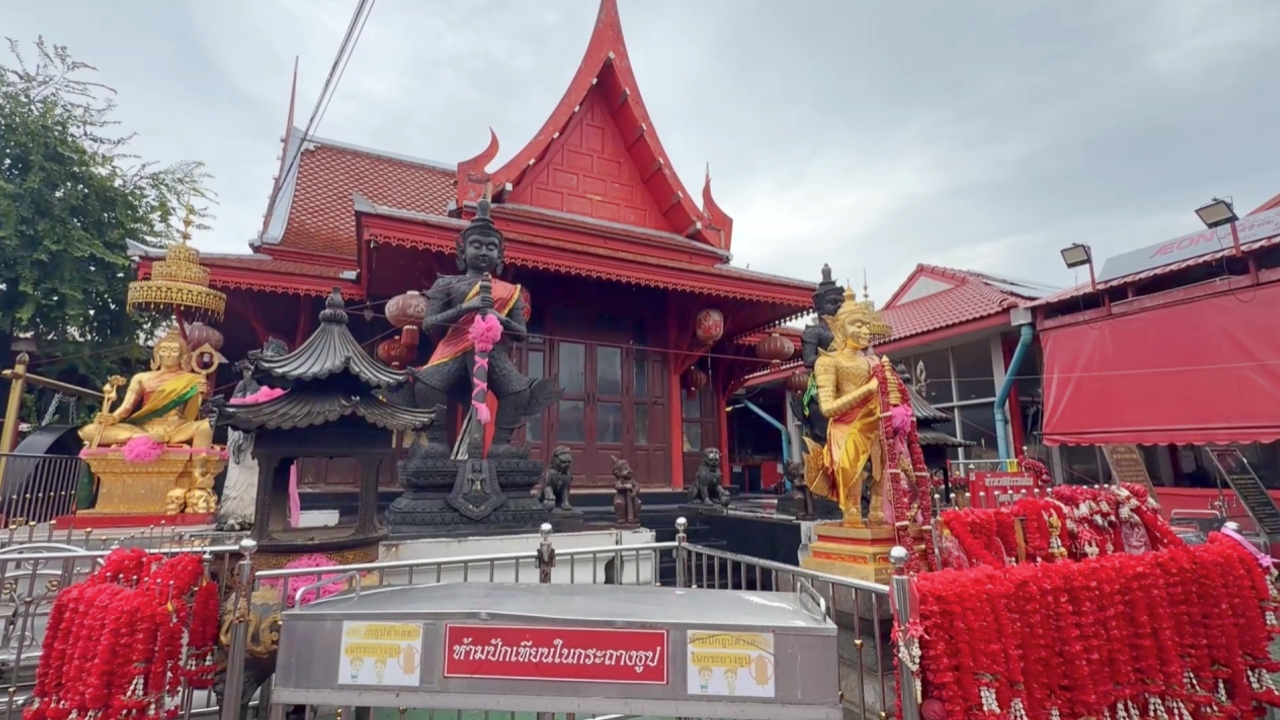
A disciple and the administrator of Chulamani Temple refuted the controversy after being linked to a “famous Amphawa temple,” affirming they never requested outsiders to produce amulets.
Following the recent controversy involving “Samichote and Seeka Ae” which escalated into a drama in a “famous Amphawa temple” in Samut Songkhram province, currently a widely debated topic online. Although the original information did not clearly name the temple, many have pointed to "Chulamani Temple" due to its renowned status.
This morning (14 Sep 2026), reporters visited Chulamani Temple in Bang Chang Subdistrict, Amphawa District, Samut Songkhram Province to verify facts. The atmosphere inside the temple remained normal, with staff and disciples performing their duties as usual.
Meanwhile, visitors continued to come and pay respects to sacred objects. On Fridays, Saturdays, and Sundays, the temple still sees many visitors, while weekdays have fewer due to continuous rain.

Mr. Wiwat Tohmuean, administrator of Chulamani Temple, said that from the widely shared messages mentioning only a famous temple in the central region or Amphawa District, he personally does not believe it refers to Chulamani Temple, as there are many renowned temples in the central region with numerous visitors.
Regarding the claims about requesting outsiders to produce amulets, throughout his tenure as administrator and close association with the temple, he has never known or seen Chulamani Temple ask outsiders to create amulets. The temple’s policy is that if amulets are made, the temple handles the process in compliance with laws and Sangha regulations. Proceeds must have clear purposes, such as temple restoration, supporting Buddhist activities, or public welfare, not personal gain.
Mr. Wiwat added that in the past, charitable organizations may have requested permission to produce amulets to raise funds for their activities or Kathin ceremonies. If the purpose and quantity were clear and the abbot approved, permission might be granted case-by-case, but never for private profit.

Mr. Thanyaboon Choosawat, 41, a temple disciple, said he does not know how the controversy came to be linked to the temple. However, years ago he saw temple personnel bringing a group of about 4–5 outsiders to meet the abbot to request permission for amulet production. After discussion, the abbot refused, and the group left.
Mr. Thanyaboon said he witnessed the request but the abbot rejected it. He cannot confirm if this is related to the current controversy—it’s only a personal observation without evidence. He affirmed the abbot is kind and has always helped the community.

Mr. Kanokdej Likhitwattanaset, 51, administrator of Chulamani Temple, said that after the news emerged linking the temple to the controversy, those inside the temple have no information on whether the issue concerns anyone related to the temple. Everyone continues their duties as usual. The abbot still performs religious and daily routines and meets visitors.
Mr. Kanokdej noted the news has not disrupted temple activities. On holidays, many visitors still come as usual, while on weekdays or rainy days, visitor numbers drop slightly but overall remain normal.
He urged the public to thoroughly verify information before accepting it. If facts exist, they should be clearly disclosed to avoid misunderstandings. People with doubts are welcome to inquire at the temple and should not jump to conclusions based on partial information.

So far, the original post has not clearly named any monk or temple. Any links to a specific temple or individual remain speculation online. Clear evidence from the original poster and statements from those involved are awaited.