

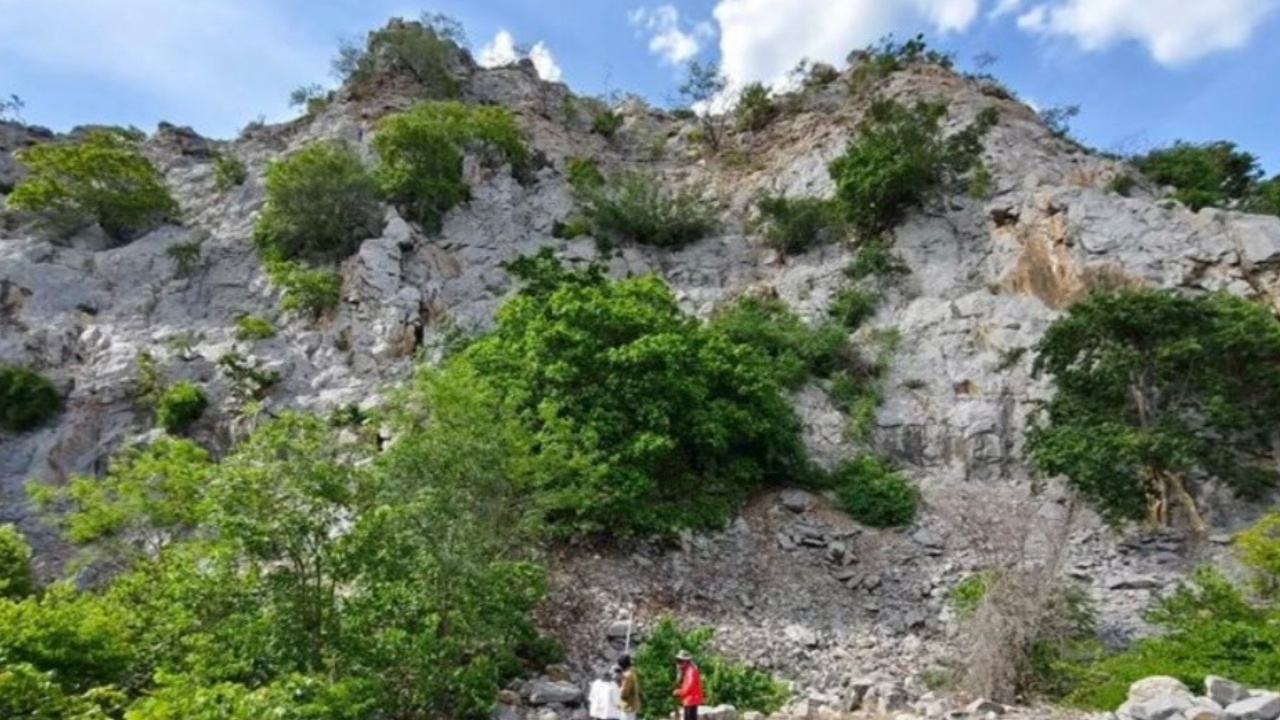
The Ministry of Natural Resources and Environment gives approval. "Khao Somphot" in Lopburi Province is registered as the 29th fossil site, moving forward with integrated development towards conservation, research, tourism, and sustainable community benefits.
At 13:30 on 15 Sep 2026 GMT+7, Mr. Suchart Chomklin, Minister of Natural Resources and Environment, advanced conservation and development of the country's fossil sites. On this day, Dr. Rawiwat Phuridetch, Permanent Secretary of the Ministry, assigned Mr. Nipon Jamnongsirisak, Deputy Permanent Secretary, to chair the 2/2569 meeting of the Fossil Protection Committee. Mr. Suwapak Imsamut, Deputy Director-General of the Department of Mineral Resources, served as committee member and secretary, joined by representatives from related agencies and experts. The meeting took place in the 17th-floor conference room of the Ministry and via video conference.
At this meeting, participants jointly considered key strategies for conserving and developing fossil site areas. They approved in principle the draft integrated development plan for the Alatoconchid bivalve fossil site at Khao Somphot (Khao Raberd Hin), setting directions for appropriate management and utilization of the area. The development approach focuses on four areas: conservation; research and knowledge transfer; infrastructure, utilities, and facilities development; and geotourism and community economy.
Additionally, the committee approved registering the Alatoconchid bivalve fossil site at Khao Somphot (Khao Raberd Hin), Chai Badan District, Lopburi Province, covering 41 rai 2 ngan 48.4 square wah, as the 29th registered fossil site under Section 14 of the Fossil Protection Act B.E. 2551 (2008). The meeting also approved the draft Department of Mineral Resources announcement regarding this registration, including the site map appended to the announcement, and assigned the secretariat to proceed with related actions.
This registration of "Khao Somphot" as the 29th fossil site marks an important step in protecting the nation’s geological heritage by laying the foundation to develop the area into a center for fossil study, research, and education. It also promotes geotourism and systematic benefits for local communities, aiming to preserve the fossil site's value alongside creating sustainable opportunities and advantages for residents in the area.