

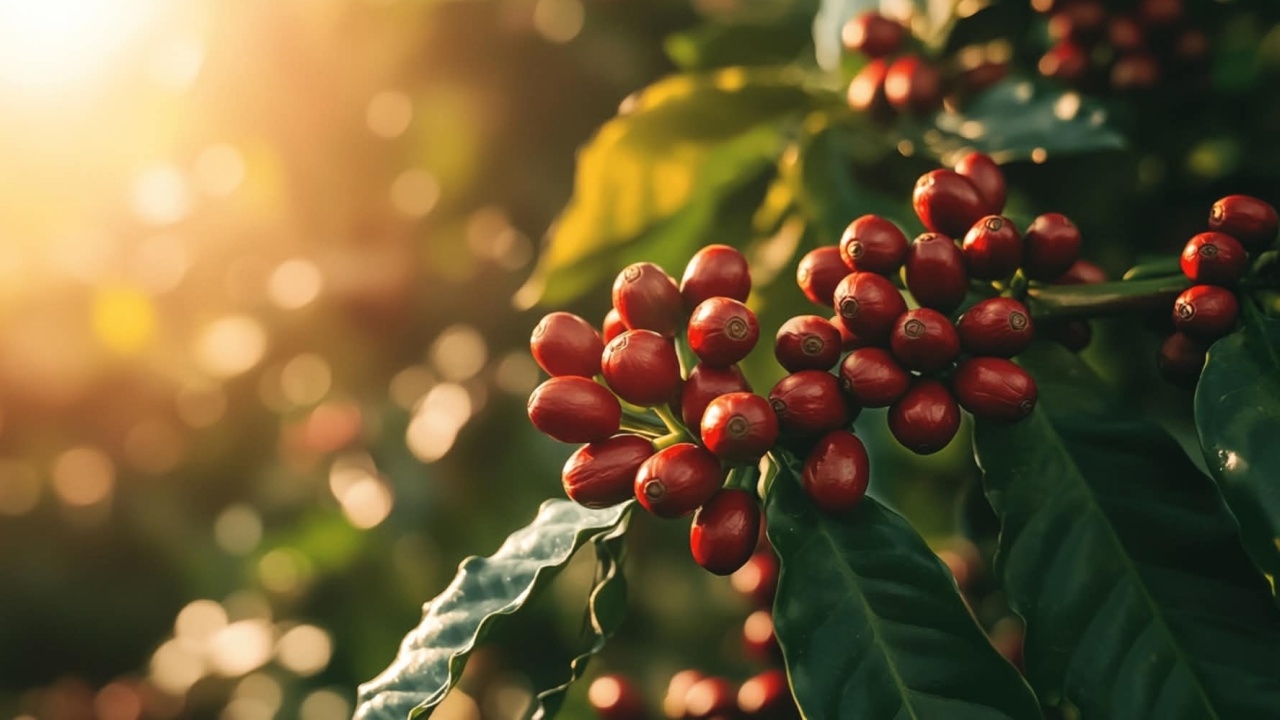
"Central Tham" is advancing efforts to connect four northern coffee-growing communities to increase product value, matching Thailand's steadily growing coffee market and promoting forest preservation for future generations to come.
On 17 Sep, reporters noted that "Central Tham" (CENTRAL THAM), a sustainable social and environmental initiative by Central Group, continues its mission by linking four northern coffee-growing communities to boost production while conserving forest areas.
The coffee market in Thailand is steadily expanding. Data from the Department of Business Development, Ministry of Commerce, shows the Thai coffee market value at around 65 billion baht in 2025, up 8.33% from the previous year. Thais consume over 340 cups per person annually, increasingly valuing quality, taste, and origin. Kasikorn Research Center estimates that in 2026, the beverage shop market—including bakeries and ice cream shops—will be worth about 94 billion baht, growing 5.1% year-on-year. This reflects opportunities for quality coffee from communities with unique identities and origin stories, which can differentiate and add value to their products. This aligns with Central Tham’s approach supporting northern coffee communities by enhancing product quality, processing, product development, storytelling about origins, and market linkage, enabling farmers to add value to their own crops. Additionally, forest coffee cultivation and agroforestry offer alternative income streams and reduce reliance on monoculture.
Currently, Central Tham collaborates with four northern coffee communities: the Phu Chi Duen Organic Forest Conservation Coffee Cooperative in Chiang Rai; the Mae Khong Kha Brave Farmer Cooperative in Chiang Mai; the Coffee De Hmong Mon Pruk Cooperative in Nan; and the Mae U Kho Luang Pesticide-Free Coffee Cooperative, Village 5, Mae Hong Son. Each area has distinct features and potential, which Central Tham further develops to suit the community and market opportunities.

Reporters further noted that Phu Chi Duen Forest Conservation Coffee represents a key model area. The Phu Chi Duen Organic Forest Conservation Coffee Cooperative in Chiang Rai has operated since 2017, with 84 members and over 1,500 rai of forest-conserving coffee plantations. They grow 100% Arabica coffee at elevations between 1,300 and 1,600 meters above sea level, which provides ideal climate for quality coffee. Central Tham supports the community in product development, processing, establishing a roasting facility, and market connections. The site also serves as a learning center and coffee processing facility, offering income from coffee and educational tourism. About 3,000 visitors have come to learn so far. Product development and processing generate roughly 5 million baht in community income. Phu Chi Duen coffee is not limited to raw sales but is developed into value-added products that tell the story of the origin and the concept of coffee cultivation alongside forest care. This motivates the community to value natural resources as a sustainable income source.
Mae Khong Kha’s shade-grown coffee provides an alternative to monoculture farming. The Mae Khong Kha Brave Farmer Cooperative in Mae Chaem, Chiang Mai, supported by Central Tham since 2020, has 50 members cultivating organic Arabica Catimor coffee under large trees at 1,000 to 1,100 meters elevation. Their coffee is notable for floral and fruit notes, smoothness, and natural sweetness. The community also diversifies agriculture by promoting other cash crops such as macadamia and avocado to reduce monoculture dependence and provide additional income sources. Mae Khong Kha’s coffee is processed into roasted beans and beverages, then connected to consumers via Good Goods. This allows the community to add value by offering products with stories and better market access, with part of the income reinvested into local occupational development.

Mon Pruk builds its identity through coffee quality and is preparing to pursue Geographical Indication (GI) registration. The Coffee De Hmong Mon Pruk Cooperative in Thung Chang, Nan, has operated since 2022 with 110 members. They conserve and restore over 120 rai of forest while upgrading coffee quality and value. The cooperative aims to create a distinct identity for Mon Pruk coffee and is in the process of GI registration to raise awareness and add value. Their coffee quality is nationally recognized: Mon Pruk farmers won first prize at the 2026 Thai Specialty Coffee Awards in all three processing methods and first prize at the 2026 Cup of Excellence Thailand. This demonstrates the community’s coffee potential and opportunity to enter the Specialty Coffee market, which values quality and origin uniqueness.
Mae U Kho Luang is a new area where Central Tham is laying foundations for quality coffee. The Mae U Kho Luang Pesticide-Free Coffee Cooperative, Village 5, Mae Hong Son, has been supported since 2025 and has 27 members. They grow coffee in the fields of wild sunflower blossoms at over 1,600 meters elevation, with distinctive flavors and aromas including almond, honey, citrus, and floral notes. Central Tham focuses on establishing production foundations and enhancing community capacity—from purchasing coffee cherries, promoting forest planting with JAVA coffee seedlings, to supporting processing facilities and necessary equipment. This prepares the community to improve processing, add product value, and ready themselves for future market linkage.

Reporters also noted that collaboration with these four communities reflects Central Tham’s approach to foster community development alongside market opportunities by leveraging each area’s potential into quality products with stories and better consumer access. For community coffee, value lies not only in a cup’s taste but also in the growers, origin, and forest that nurtures the crop. Linking community resources and wisdom with markets is a key mechanism to increase farmers’ income, motivate forest conservation, and enable sustainable community economies.
Those interested in tasting and experiencing forest conservation coffee from Thai communities—including Phu Chi Duen, Mae Khong Kha, Mon Pruk, andMae U Kho—can support these coffees at Good Goods stores in 10 locations: CentralWorld, 1st floor, Dazzle zone; Jing Jai Market, Chiang Mai; Central Phuket Festival, 2nd floor, Skywalk zone; Central Pattaya, ground floor; Central Park, LG floor; Central Krabi, Palm Square zone; Central Chiang Mai Airport, 1st floor; Central Chidlom, 6th floor; Central Patong, 1st floor; Robinson Ocean Jangceylon, 1st floor. Proceeds are reinvested in community development under Central Tham's social enterprise.