

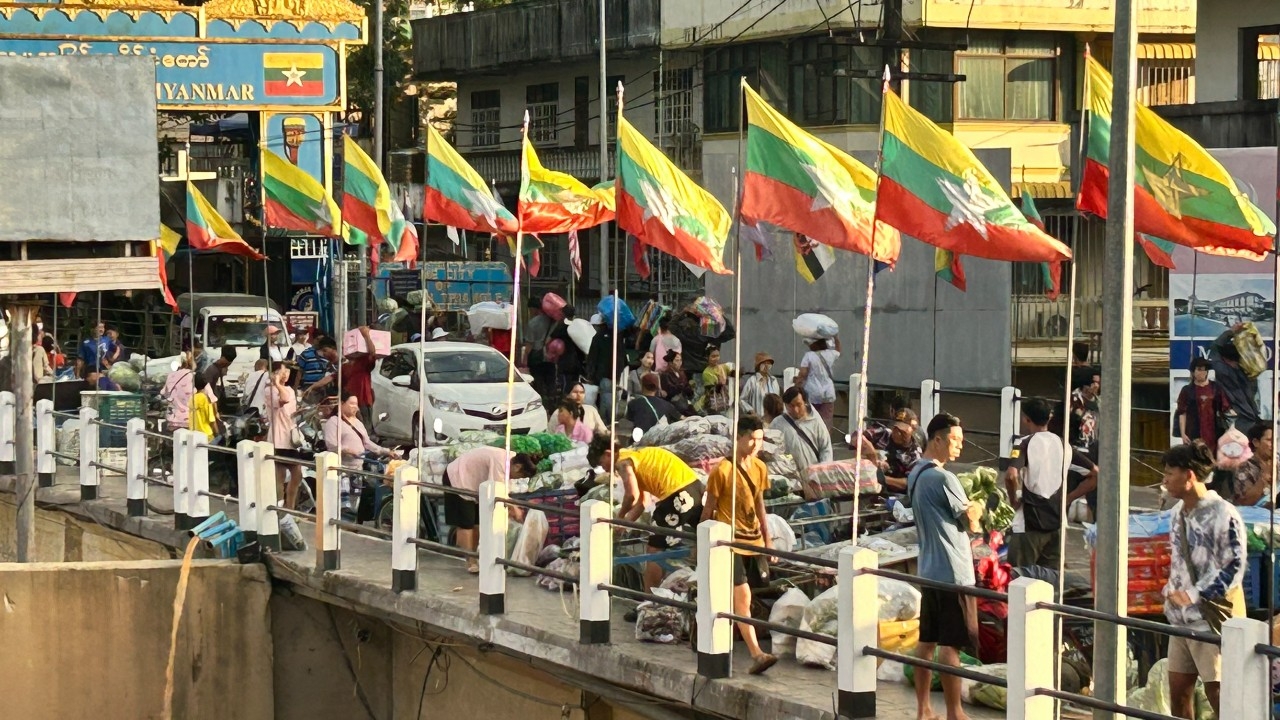
Chaos erupted on the Mae Sai-Tachileik bridge after Myanmar authorities ordered a halt on imports of Thai goods, causing costs to soar. Egg prices in Tachileik are expected to rise to 12-15 baht per egg.
Myanmar authorities at Tachileik temporarily banned vans, motorized three-wheelers, and sidecar motorcycles from importing all goods from the Mae Sai 1 checkpoint. This followed an incident on 15 Sep 2026 when Tachileik officials seized 12.767 tons of frozen meat and fruits and vegetables from Thailand, accusing drivers of smuggling without authorization. Twenty-five small vehicle drivers were prosecuted for unauthorized importation.
An exemption was made allowing goods to be handed over for people to carry across the bridge for personal consumption only, prohibiting whole vehicles from crossing to sell goods. As a result, locals and traders adapted by placing goods mid-bridge and carrying bags across in small loads, repeatedly walking back and forth to fetch more items.

At approximately 07:00 today (21 Sep 2026), heavy confusion and chaos erupted on the first Mae Sai-Tachileik border bridge in Mae Sai district, Chiang Rai province, shortly after the checkpoint opened at 06:00. Many Thai and Myanmar traders brought fresh goods, vegetables, fruits, and frozen food, rushing to cross into Tachileik market in Myanmar.
Myanmar authorities have temporarily suspended imports of frozen foods and various other items, citing lack of standard inspections and unpaid Myanmar taxes. This disruption has forced daily wage traders, unable to cross goods as usual, to halt in the middle of the border bridge, causing disorder.
The chaos not only affected border trade but also caused widespread traffic congestion on the bridge. Vans transporting students from Tachileik were stuck amid traders carrying goods and parked carts blocking traffic. Thai officials had to intervene to restore order, urging traders to use the 06:00–09:00 time slot for loading and unloading on the bridge.
Due to Myanmar's new measures, traders must carry goods about 100 meters across to the Tachileik checkpoint to place items in a collective area. This inevitably increases transportation costs, with laborers charging approximately 30–60 baht per load (each carrying at least two trips), plus about 10 baht per person for crossing the border labor.
Additionally, gathering goods amid the chaos risks mix-ups, losses, and misplacements, all of which add extra costs to the final product prices.

Mr. Saeng (pseudonym), 69, a resident of Pha Taek village, Wiang Pang Kham subdistrict, Mae Sai district, Chiang Rai, originally from Kengtung, Myanmar, said he had never witnessed such chaos on the bridge before. He expressed sympathy for the people of Tachileik facing high prices and shortages, highlighting the clear inequality—wealthier groups are less affected, but the poor struggle to afford basic food.
Mr. Saeng added that egg prices in Tachileik have risen close to 12 baht per egg, and in remote towns may reach 15 baht each. If this situation continues, it could lead to petty theft issues in the area.
Reports also indicate that Tachileik authorities have banned the sale of Thai liquor, beverages, and goods, warning of heavy fines for violations. Small shops wishing to sell Thai liquor legally face tax burdens equal to the retail price, amounting to hundreds of thousands of baht, causing financial distress and forcing many small businesses in Tachileik to cease operations due to unsustainable costs.