

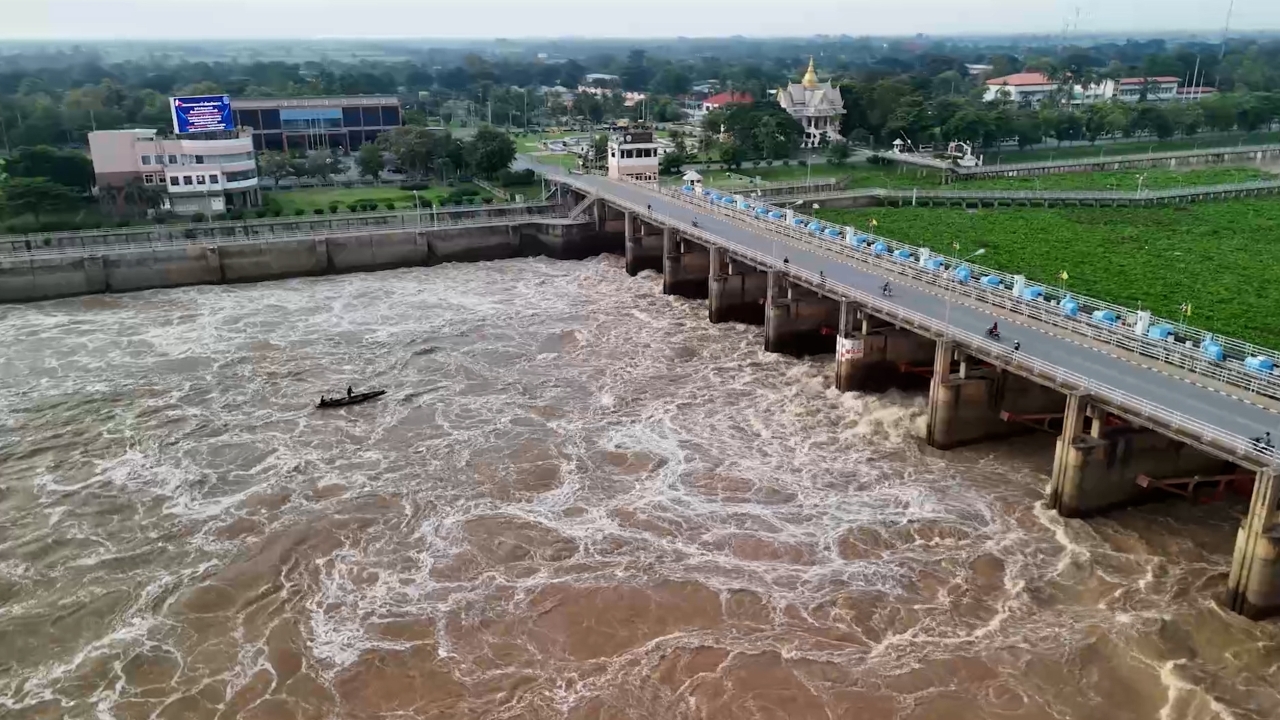
Floodwaters surge at Chao Phraya Dam with an urgent warning to increase daily discharge nearing 2,000 cubic meters per second, urging 11 provinces in the Chao Phraya basin to monitor closely.
On 23 Sep 2026 GMT+7, Mr. Det Lekvichai, Deputy Director-General acting for the Royal Irrigation Department Director-General, issued an urgent announcement, the fifth update on the Chao Phraya basin situation, to governors of 11 provinces: Uthai Thani, Chai Nat, Sing Buri, Ang Thong, Phra Nakhon Si Ayutthaya, Suphan Buri, Lop Buri, Pathum Thani, Nonthaburi, Samut Prakan, and Bangkok.
According to the Meteorological Department's third warning about heavy to very heavy rainfall across Thailand affecting 23–27 Sep 2026 GMT+7, covering the North, lower Northeast, Central, East, and South regions, this may cause flash floods and landslides, especially near mountain slopes close to waterways and low-lying areas.

Forecasts for the next 1–9 days indicate that on 23 Sep 2026 GMT+7 at water station C.2 in Mueang district, Nakhon Sawan province, peak flow is expected at about 1,800 cubic meters per second, plus 300–400 cubic meters per second from tributaries, resulting in 2,100–2,200 cubic meters per second inflow above Chao Phraya Dam. Additionally, irrigation diversion on both sides of the Chao Phraya totals 400–450 cubic meters per second.

The Royal Irrigation Department must increase discharge downstream of Chao Phraya Dam to between 1,500 and 2,000 cubic meters per second, causing water levels to rise by approximately 0.70–1.70 meters in low-lying areas outside flood barriers in Sena, Phak Hai, Bang Ban, Phra Nakhon Si Ayutthaya, Bang Pa-in, and Bang Sai districts of Phra Nakhon Si Ayutthaya province, as well as Wiset Chai Chan and Pa Mok districts of Ang Thong province.
If discharge exceeds 2,000 cubic meters per second, wider impact will affect Wat Sing in In Buri district, Mueang district, Phrom Buri district, and Wat Chaiyo in Ang Thong province.

To prepare for this water situation, the Royal Irrigation Department warns the 11 provinces in the Chao Phraya basin, related agencies, and residents living along both banks of the Chao Phraya and Noi rivers to monitor water conditions closely.