

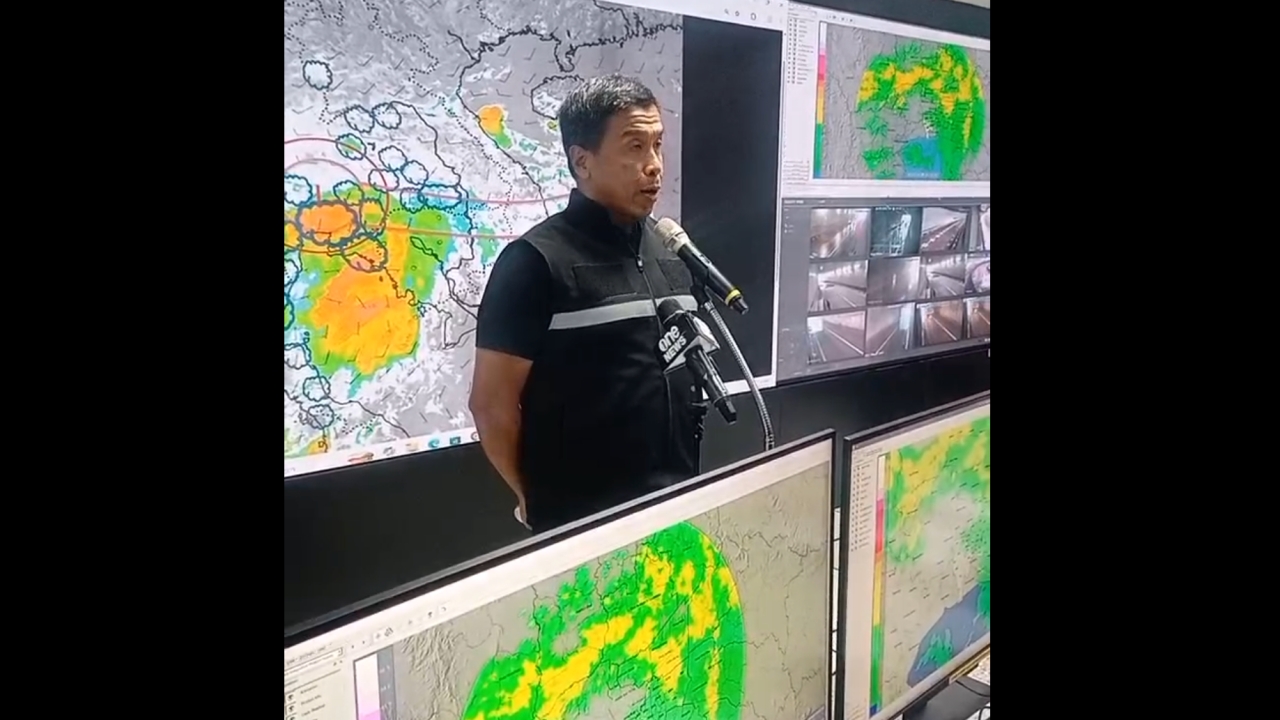
Chadchart revealed that accumulated rainfall in Bangkok has exceeded 300 millimeters, with the situation remaining stable. He expects the rain to decrease, which will help speed up water drainage and ease the situation within 2 to 3 days. He explained that the delay in issuing warnings was due to the difficulty of accurately predicting rainfall, requiring high precision, and emphasized that reports are based on the current situation.
On 26 Sep 2026 GMT+7, Chadchart Sithiphan, the Bangkok governor, reported on the flooding situation in Bangkok. He stated that as of 13:10, since 4 p.m. on 24 Sep, rainfall in Bangkok exceeded 300 millimeters, a very high amount, comparable to the 1983 storm that caused heavy rain around Minburi, Phaya Suren, and other areas, all exceeding 300 millimeters.
Initially, rain fell mainly in the eastern side, but on the second day it spread across Bangkok, with persistent rain over Bangkok, Pathum Thani, Nonthaburi, Chachoengsao, and Samut Prakan. Yesterday’s heavy rain led to over 300 millimeters accumulating across Bangkok in about a day and a half, prompting the declaration of the entire city as a disaster zone to facilitate relief efforts.
According to the Meteorological Department’s forecast model, rainfall will begin to ease this afternoon between 14:00 and 15:00, continuing to lessen afterward. If this forecast holds true, it will enable Bangkok to accelerate drainage of accumulated water more effectively.
Currently, heavy rainfall mainly affects the Phra Nakhon side, while Thonburi side is less impacted. The Phra Nakhon area has about 223 million cubic meters of rainwater, whereas Bangkok’s pumping capacity ranges between 1,000 and 1,200 cubic meters per second.
If rain stops and no new water enters the system, it is expected to take about 2 to 3 days to drain the accumulated water. However, initially, water from surrounding areas, known as side flow, may continue to enter, so water levels might not drop immediately. Once inflows decrease, water levels will fall more rapidly.

The governor stated that a major problem now is that many canals are at critical high water levels. Monitoring shows many areas are in a crisis status, except along the Chao Phraya River where Bangkok’s pumping capacity is high, so the riverbank areas are not yet critically affected.
However, water from inner areas still needs time to reach pumping stations, so continuous pumping is necessary. All pumping stations, including drainage tunnels and pumps along the Chao Phraya River, are operating at full capacity, with the Phra Nakhon side able to pump about 1,100 cubic meters per second.
Chadchart said Bangkok has coordinated with relevant agencies, especially water management units, to control water volume from upstream areas potentially flowing into Bangkok. The plan is to discharge as much water as possible through the Rangsit canal directly to the Chao Phraya River to prevent inflow into Bangkok.
Some areas may have water flow toward the Phra Ong Chao Chayanuchit canal, but management aims to minimize impact on Bangkok. Meanwhile, Samut Prakan, also affected by heavy rain, has high water levels limiting its capacity to receive water from Bangkok. Similarly, Nonthaburi and Pathum Thani have high water volumes and are urgently draining sideways, requiring joint water management among all agencies.
Additionally, some water is being diverted toward Chachoengsao province, especially via Khlong Saen Saeb, which remains in a critical condition.
Currently flooded areas mainly have canals with high water levels overflowing onto roads and communities. These include Khlong Prem Prachakorn affecting Don Mueang, Khlong Ladprao impacting Sena, Wang Hin, and Phahonyothin areas, and Khlong Saen Saeb affecting New Phetchaburi Road and Ekkamai, as well as Khlong Prawet Burirom and Khlong Phra Khanong impacting Suan Luang, Phatthanakan, and Lat Krabang.
There are also areas along Khlong Thawi Watthana that, while not widely affecting roads, have homes impacted where residents must elevate their belongings.
Chadchart added that Bangkok reports at least 13 roads affected by flooding and high canal water levels, including Ekkamai Road with pump system issues due to flooding at pump sites causing partial shutdowns and reducing drainage efficiency; Phong Phet Intersection; Ngam Wong Wan Road; Vibhavadi Rangsit Road from Chatuchak to Thai Airways; Ramkhamhaeng Road near Ramkhamhaeng University pressured by Khlong Saen Saeb; Lat Krabang Road at Kingkaew Intersection affected by Khlong Prawet; Senanikom Road affected by Khlong Ladprao; Chaeng Watthana Road from Lak Si Intersection to expressway affected by Khlong Prem Prachakorn, with some spots flooded about 50 centimeters; Srinagarindra Road; Din Daeng Road from Din Daeng to Asoke Intersection; Phahonyothin Road from Saphan Kwai to Ari Soi; Suwinthawong Road from Minburi to Wat Saen Suk; Ratchadaphisek and Lat Phrao Roads at Ratchada-Lat Phrao Intersection.
There are also many smaller flooded spots throughout the city. Bangkok urges residents to monitor conditions through official websites and traffic information channels. Locations marked as critical or unusually congested might be due to flooding and should be avoided.
Chadchart said the main impact on residents comes from homes and communities along canals where high water levels overflow into properties. Currently, Bangkok has set up 233 temporary shelters, mostly using local schools as shelters due to proximity and capacity.
About 981 people are currently staying in shelters, which can accommodate approximately 15,000 individuals in total.

For bedridden patients, Bangkok has evacuated about 36 individuals from risk areas. Some require hospital transfer due to medical equipment or ventilators. The city has received support for transportation from various agencies, including the military and disaster prevention units, along with boats for evacuation, prioritizing vulnerable groups and those still trapped.
Chadchart said Bangkok has data on vulnerable groups and bedridden patients, as public health centers regularly conduct home visits. This information aids in monitoring and providing assistance. Evacuations from risk zones will continue and are expected to complete by tomorrow.
Regarding citizen care, Bangkok assesses no overall food shortages as travel restrictions mainly affect canal communities, while main roads have alternative routes. Nonetheless, all district offices are directed to establish central kitchens to prepare and distribute meals to flood-affected residents unable to cook or procure food normally.
Residents needing sandbags can contact their local district office. Those able to pick up sandbags themselves can do so at the office; those unable to travel can coordinate community requests for delivery through the district office.
In case of bedridden patients or health emergencies, residents should call 1669. For general assistance, flood reports, sandbag requests, or other local issues, contact the district office directly or call 1555, Bangkok’s hotline linked with Traffy Fondue to coordinate relevant agencies.
For those concerned about additional heavy rain possibly affecting vehicles, Bangkok has coordinated with agencies to open temporary free parking spaces at designated locations, including MRT park-and-ride buildings, Chaeng Watthana Government Complex in Lak Si, all Central Department Store branches, The Mall branches, Fashion Island, and Lotus. Details are available via Bangkok’s public communication channels.
Chadchart advised that if residents remain uncertain about the situation or see intensifying rain, they should park vehicles in safe locations beforehand to prevent damage from rising water levels.
Regarding travel and work on Monday, Bangkok plans to request that non-essential government staff work from home to reduce travel and alleviate traffic congestion.
Bangkok schools under city jurisdiction will consider closure on Monday, despite ongoing exams and the term not yet ending, aiming to reduce travel burdens for students, parents, and teachers and ease road traffic. The city expects rain and flooding to ease if no further rainfall occurs as forecasted.
Overall, the current situation is stable, and without additional rain, gradual relief is expected. However, more rain could raise water levels as Bangkok cannot precisely predict where or how much rain will fall. Residents are urged to monitor the situation closely and, if heavy rain or risks increase, to move valuables, vehicles, and property to safe areas, especially the city’s designated temporary vehicle shelters.
Chadchart mentioned that Bangkok has previously created flood scenario models for about 300 millimeters of rain to assess potential impacts. However, the actual event is more complex due to differences in rainfall volume, terrain, water flow, and drainage capacity across areas. The real situation did not involve widespread flooding matching the model but provides critical data to improve future models for better planning.
He noted that 300 millimeters of rain is challenging to manage. To prevent any flooding, Bangkok must enhance drainage capacity. Currently, major bottlenecks exist, especially canal capacities. Bangkok’s drainage involves collecting rainwater from streets into pipes, then canals, flowing to floodgates before pumping into the Chao Phraya River, with drainage tunnels playing a key role in improving efficiency.
Therefore, increasing capacity to handle 300 millimeters requires investment in upgrading canals and drainage infrastructure, planned for the future. This includes developing drainage tunnels like the project augmenting the Prawet canal system to Bueng Nong Bon pond, currently funded and under bidding. Once completed, it will improve drainage from Prawet canal to the pond and subsequently to the Chao Phraya River more rapidly. He emphasized that even with improvements, heavy rain around 300 millimeters may still cause some flooding due to system and terrain limitations.
When asked about criticism regarding delayed warnings by Bangkok, Chadchart said the city issues continuous daily updates and reports on water levels and canal conditions. The main limitation is forecasting rainfall amounts in advance, as it is uncertain how much additional rain will fall after canals reach full capacity or how widespread it will be.
Hence, warnings require a certain confidence level. Meanwhile, Bangkok has alerted residents that many canals are at high and critical water levels.
Chadchart stated this event highlights the need to develop more accurate rainfall forecasting and alert systems. Previously, Bangkok relied on data from other agencies for situation assessment. There is a need to incorporate technology for more detailed and precise forecasting.
Forecasting exact rainfall amounts and flood-affected areas for the next day is complex. However, this event provides important data to improve future systems, as heavy rainfall around 300 millimeters may recur.
Asked about recovery time, Chadchart said it depends on whether additional rain falls. Without more rain, it should take about three days to drain water gradually. Initially, water levels may not drop quickly due to inflows from surrounding areas or side flows. Once inflows reduce and canal water levels decline, pumping effectiveness will become more apparent.
In some areas like Ekkamai, once water levels fall enough to allow full pump operation, drainage will accelerate, helping the situation to improve faster.
Regarding many residents facing vehicle breakdowns and impacts from flooding, especially in high-water areas where cars cannot move and remain stranded, Chadchart said discussions with traffic police and municipal officials have emphasized the need for active public communication and warnings in vulnerable zones, especially where flooding is deep or conditions fragile, advising people to avoid driving into such areas.
Because during high floods, residents may misjudge water depth, entering risky areas can cause vehicle failure and inability to move cars out, affecting owners and overall traffic management.
Bangkok urges residents to exercise caution when traveling, check water and road conditions before departure, and follow official advice, especially in areas with flood warnings, to prevent vehicle damage and reduce stalled-car problems that worsen traffic congestion.