

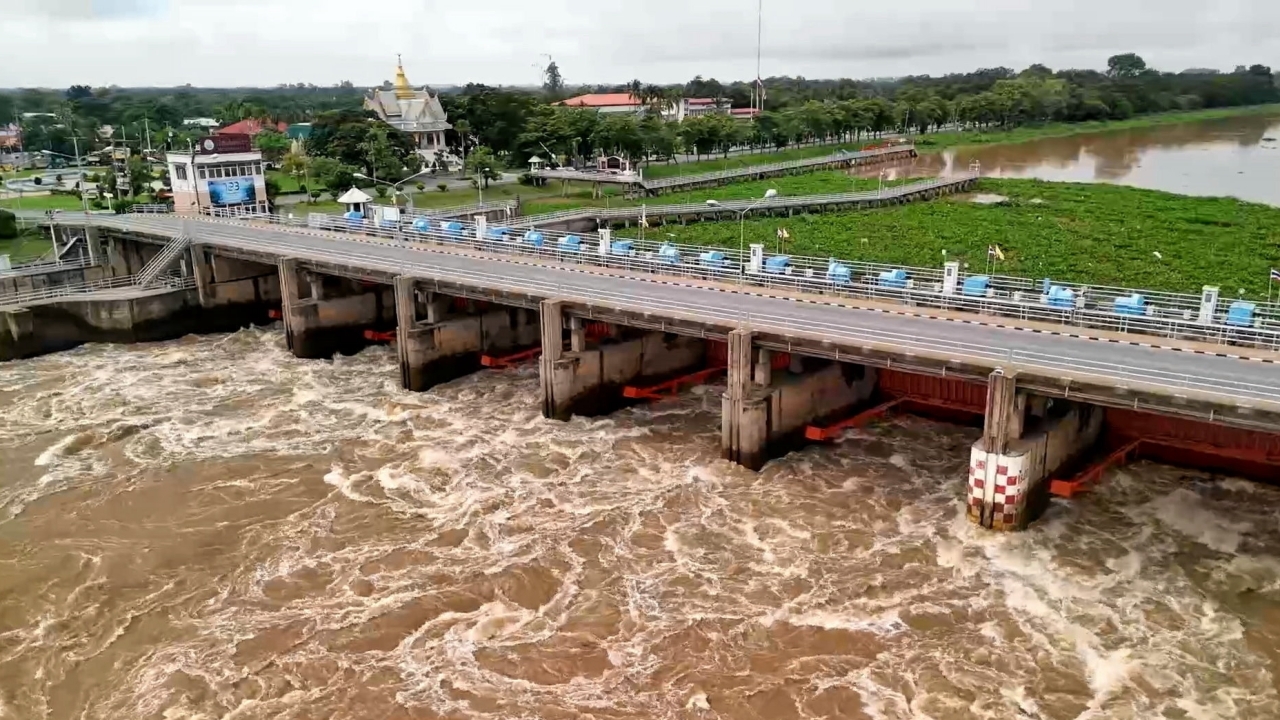
The National Water Resources Office (NWRO) announced an increase in water discharge through the Chao Phraya Dam to 2,200 cubic meters per second, resulting in a 1.00 to 1.20 meter rise in water levels downstream of the dam, and warned six provinces to be on alert for flood risks due to rising water levels.
On 29 Sep 2026 GMT+7, reporters reported that the National Water Resources Office (NWRO) issued a statement on monitoring impacts from adjusted water discharge at the Chao Phraya Dam. The NWRO has been tracking the Chao Phraya River basin situation, where current water flow at station C.2 in Mueang Nakhon Sawan District, Nakhon Sawan Province, ranges from 1,800 to 2,350 cubic meters per second. Water is being held back upstream of the dam by diverting approximately 500 cubic meters per second into irrigation canals on both the west and east sides, maximizing canal capacity. However, heavy rainfall in the Ping River basin has caused flow at station P.7A in Mueang Kamphaeng Phet District, Kamphaeng Phet Province, to increase from 700 to 1,700 cubic meters per second. Additional water from the Sakae Krang basin has joined, rapidly increasing water volumes entering the Chao Phraya River, raising levels in both upper and lower basin areas. To reduce impacts and prevent damage, it is necessary to increase water discharge through the Chao Phraya Dam to 2,200 cubic meters per second. This will raise downstream water levels by 1.00 to 1.20 meters from current levels. The following areas are identified as at-risk and require close monitoring:

To prepare for the situation, relevant agencies are requested to take the following actions:
1. Monitor, inspect, and repair riverbank embankments; promptly remove any waterway obstructions; plan appropriate water management strategies; adjust water management in large, medium, and small reservoirs, river flows, as well as drainage gates to coordinate from upstream to downstream, considering the effects of tidal fluctuations. Accelerate water discharge and drainage to accommodate expected heavy rainfall.
2. Prepare flood response plans, ready personnel and equipment, clear waterway blockages, clean drainage pipes, and integrate efforts to provide immediate assistance.
3. Publicize the water situation and issue advance warnings to residents likely to be affected, so they can prepare for timely evacuation if necessary.