

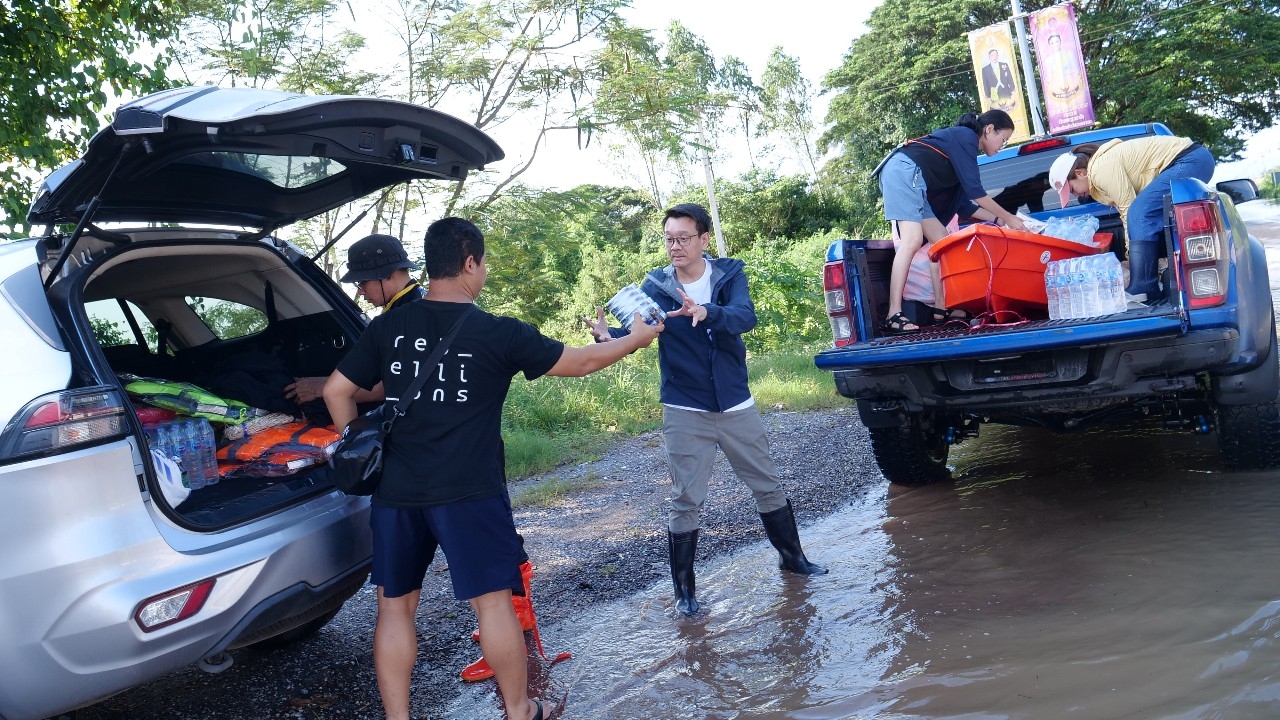
The Deputy Leader of the People’s Party visited Prachinburi, where residents of Si Maha Phot accused the government of late warnings and disorganized aid efforts.
On 29 Sep 2026 GMT+7, Mr. Weerayut Kanchuchat, Deputy Leader of the People’s Party, visited Prachinburi Province to monitor flooding, especially in Si Maha Phot District. Water levels rose rapidly and continuously, flooding roads and cutting off access, making even large vehicles unable to reach many areas.
After speaking with locals, Mr. Weerayut said a major problem was that government warnings lagged behind the real situation. Some residents were told to evacuate only after floodwaters had already risen significantly, despite the crisis beginning as early as the previous weekend. This left many stranded at home, unable to leave due to strong currents. Although rescue volunteers arrived to help, their efforts were uncoordinated and lacked centralized management, overburdening rescuers and leaving outsiders unfamiliar with local conditions.
Aid efforts also faced equipment shortages, especially motorized boats and qualified boat drivers needed to deliver food and relief supplies to communities. The Si Maha Phot Subdistrict Administrative Organization converted its office area into a central kitchen to prepare meals for distribution. The local People’s Party team contributed food ingredients, while officials expressed concern that slow water drainage might prolong the crisis.
Mr. Weerayut added that residents were also worried about contamination from industrial waste, since Prachinburi is an industrial city. During a field survey of rice fields, he and his team observed oily patches on the water surface, suspected to be chemicals or waste from factories. They urged relevant agencies to promptly inspect and officially sample the water, but so far no serious intervention has occurred.
Residents further criticized the government’s slow response and incomplete disaster area declarations, which failed to cover all affected zones. They stressed that urgent tasks include not only accelerating aid delivery and organizing volunteers efficiently but also issuing timely warnings and checking water quality to prevent further health and environmental risks.