

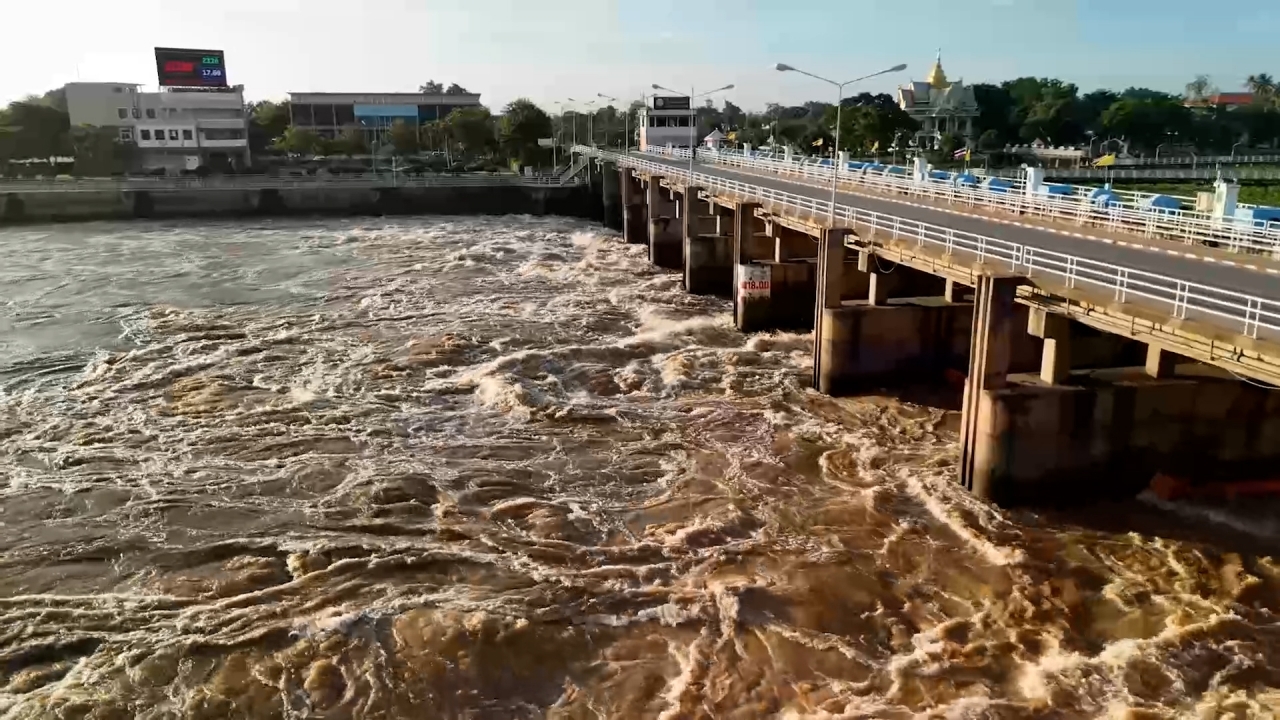
Residents in low-lying areas, unable to avoid the flooding, are renting tents at 2,000 baht per month to pitch on roads for shelter after the Chao Phraya Dam plans to increase discharge to 2,500 cubic meters per second. Four provinces are on alert as water levels are expected to rise by nearly a meter.
On 30 Sep 2026, Major Phatdarasmit Thongsaluaykorn, Deputy Spokesperson of the Prime Minister's Office, issued a warning to residents in 11 provinces—Uthai Thani, Chainat, Sing Buri, Ang Thong, Phra Nakhon Si Ayutthaya, Suphan Buri, Lopburi, Pathum Thani, Nonthaburi, Samut Prakan, and Bangkok—about expected water conditions over the next 1–5 days. On 2 Oct 2026, at station C.2 in Mueang Nakhon Sawan district, water flow may peak at approximately 3,000 cubic meters per second, with tributary inflows adding another 700–750 cubic meters per second. This could bring total inflow above the Chao Phraya Dam to about 3,600–3,700 cubic meters per second, while the Royal Irrigation Department manages irrigation intake on both sides at around 550–580 cubic meters per second.
Therefore, the discharge through the Chao Phraya Dam will be increased to 2,500 cubic meters per second starting at 12:00 on 30 September 2026 to manage the rising water volume according to the situation. Residents in the Chao Phraya basin are urged to exercise caution and prepare in advance for the water situation.
Currently, water flow at station C.2 in Mueang district, Nakhon Sawan province, is 2,461 cubic meters per second. At station C.13 at the Chao Phraya Dam in Sapphaya district, Chainat province, upstream water level is 17.72 meters above mean sea level, continuing to rise. Downstream water level is 15.22 meters above mean sea level, with water about 1.12 meters below the riverbank.
Special watch areas include Phra Nakhon Si Ayutthaya, Ang Thong, Sing Buri, and Chainat provinces. In Phra Nakhon Si Ayutthaya, districts Sena, Phak Hai, Bang Ban, Phra Nakhon Si Ayutthaya, Bang Pa-In, and Bang Sai expect water to rise by 1 to 1.2 meters. In Ang Thong, districts Wiset Chai Chan, Pa Mok, Mueang Ang Thong, and Chaiyo expect a rise of 70 to 90 centimeters. Sing Buri districts In Buri, Phrom Buri, and Mueang Sing Buri anticipate a 70 to 90 centimeter rise. Chainat’s Sapphaya district expects water to rise by 80 centimeters to 1 meter.

Recently, residents in Had Asa subdistrict, Sapphaya district, have begun evacuating, moving cars, tractors, and valuables to higher ground, setting up tents along the Khlong Maharaj embankment road ahead of the water release announcement. They anticipate that if the discharge reaches 2,500 cubic meters per second, flooding will definitely occur.
Mr. Yongyut Puangpuangthong, 60, a resident of village 2, Had Asa subdistrict, said his home is nearly flooded and he has been unable to sleep well. Preparing early this year, as soon as he learned the release would exceed 2,200 cubic meters per second, he quickly rented a tent to set up, so he could move belongings, vehicles, and valuables to safety. The tent rental costs 2,000 baht per month, but it is necessary to stay on the roadside for shelter against sun, wind, and rain, sometimes for months.
Meanwhile, staff from Had Asa municipality and soldiers from the Army Aviation Maintenance Battalion in Lopburi province are filling sandbags in low-lying areas to delay and slow the floodwaters, giving residents more time to move belongings to higher ground.

Mrs. Channyach Suphavita, Mayor of Had Asa subdistrict, said the municipality continues to reinforce barriers in low-lying areas already affected. Their current response plan includes evacuation and issuing warnings to residents to move to the Khlong Maharaj embankment area, as done annually. This year, the dam is releasing water very quickly; in just 10 days, flooding has occurred. They are still maintaining barriers to slow the water, allowing time for people to secure their belongings.