

Bangkok Metropolitan Administration (BMA) unveils flood relief criteria, increases assistance caps, enables online submissions without police reports. District offices continue normal processing. Online system expected to launch tomorrow evening onwards.
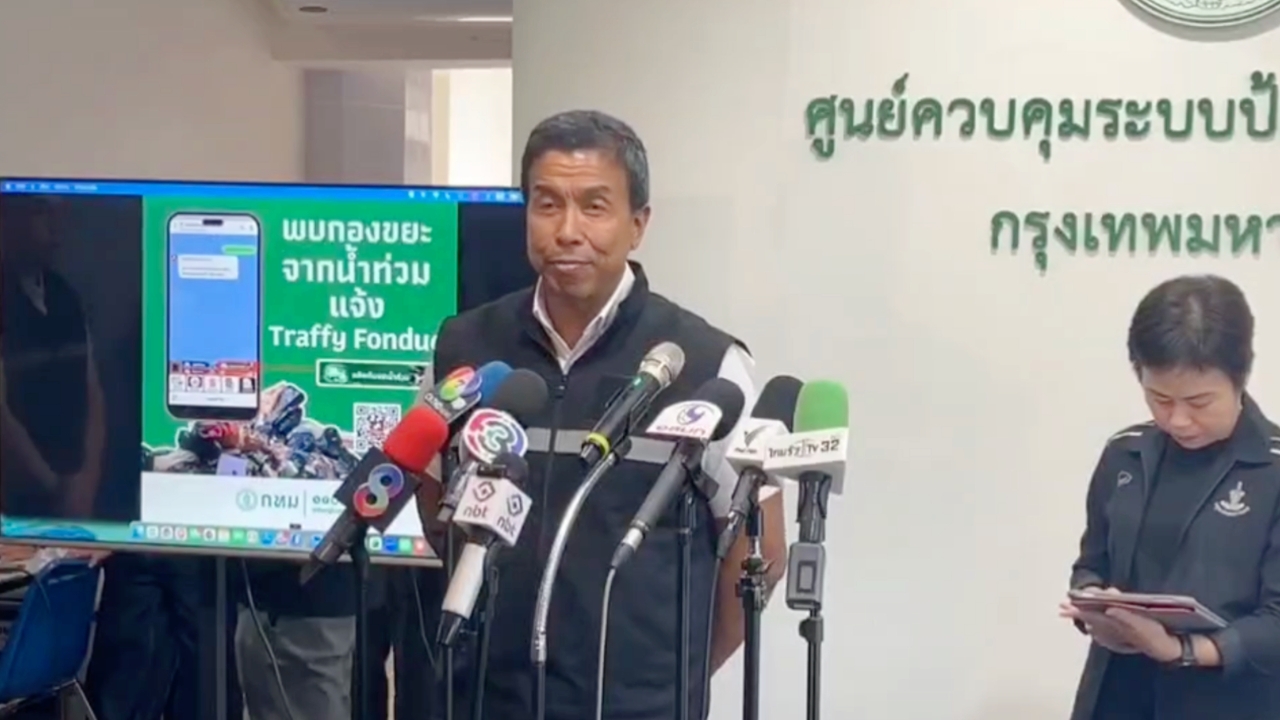
At 11:00 a.m. on 1 Oct 2026, Chadchart Sittipunt, Governor of Bangkok, together with Thavida Kamolwetch, Deputy Governor of Bangkok, revealed details of the criteria and procedures for applying for flood relief funds in Bangkok at the Bangkok Flood Control System Center, Drainage Department, Din Daeng District.
BMA is accelerating improvements to make relief access easier and faster for citizens, coordinating with the Department of Disaster Prevention and Mitigation, the Comptroller General’s Department, and related agencies to ensure aid complies with official regulations and guidelines.
Thavida said BMA has revised the application process so citizens no longer need to file police reports. Applications can be submitted directly with required documents either at district offices or via an online system.
Regarding the online system, BMA plans to allow citizens to download application forms, fill in damage details, attach photographic evidence, copies of ID cards, bank account information, and related documents, and submit everything online without visiting district offices.
The system is expected to be operational by the evening of Friday, 2 Oct 2026, with detailed documentation requirements to be clearly announced to the public again.
If additional information is needed, BMA will contact applicants via SMS to reduce travel and document preparation burdens. For those uncomfortable with online submission, especially the elderly, district offices remain open for in-person applications. District offices will also process any applications already submitted in person.

Thavida explained that BMA has raised assistance limits in several categories to reflect current conditions and damage levels, following Ministry of Finance regulations and disaster prevention and mitigation guidelines, including:
Aid payments will be based on damage type, evidence, and official guidelines. Home repair payments apply to homeowners, while tenants may claim assistance for other eligible damages with proof of tenancy and residence as specified.
Regarding documents like title deeds or ownership papers, BMA is consulting with the Department of Disaster Prevention and Mitigation to reduce required paperwork to essentials. Detailed document requirements will be announced clearly today.
Thavida added that BMA is currently developing unified damage assessment criteria involving district offices, the Department of Public Works, Drainage Department, and the Disaster Prevention and Mitigation Office, based on past flood events such as in 2011 and 2022.
The criteria will clarify which water levels, damage types, and evidence qualify for specific aid categories. BMA is also considering, under regulations, whether staff from other agencies can assist districts in damage surveys to expedite assessments, anticipating a large number of applicants.
Currently, the disaster declaration covers 38 districts and 118 subdistricts. Additional affected areas identified through surveys may be proposed for inclusion if supported by evidence and damage data per criteria.
Chadchart said that after floodwaters recede, BMA’s key mission is to rehabilitate and provide relief to affected residents. Given the scale and legal procedures involved, he asked for public understanding and patience. BMA will strive to streamline processes while ensuring thoroughness and maximum benefit to citizens.
Thavida also addressed relief delivery challenges, noting that areas like Saphan Sung, Suan Luang, Bueng Kum, and Khan Na Yao experienced high water levels, preventing large vehicles from reaching inner zones. BMA has thus adjusted relief delivery methods, especially for hard-to-access locations.
Currently, daily demand for cooked meals is about 300,000–400,000 boxes, while BMA can centrally produce and distribute approximately 100,000 boxes per day. The remainder comes from district offices and supporting partner agencies.
For areas difficult to access with food deliveries, BMA has increased distribution of survival kits, having already allocated nearly 20,000 kits containing essential items for about three days to enable residents to care for themselves during restricted travel periods.
A major issue is that demand data is not real-time, with overlapping reports from district offices, housing estates, residents reporting by phone, and social media, causing gaps in relief delivery.
BMA urges residents who have not yet received aid or still lack food and essentials to report through multiple channels, including hotline 1555, the Traffy Fondue app, or BMA’s social media. This will help officials compile data, verify needs, and promptly close relief gaps.