

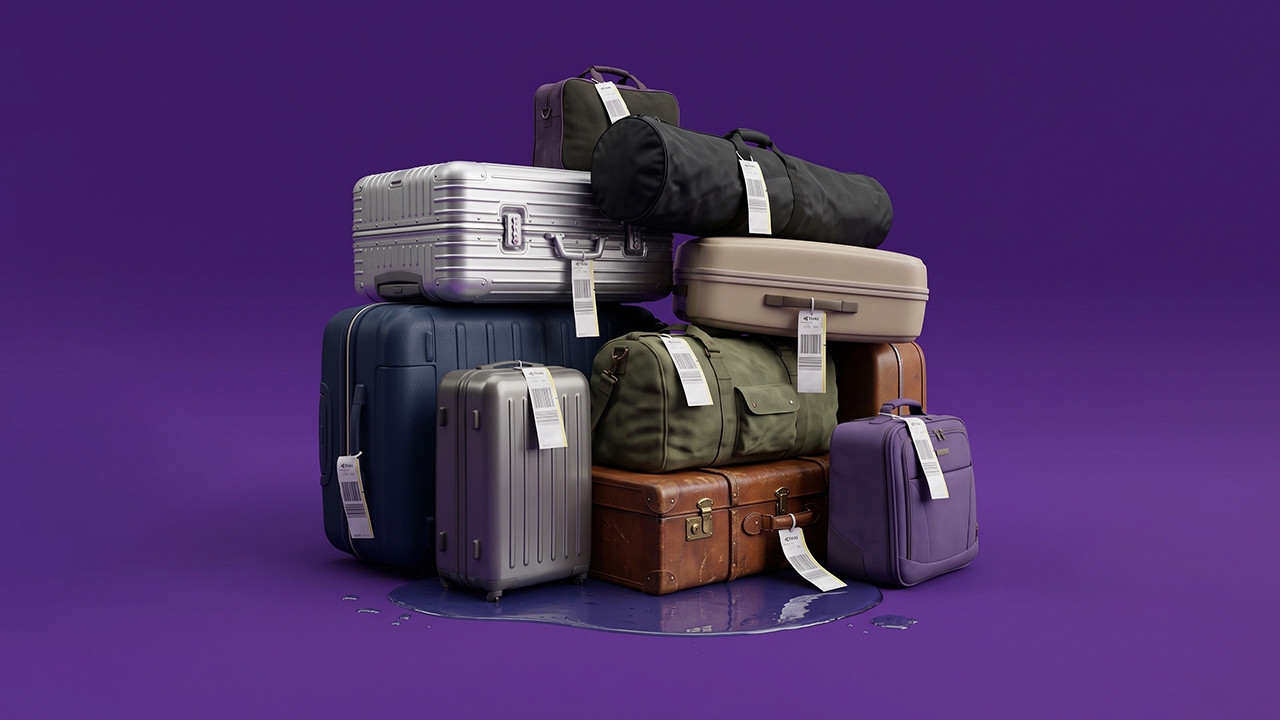
Negligence of duties by senior executives and over 40% of employees across all departments involved in operations at Suvarnabhumi International Airport under Thai Airways Public Company Limited since Saturday, 26 Sep, continuing through 27-29 Sep.
Eventually, Ms. Paweena Jariyathitipong, Director General of Airports of Thailand Public Company Limited, had to personally manage the issues and established a War Room to mobilize resources and cooperation from the Air Force, Army, Thai Post, and outsourced teams to resolve the major problems sequentially.
Starting with over 10,000 delayed bags that had to be returned to passengers’ homes in Bangkok, other provinces, and abroad, this caused serious damage to Thailand's reputation and public embarrassment, to the point where some compared Thai Airways' failures to a national security threat, demanding accountability.
And that person is Mr. Chai Eamsiri, Chief Executive Officer of Thai Airways Public Company Limited. A longtime insider promoted to lead Thai Airways during Khun Piyasawat Amranand's era, a former executive who helped Thai Airways survive its rehabilitation plan by securing over 40 billion baht in capital injections from the Ministry of Finance, allowing the airline to survive until today.
Mr. Siripong Angkasukolkit, Deputy Minister of Transport, revealed that since the first day of the crisis involving abandoned Thai Airways passengers, AOT tried to obtain passenger lists for the affected flights.
However, Thai Airways officials refused to provide passenger names or baggage codes, which were necessary to identify the owners and their residences, so the bags could be gradually delivered and not accumulate in large numbers at the airport.
Because Thai Airways refused to cooperate, the situation escalated, leaving the airport area filled with stranded luggage, making it even more difficult to identify owners.
At the same time, Ms. Paweena reported that she struggled to contact Thai Airways management but was unable to reach anyone, eventually informing the government and Mr. Lawaron Saengsanit, Permanent Secretary of the Ministry of Finance and Chairperson of Thai Airways’ board, that no Thai Airways personnel were present to assist arriving or departing passengers. She was also told to try contacting them again on the next working day, Monday, 28 Sep.
Deputy Minister Siripong also disclosed that Mr. Chai Eamsiri, CEO of Thai Airways, explained that employees could not come to work due to flooding and refused to leave their flooded homes, whether general staff or specialized personnel.
In fact, the Ministry of Transport had sent Army GMC trucks into the Thai Airways village and flooded areas around Suvarnabhumi Airport, where Thai Airways employees reside.
But as Mr. Chai said, employees claimed they could not leave their flooded homes to work, unlike many others who tried to get to work as required.
The situation worsened because incoming cargo handled by Thai Airways was left disorganized, causing the AOT’s leased inbound cargo yard to overflow and scatter everywhere.
Thai Airways management’s lack of maturity in crisis handling caused problems to spread to other airports worldwide, such as in Japan, where officials were not clearly informed when Thai Airways flights would arrive, forcing passengers to switch to more prepared airlines.
Some Thai Airways planes departed to Shanghai, China, without waiting for new passengers or unloading baggage first, acting irresponsibly.
Mr. Korn Chatikavanij, former Finance Minister, posted on his Facebook that flooding was not the root cause but merely revealed longstanding problems. Since 26 Sep, passengers at Suvarnabhumi Airport had to wait 5 to 6 hours for baggage from 55 flights.
Thai Airways had to cancel 22 additional flights, ultimately requiring military assistance to move luggage. The explanations given were flooding, employees unable to work, and broken transport vehicles.
Korn invited deeper examination: Observation 1 – flooding was the same, but impacts differed. AOT confirmed problems occurred only on flights using Thai Airways ground services; other providers had no issues. Don Mueang Airport, where Thai Airways does not provide ground services, was unaffected.
The Bangkok floods affected almost every company. The question is why some handled it well while others did not.
Observation 2 – a 35-year contract without penalties. AOT revealed Thai Airways’ ground service contract, made about 20 years ago, lasts 35 years until around 2035 CE and lacks penalty or sanction clauses for delayed services.
Reports indicate other airlines contracting Thai Airways for baggage handling were less affected, possibly due to contracts including penalties for delays.
Observation 3 – this is not the first time. AOT said this is the second occurrence of such baggage delays; the first was during COVID-19. They have tried to amend contracts to include penalties but failed because changes require Cabinet approval and consent from contract parties, who naturally avoid agreeing to penalties.
Observation 4 – passengers were left uninformed. Korn reported directly from passengers that while waiting, no one provided information on baggage whereabouts or arrival times; QR codes given to scan did not work, and provided phone numbers were unreachable.
Operational problems might arise from unforeseen events, but communication can be prepared in advance and does not require anyone to carry bags.
Now, let's consider another perspective reflecting the insight and vision of executives leading major businesses, such as Thai AirAsia.
Mr. Vichit Tantivanich, CEO of Thai AirAsia, personally stated that organizational culture is very important. At Thai AirAsia, they have brotherly relationships, like a family that supports and encourages each other. Everyone is called an "all-star." The executives’ office is modest, where 7-8 people can discuss work together, then meet in the conference room to conclude with the phrases"Sure, brother"and"Thanks a lot, everyone, let's go."
None of the board members have cars with special privileges, parking spaces, or private offices. Meetings are held in conference rooms, with lunch boxes served at noon during meetings.
Executives do not stay confined to offices but circulate among departments. Employees at all levels smile at each other. Even during floods, they wear gear to wade through water and then change into uniforms at work.
All this is done to maintain the status of the number one low-cost airline for 17 consecutive years.
Although recent years' performance was poor, it was not due to wasteful spending but because oil prices surged beyond what they could absorb, while their average ticket price was less than 2,000 baht per flight, which was not"sustainable"but"temporarily unsustainable."
They accept losses but refuse to lose their reputation. They communicate honestly with shareholders, which is better than disappointing passengers.
"I want to tell everyone that we are doing our best. The only remaining factor for strong continuation is to support AirAsia. If we increase revenue from happy passengers, flight numbers, routes, and punctuality, we can generate profits to share with our valued shareholders."
They have not received dividends for years; share prices have dropped. If Thais and tourists support AirAsia, they can repay shareholders and keep customers happy together. #LifeCanBeGoodWithoutCheating# Responsible and dignified.
An interesting case seen on social media and from employees' accounts reveals AirAsia’s staff collaborating to overcome chaos, bringing flights as close to normal as possible despite some delays from their Don Mueang base.
It was reported that reinforcements from provinces, especially GS/RAMP staff able to assist, flew in to help with Don Mueang flights on same-day return trips. They also sent supplies from provinces to Don Mueang when leaving the airport to buy food was difficult due to flooding, store closures, or stock shortages—for example, the Chiang Rai team sent sticky rice with fried chicken to colleagues at Don Mueang.
Hearing so many people talk about Thai Airways, faith in the airline seems to have completely vanished.