

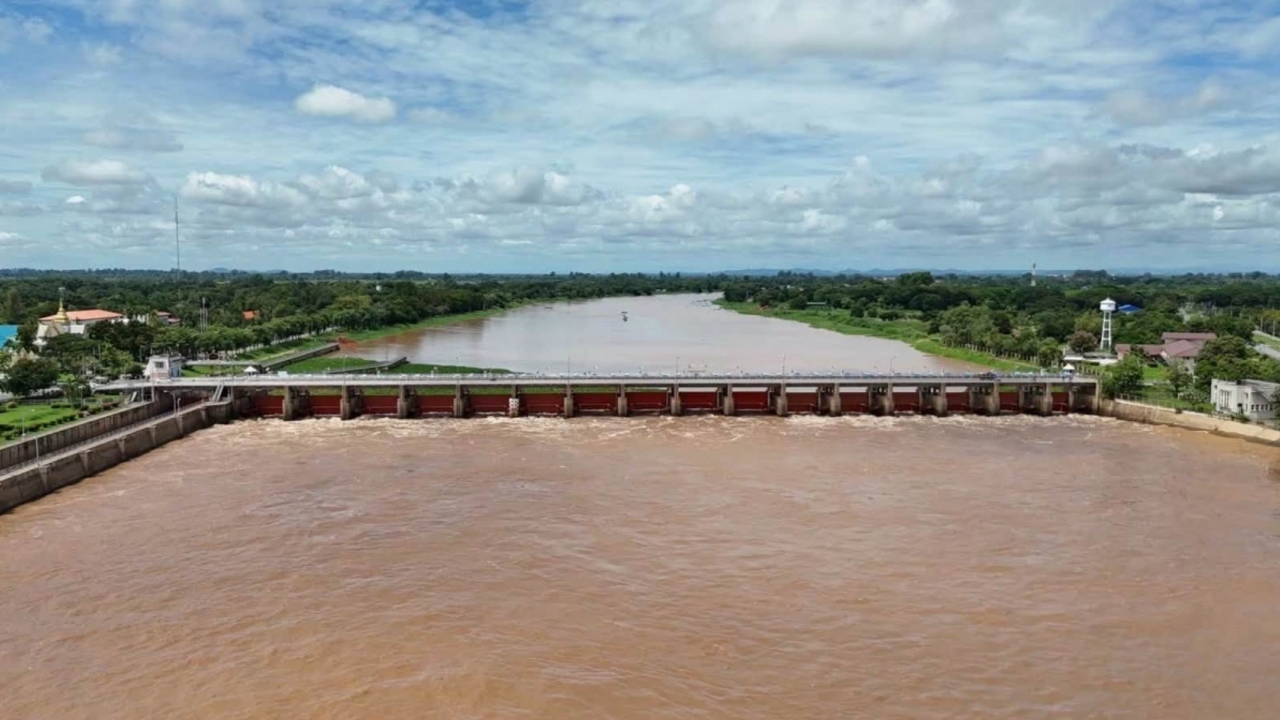
The Royal Irrigation Department manages water flow between the Chao Phraya and Pasak rivers, emphasizing that dam discharge at the tail end will not affect Bangkok. Authorities are monitoring heavy rain and accumulated rainfall in the area.
On 3 October 2026, the Royal Irrigation Department closely monitors water conditions in the Chao Phraya and Pasak basins, continuously managing and regulating water traffic within the irrigation system to control volume and distribute discharge in line with the area's capacity.
Currently, water releases from the Chao Phraya and Pasak Chonlasit dams remain at manageable levels and do not impact Bangkok's flood barrier lines. Meanwhile, the department is accelerating water drainage in canals and preparing areas to accommodate new rainfall, urging residents of Bangkok and its metropolitan vicinity to stay vigilant for heavy rain and accumulated rainfall.
As of 3 October 2026, water volume at station C.2 in Mueang Nakhon Sawan District is trending downward after peak flow has passed. The Chao Phraya dam is releasing about 2,500 cubic meters per second at its tail. The department continuously monitors tributary water volumes and local rainfall, managing water release timing to suit the situation.
Regarding Pasak Chonlasit Dam, which holds a high water volume, the department is gradually releasing water in steps to reduce reservoir levels and create capacity. Discharge management aligns with water conditions in the Pasak and Chao Phraya rivers, as well as the capacity of downstream drainage systems.

Water from both dams converges before passing through station C.29B in Sam Khok District, Pathum Thani Province, a key measurement point before flowing into Bangkok. This morning, average flow was about 2,382 cubic meters per second, remaining below the threshold of 3,600 cubic meters per second that could affect Bangkok's flood barriers. The department manages water traffic through canals and irrigation infrastructure to distribute and slow water volume, including preemptive drainage to enhance the system's capacity before water enters Bangkok.
In Bangkok and its surrounding areas, the department collaborates with the Bangkok Metropolitan Administration, neighboring provinces, and related agencies to manage water via canal systems, sluice gates, and pumping stations connected to the Chao Phraya River and coastal canals. Water traffic from upstream areas is regulated to match the drainage system's capacity in each zone.
Upper areas utilize the semi-permanent pumping station at Pak Khlong Rangsit to accelerate drainage and reduce peak flow before water reaches Bangkok. Central zones are managed through Khlong Saen Saep, Khlong Prawet, and related pumping stations. Lower areas expedite drainage via pumping stations along coastal canals, including Chonharaphichit, Suvarnabhumi stations, and the Khlong Lat Pho sluice gate, which is part of a royal initiative, to speed water discharge from the Chao Phraya River into the Gulf of Thailand, coordinated with tidal cycles for efficiency.
However, the primary concern for Bangkok and its vicinity during this period is heavy rain and accumulated rainfall. Rainfall directly over urban areas immediately enters drainage systems, unlike water discharged from the Chao Phraya dam. Low-lying areas, drainage limitations, and riverbanks are especially vulnerable, so close monitoring of rain and water levels is advised.

Weather forecasts indicate increased rainfall in some areas from 5 to 7 October, decreasing between 8 and 9 October, then rising again with heavy rain in parts of central Thailand, from Nakhon Sawan southward, between 11 and 14 October. Consequently, the department is using the period of declining upstream water volume to release water from irrigation systems, expand storage capacity, and prepare drainage systems for the upcoming rainfall.
The Royal Irrigation Department urges residents in Bangkok and its metropolitan area to closely follow weather forecasts, rainfall updates, and official warnings. The department will continue to monitor water and rain conditions closely, adjusting water management and traffic accordingly to ensure efficient drainage from upstream and urban areas, minimizing water accumulation and reducing impacts on local residents.