

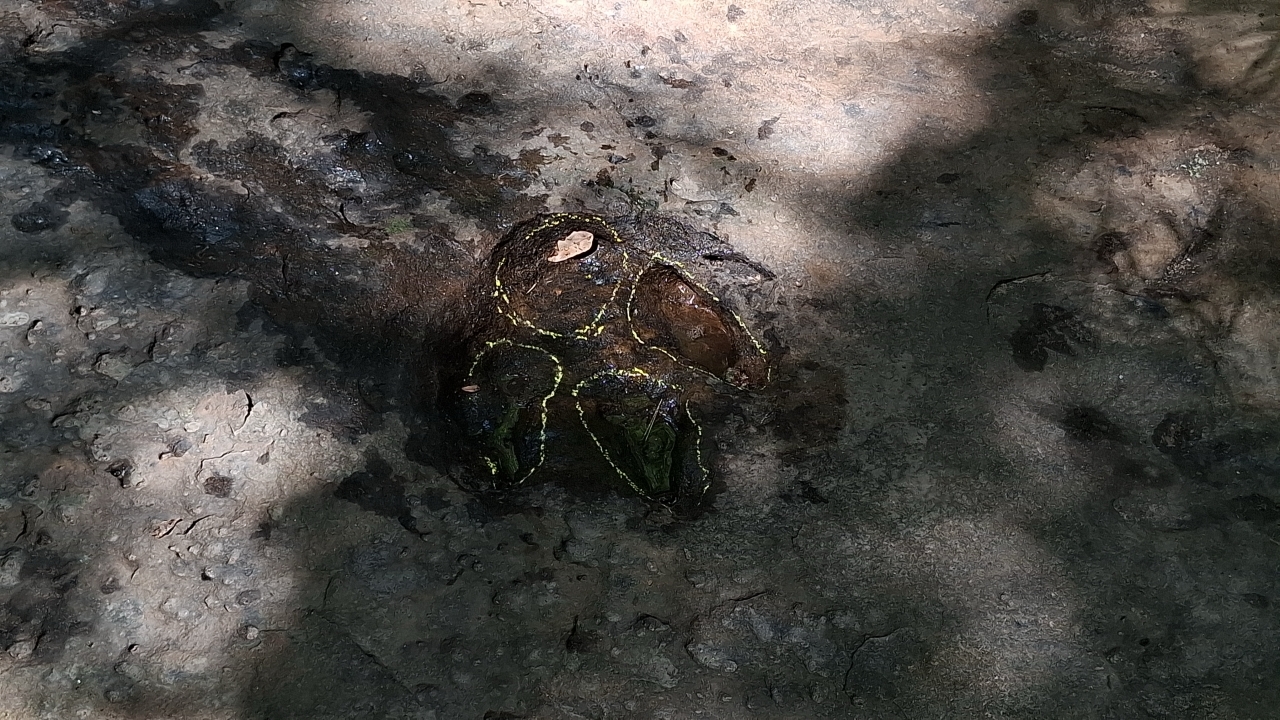
In Udon Thani, geologists conducted an inspection of dinosaur footprints at Phu Phrabat, creating excitement by discovering two more prints, bringing the total to six. The prints are confirmed authentic and over 120 million years old. Plans are being made to divert the water flow to prevent erosion.
On 20 October 2026, at the Phu Hin Chom That National Park Protection Unit 3 (Phu Phrabat), Muang Phan Subdistrict, Ban Phue District, Udon Thani, Mr. Nopwong Pruksachat, Director of Protected Area Regional Office 10, Mr. Winai Thongpan, Acting Head of Phu Hin Chom That–Phu Phrabat National Park, and Ms. Kulawadee Samakthai, Head of Phu Phrabat Historical Park, welcomed Ms. Panipa Saetian, Director of the Standard and Fossil Data Division, Fossil Protection Bureau, Department of Mineral Resources, and Acting Second Lieutenant Krisana Sudcha, Geologist, along with their team to prepare for a field survey of dinosaur footprints near Tad Noi Waterfall. They held a 30-minute meeting to exchange information between agencies and plan the survey.
The footprint area is under the care of Phu Phrabat Historical Park, located about 3 km before ascending to Phu Phrabat, in a headwater forest area covering approximately 300 rai. Officials from the Department of Mineral Resources noted this site is within the Phu Phan sandstone formation of the Khorat Group, spanning five provinces: Sakon Nakhon, Kalasin, Udon Thani, Nong Khai, and Nong Bua Lamphu. Dinosaur footprints are commonly found here, dating back at least 120 million years. Typically, fossil remains are not found at footprint sites.

The team traveled by vehicle to the Tad Noi Waterfall tourist waiting area, about 2 km behind the park protection unit, then walked approximately 500 meters to the footprint site. The prints were located at a small water barrier on the left side of a stream. Forest rangers explained that during the rainy season, the left-side water barrier was damaged, allowing water flow to erode the stream bank. This erosion removed sediment, revealing the footprints clearly. The day before, tourists found the first footprint, and after clearing away soil and leaves, three more prints were uncovered, totaling four.
During the inspection, the Department of Mineral Resources team requested forest rangers to clear the area near the upper dam of the water barrier. This uncovered two additional footprints, bringing the total to six, each with a consistent stride length of 80 cm. The department officials painted the footprints to highlight their outlines, then measured their width, length, and spacing. They documented the findings with photographs and data to report back to the Department of Mineral Resources.

Ms. Panipa Saetian, Director of the Standard and Fossil Data Division, stated the footprints are confirmed dinosaur prints dating back about 120 million years, belonging to medium-sized carnivorous theropods. "Today, we gathered additional geological data. Next, we will coordinate with the area to install signs for information and advise tourists. However, we are concerned about the location since it is a water flow path, which may cause erosion of the prints. We will collaborate with local agencies to plan water diversion from the footprint site to preserve it for study."
The footprint site is close to Phu Phrabat Historical Park and could attract tourists for viewing or study in the future. Visitors are advised not to step on the footprints to prevent damage and fading. Finally, anyone who discovers similar footprints is urged to report them promptly to the Department of Mineral Resources via their Facebook page.
This discovery marks the first time dinosaur footprints have been found in Ban Phue District, Udon Thani Province.
