

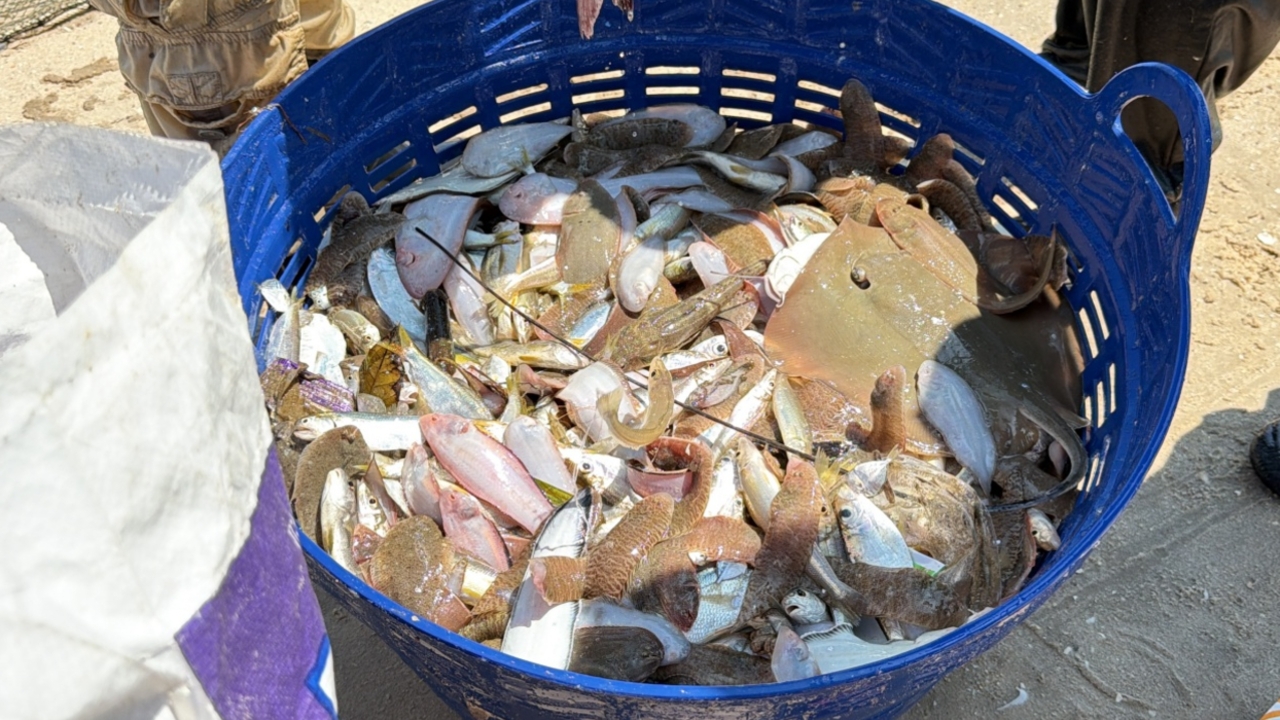
In Cha-Am, a "freshwater surge" phenomenon caused sea fish to wash ashore over a stretch exceeding 1.5 kilometers. Hundreds of locals enthusiastically gathered to catch fish.
On 22 Oct 2026 GMT+7, at Cha-Am beach, especially near Ban Khlong Thian community, people gradually arrived at the shore to catch fish floating near the surface and along the coast. Some used cast nets, others encircled fish with nets and dragged them ashore, catching large quantities along the beach, enlivening the area during that time.

The caught fish included various species such as large and small gobies, flathead sea catfish, sea perch, as well as shrimp and crabs. Additionally, Nile tilapia measuring about 2–3 per kilogram attracted special interest. It was speculated these fish might have escaped from local fish farms affected by flooding and carried by currents into the sea. However, the exact source of these tilapia has not been officially confirmed.

The term "freshwater surge" is used by locals to describe situations when large amounts of freshwater from rain and floods flow into the sea, especially after continuous heavy rains. This rapidly alters coastal conditions—salinity, temperature, and water quality—potentially causing some aquatic species unable to adapt quickly to become disoriented, float to the surface, or be swept ashore by currents and waves.

However, finding many floating or stranded fish alone cannot definitively confirm that changes in salinity are the sole cause. Water quality and marine environmental factors must be investigated by relevant agencies to identify clear causes and assess impacts on the ecosystem.
Meanwhile, this phenomenon attracted many people to fish along the beach. However, residents should exercise caution when entering the water and handling aquatic animals, avoiding contact with or consumption of dead or abnormal fish until causes are confirmed. They should also follow guidance from fisheries and public health authorities.
Tourism at Cha-Am beach should be monitored closely via announcements from local authorities, especially if abnormal water quality or marine safety warnings arise. The duration for conditions to return to normal depends on freshwater flow volume, weather, currents, and findings from relevant agencies.

This event not only energized Cha-Am beach but also highlighted potential impacts on the coastal ecosystem following heavy rain and flooding, necessitating close monitoring to ensure safety for residents, tourists, and marine resources in the area.
Later, at 13:02 GMT+7, the fan pageCha-Am Substation of the Marine Science Instituteupdated the "Freshwater Surge - Fish Stunned at Cha-Am Beach" situation as of 22 Oct 2026 GMT+7.
The Marine Science Institute of Burapha University, through its Cha-Am Substation, has been continuously monitoring seawater color changes and impacts on coastal organisms.
Surveys found several benthic species showing signs of distress and floating ashore, including tonguefish (notably), flounder, stingrays, sand sharks, flathead sea catfish, sea shrimp, and gobies.
At the time of this survey, there was no data indicating a need to ban swimming. However, residents and tourists should keep updated on the latest warnings and monitoring information from authorities.
The Marine Science Institute at Burapha University, via the Cha-Am Substation, will continue monitoring water mass movements, plankton composition, and seawater quality to assess the situation and inform the public accordingly.