

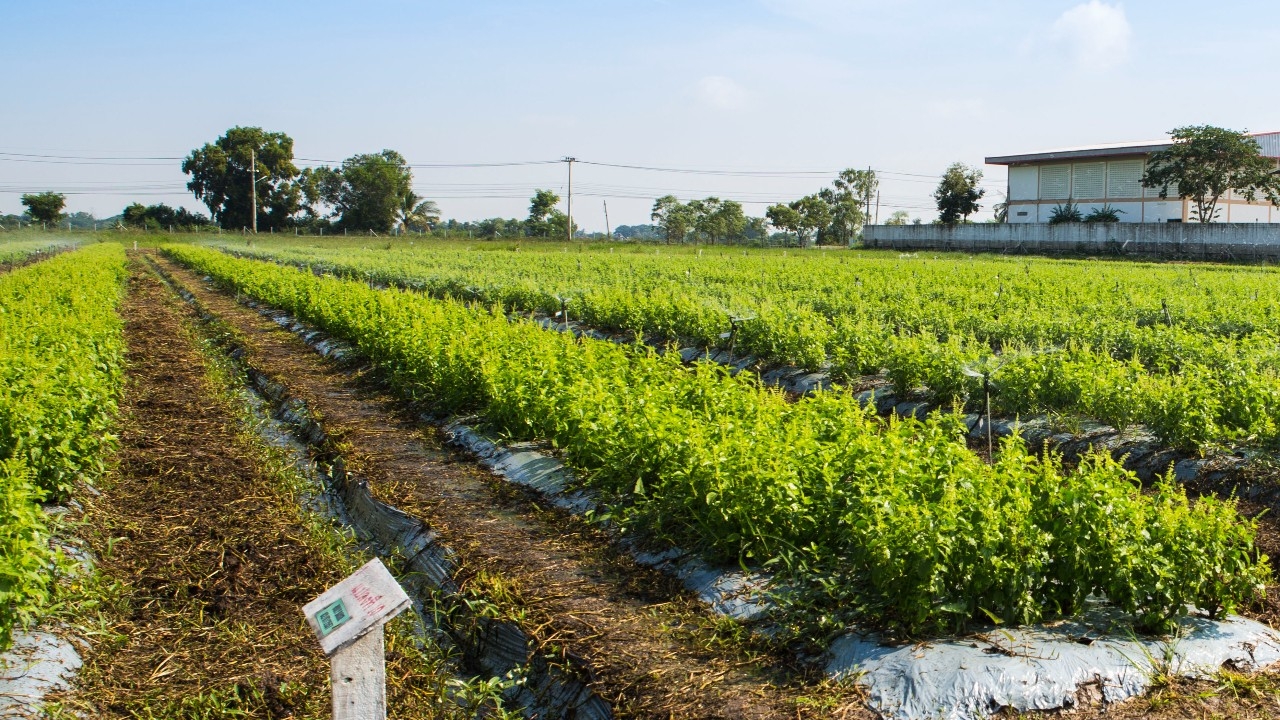
News about the registration of basil variety protection has caused considerable concern among consumers and street food vendors. Many have questioned whether they can still pick basil from their backyard for cooking or if they will now be required to buy seeds exclusively from private companies.
Recently, CP Ram Company Limited issued a clear statement, affirming that all Thai people can continue to grow, consume, and trade basil as usual, with no restrictions imposed.Rightsof the public are not limited as feared on social media.
The news about basil registration has caused misunderstandings suggesting possible monopolization. In fact, CP Ram Company Limited has applied for protection rights only for four new varieties: Kaewjuree 01, 02, 03, and 04.

Vises Wisitwinyoo, Managing Director, confirmed that Thailand still has more than 300 traditional basil varieties not covered by this protection. Therefore, the public and farmers can continue to cultivate, consume, and trade these as normal in every respect.
The development of new basil varieties by CP Ram is the result of over 10 years of research and study, aiming to elevate quality from both culinary and cultivation perspectives.
For consumers, the basil has a stronger aroma and flavor, with leaf sizes suitable for cooking. When stir-fried, the leaves do not shrink or curl, preserving the dish's appealing appearance.

For farmers, the produce has consistent leaf size and weight, increasing yield per plot cost-effectively and extending the harvest cycle to about 20 times before replanting, compared to only 8-9 times previously.
Comparison points | Four new basil varieties (Kaewjuree) | General traditional basil varieties |
Main purpose | Used as raw materials for CP Ram's ready-to-eat food products | Cultivated for general consumption and sale |
Seed sales | No seeds or seedlings sold on the open market | Seeds can be freely bought, sold, and exchanged |
Cultivation rights | Cultivated only by farmers participating in the company's project network | All Thai people can freely grow, consume, and sell |
Many farmers question whether pollen from the new variety fields contaminating local traditional basil and subsequent seed harvesting could lead to infringement lawsuits.Rightsissues?
Vises explained that natural cross-pollination occurs naturally and causes genetic mutation. Planting seeds from such mutations is not considered patent infringement, so people can rest assured about legal disputes.
This basil variety registration is solely a mechanism to protect intellectual property from research developed jointly with Kasetsart University, Kamphaeng Saen Campus. Its main aim is to enhance the quality of Thai food ingredients to compete globally.

Therefore, the public can be confident that this registration will not affect traditional lifestyles. Thai people remain fully free to grow, buy, sell, and cook with native basil varieties as usual, 100%.