

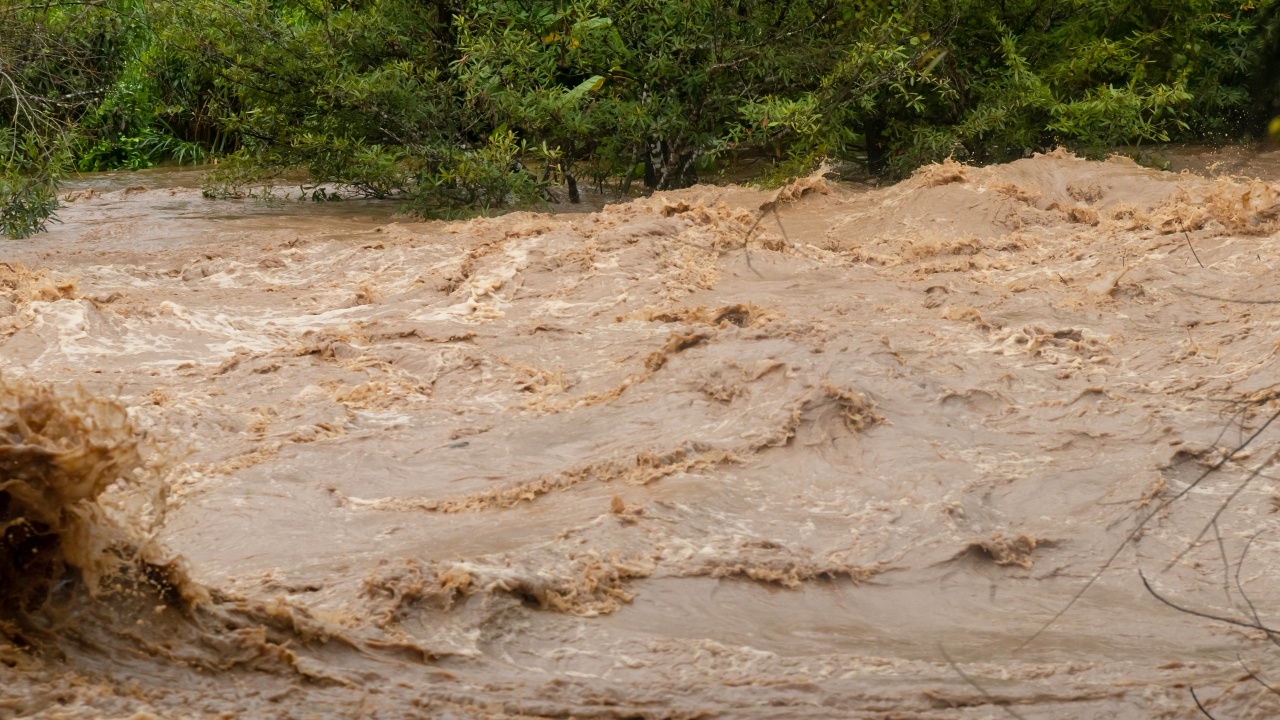
The National Water Resources Office has issued a warning for stagnant flooding, flash floods, flash floods from mountain torrents, and riverbank overflow from 26-29 Oct 2026, alerting risk areas in 14 southern provinces.
On 25 Oct 2026, the National Water Resources Office announced vigilance for stagnant flooding, flash floods, flash floods from mountain torrents, and riverbank overflow. The office reported that a high-pressure system or cold air mass from China will cover upper Thailand and the South China Sea, bringing easterly winds carrying moisture from the South China Sea and Gulf of Thailand over upper Thailand and the upper south. Meanwhile, the monsoon trough crossing the south will strengthen, causing continuous heavy to very heavy rain in some areas.
The office assessed the water situation based on rainfall forecasts from the Meteorological Department and the Water Resources Information Institute (Public Organization), as well as flood and landslide risk forecasts at headwater areas from the Department of Water Resources and Department of Mineral Resources. They found risk areas requiring monitoring for flash floods, flash floods from mountain torrents, riverbank overflow, and stagnant flooding in urban areas prone to regular flooding due to poor drainage during 26-29 Oct 2026 as follows.
This includes Ratchaprapha Reservoir in Surat Thani Province and medium and small reservoirs with water levels over 80% capacity in Chumphon, Ranong, Phang Nga, Phuket, Krabi, Surat Thani, Nakhon Si Thammarat, Trang, Satun, Phatthalung, Songkhla, Yala, Pattani, and Narathiwat provinces.
This includes main rivers and tributaries such as Khlong Chumphon and Lang Suan River in Chumphon Province; Tapi and Phum Duang rivers in Surat Thani; Takua Pa River in Phang Nga; Khlong Cha-uat and Khlong Tha Dee in Nakhon Si Thammarat; Khlong Palian and Trang River in Trang; Khlong La-ngu and Khlong Dusun in Satun; Khlong Tha Nae in Phatthalung; Pattani River in Pattani and Yala; Sai Buri River in Pattani, Yala, and Narathiwat; and Golok River and Khlong Tan Yong Mas in Narathiwat Province.
Accordingly, to prepare for the situation, related agencies are requested to take the following actions:
1. Continuously monitor weather and water conditions, especially in areas with accumulated rainfall over 90 millimeters in 24 hours and known flood-prone spots.
2. Inspect, repair, and clear riverbank embankments and waterway blockages; plan water management appropriately; adjust water management in large, medium, and small reservoirs, rivers, dams, and water gates coherently from upstream to downstream considering tidal influences by accelerating drainage and lowering water levels to cope with forecasted heavy rainfall.
3. Prepare flood response plans including readiness of personnel, machinery, removal of waterway obstructions, drainage pipe clearing, and integration of readiness to provide immediate assistance.
4. Publicize water situation updates and issue early warnings so affected residents can prepare for timely evacuation if necessary.
Information courtesy of the National Water Resources Office's Facebook page.