

;
Thairath Online
Thairath Online

Urgent Order for Traffic Police Nationwide: No Face-Covering Hoods or Pressure to Pay Fines at Checkpoints

Local28 Oct 2026 11:02 GMT+7

Share

Urgent Order for Traffic Police Nationwide: No Face-Covering Hoods or Pressure to Pay Fines at Checkpoints

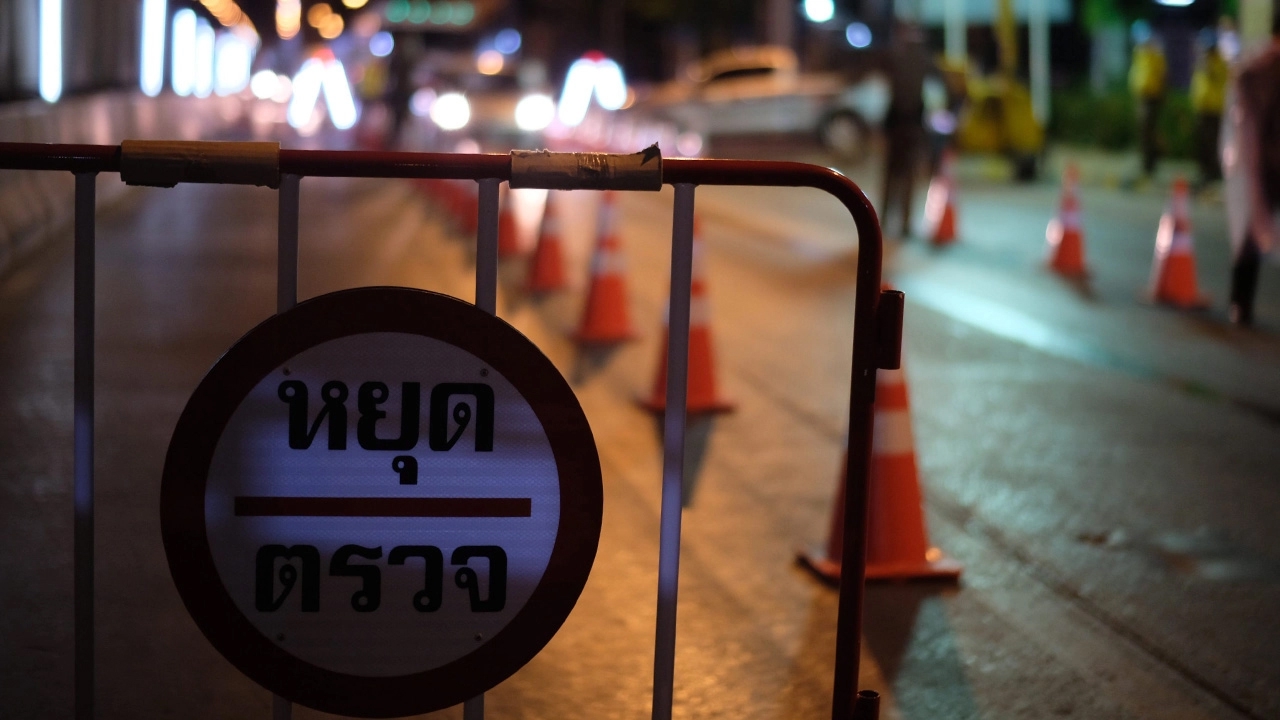
The police issued an urgent directive to traffic police nationwide, enforcing strict discipline: officers are prohibited from wearing hoods that cover their faces, must clearly show their faces during stops, follow a warning-first policy for first offenses, and are forbidden from pressuring for money at checkpoints.

The Royal Thai Police, through the Traffic Management Center, is advancing efforts to raise operational standards among traffic police nationwide to promote transparency and regain public trust, strictly following the policy of Pol. Gen. Samran Nualma, Commissioner-General of the Royal Thai Police.

Pol. Lt. Gen. Nithithorn Jintakarn, Deputy Commissioner-General and Deputy Director of the Traffic Management Center, has issued orders to the Metropolitan Police Bureau, Provincial Police Regions 1–9, and relevant agencies to ensure all commanding officers supervise their traffic police officers to adhere concretely to the new guidelines.

Ban on wearing "hoods" that cover the face; officers must remove sunglasses and masks during stops.

The directive highlights uniform regulations for traffic police on duty, clearly stating:

  • Faces must not be concealed. Officers are forbidden from wearing headgear or face-covering hoods, scarves around the face and neck, or any other items that conceal the face while on duty.
  • Protection against sun and dust. If necessary to protect against dust or sunlight, officers may appropriately use face masks and sunglasses.
  • Identification to the public. When stopping drivers for offenses or issuing tickets, officers must temporarily remove sunglasses and face masks so the public can clearly see and identify the officer’s face, ensuring transparency and accountability.

Adjusting enforcement guidelines: emphasize warning before fines; prohibit on-the-spot fine payments at checkpoints.

Beyond uniform standards, the directive sets a law enforcement approach that focuses on understanding rather than punishment.

  1. Prioritize verbal warnings. For minor offenses or first-time violations, officers should use discretion to issue warnings and educate drivers about traffic laws first.
  2. Prohibit forcing payment at checkpoints. Traffic police must not coerce, pressure, or impose conditions forcing citizens to pay fines at the checkpoint under any circumstances.
  3. Inform rights and proper payment channels. Officers must clearly inform citizens about their rights, procedures, deadlines, and legal payment methods to ensure convenience and correctness.
  4. Strict stance on illicit benefits. Soliciting money, property, or other improper benefits is strictly forbidden; violations will lead to disciplinary and criminal proceedings.

These guidelines are a key measure to improve the image of traffic police, reduce disputes between officers and the public, and promote transparency according to justice system standards.