

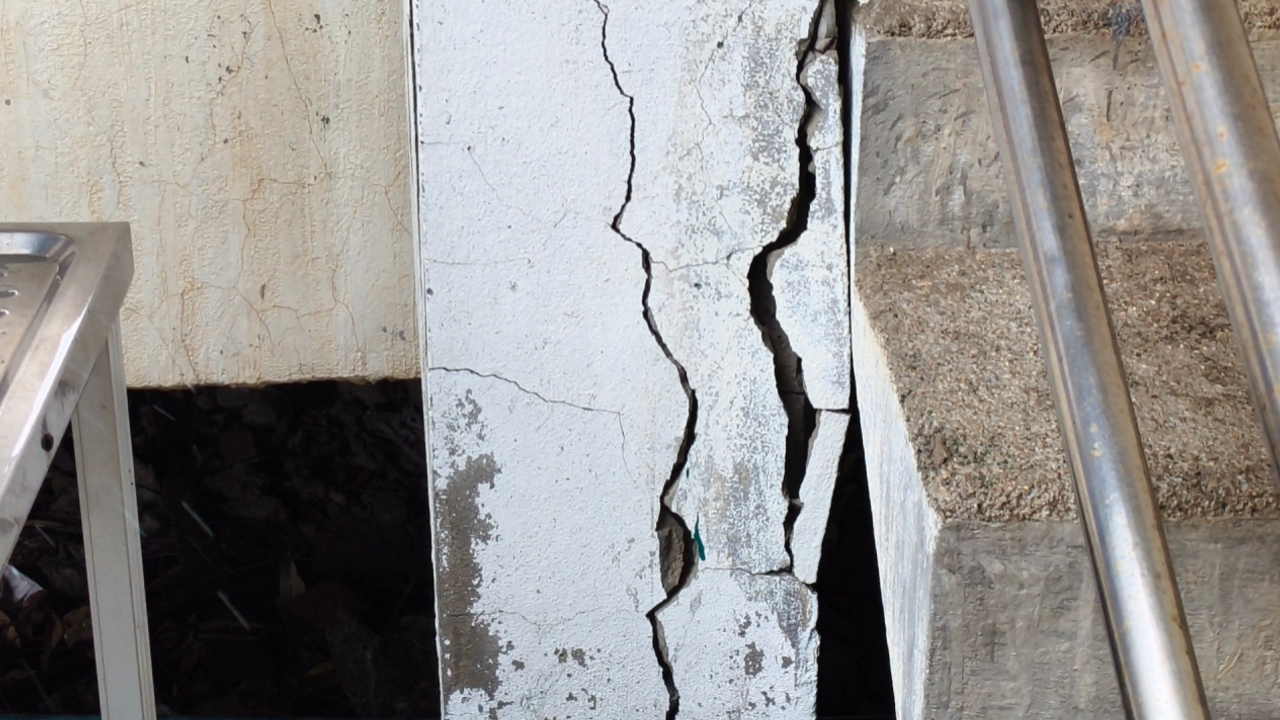
Chet Samian Hospital's concrete pillars are cracked with exposed rusted rebar and severe subsidence, yet it must continue operating due to lack of space to relocate patients, accelerating efforts to build a replacement facility.
On 6 Nov 2026 GMT+7, reporters were informed that several concrete pillars in Chet Samian Hospital, located in Chet Samian Subdistrict, Photharam District, Ratchaburi Province, had cracked and subsided at multiple points. This raised concerns about the building's structural integrity as the hospital remains open to serve the public as usual.
After receiving the report, the news team visited the site and found that the hospital had invited Mr. Jatuporn Kamonpantip, or “MP Jik,” Member of Parliament for Ratchaburi's 3rd district, to attend a meeting addressing the building's issues and concerns. The discussion took place in a second-floor conference room before inspecting the damage throughout various hospital structures.

Inspection revealed that many concrete pillars had visible cracks, with some areas where the concrete had spalled off exposing rusted reinforcement bars. Structural subsidence was also observed in parts of the building, raising serious safety concerns for patients, relatives, and medical staff.
In addition, some sections of the hospital were affected by recent flooding, resulting in damage to medical equipment and instruments.

Acting Director Dr. Kasadech Petsuk stated that the hospital building was constructed around 1996, about 30 years ago. Combined with flooding issues inside and around the hospital, the structure has deteriorated. Particularly concerning are the cracked concrete pillars showing exposed rusted rebar, which pose risks to both patients and staff. The affected buildings include the outpatient clinic, emergency building, and inpatient ward, with the inpatient ward being the most worrisome as nearly all pillars there are damaged and subsiding.
According to information from the hospital, the 5th Health Service Support Center in Ratchaburi sent structural engineering experts to inspect and assess the building's stability. They expressed concerns that the building should not continue in use due to safety risks.
However, the hospital faces a shortage of space to relocate patients and provide alternative services, so it must continue normal operations at present.

Dr. Kasadech warned that if patient numbers increase, the weakened structure might not bear the load, risking serious incidents that could injure or kill patients and staff. The hospital has conducted basic repairs, such as patching cracks with cement and reinforcing some damaged pillars, but full remediation has not yet been possible.
The acting director also said the hospital submitted a proposal through the province to secure budget support for constructing a new five-story hospital building to accommodate patients and replace the deteriorated structure. This new facility would allow safer and more efficient service to residents of Chet Samian Subdistrict and Photharam District.

During this site visit, MP Jatuporn Kamonpantip listened to hospital management's concerns and personally inspected the damaged buildings after learning about the safety risks and challenges in relocating patients.
He plans to bring the issue to parliament and coordinate with the Ministry of Public Health to seek solutions for the structural problems and to push for budget approval for the new hospital building as proposed by the hospital.
It remains to be seen what urgent measures the Ministry of Public Health and related agencies will implement to ensure patient and staff safety, including possible temporary service arrangements while long-term repairs or reconstruction proceed.
Key urgent actions include inspecting and certifying the building’s structural safety, establishing protective measures for patients and staff, and securing space for continued services to prevent potential harm or loss.