

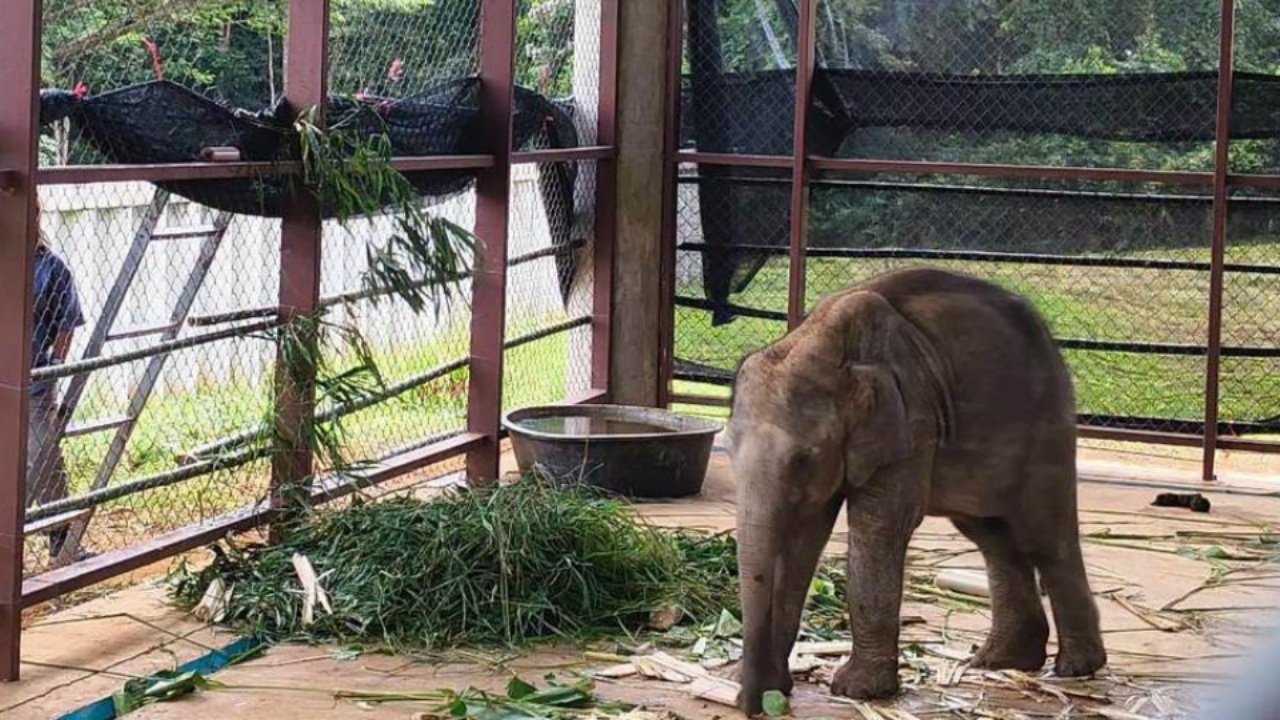
The Wildlife Conservation Office updated on the condition of the orphaned elephant at Khao Soi Dao, stating that overall health remains stable, appetite is good, digestive functions continue well, and the calf is learning more wild elephant foraging skills. The veterinary team continues close behavioral monitoring.
On 11 Nov 2026, the Facebook pageWildlife Conservation Office, Thailandposted an update on the orphaned Khao Soi Dao elephant dated 11 Nov 2026 (covering data from 10 Nov through the morning of 11 Nov 2026).
It stated that the wild elephant calf’s overall health remains stable, appetite is good, digestive functions continue well, and it is learning more wild elephant foraging skills. The veterinary team closely monitors its health and behavior.
Story today: Meals on high platforms.
The care team hangs food at elevated spots, encouraging the calf to stretch its trunk to pull down the food itself—mimicking how wild elephants reach for leaves on tree branches in the forest. Each meal is thus a skill training session preparing it for eventual return to the wild.
Animal information: Male wild elephant calf, approximately 1–2 years old, at Khao Soi Dao Wildlife Breeding Station, Chanthaburi Province.
1. Eating and excretion
- Eats banana stalks and wild banana leaves, ripe bananas, bamboo leaves, various grasses, and wild plants and herbs (kra-thue). Total food intake about 18 kg.
- Has good appetite, uses feet and trunk skillfully to pull grass and grasp food.
- Normal excretion, feces formed in round clumps with good consistency; digestive system progressively improving.
- Urinates five times daily; urine is clear yellow, indicating sufficient hydration.
2. Behavior and general health
- Clear skies all day; calf spends more time walking in the enclosure with full sun exposure.
- Care team added one more wooden log, selecting bark with deep grooves to facilitate rubbing; the calf enjoys this very much.
- Mostly grazes while walking, uses trunk to spray dust on itself, and vocalizes intermittently; staff observe closely.
- Still cautious and charges when people approach the enclosure, showing it retains wild elephant instincts.
- Naps intermittently from midnight until early morning, totaling about three hours.
3. Care and health rehabilitation
- Administered vitamin C, calcium, and probiotics (beneficial microorganisms aiding digestion) as per care plan.
- As temperatures drop, staff build fires for warmth and clean the enclosure to deter insects and venomous animals.
- Increased variety of grasses, bamboo, and banana leaves, adjusting amounts according to appetite and feces characteristics.
Note: The recovering calf may eat less on some days and be sleepier than usual; this is normal. Veterinarians monitor overall trends and provide daily truthful updates.
Currently requesting cooperation on two points:
Thanks to Dr. Sirawit Supanake, veterinarian at Protected Area Regional Office 2 (Sriracha) and head of Khao Soi Dao Wildlife Breeding Station, Wildlife Conservation Office.
Thanks for the information from the Wildlife Conservation Office, Thailand Facebook page.