

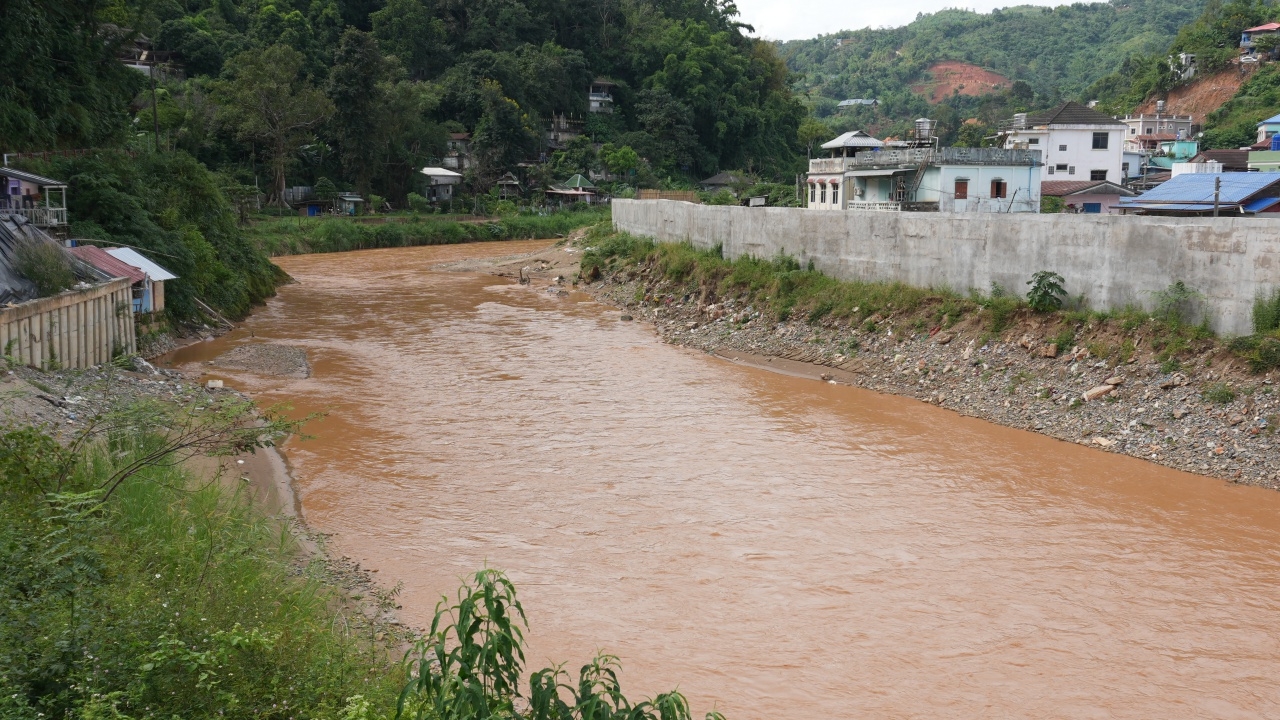
Chiang Rai villagers question the government's plan to sign an MOU with China to support establishing a laboratory to detect environmental toxins aimed at solving pollution problems in the Kok and Sai rivers, describing it as 'scratching the wrong itch' and urging to stop the source by closing the mining operations causing pollution.
On 12 Nov 2026, regarding the government's plan to sign a Memorandum of Understanding (MOU) with the People's Republic of China during Chinese Premier Li Qiang's visit to Thailand to support setting up an environmental toxin testing laboratory in collaboration with Mae Fah Luang University, aiming to enhance monitoring and address pollution in the Kok River, Sai River, and northern region areas.
Recently, villagers and those affected in Chiang Rai province expressed their opinions and raised questions about this approach, viewing it as a solution that misses the point and may only create an image that China is providing assistance, while in reality the main problems continue unabated.

Local sources stated that merely establishing a laboratory to measure toxins cannot prevent contaminants from flowing into the Sai, Kok, Ruak rivers, and onward to the Mekong River, which also affects people on the Lao PDR side. Villagers believe the most direct solution is addressing the source by closing the mines that produce the pollution, rather than allowing continuous mining and exporting of mineral resources to China, while Thailand bears the direct environmental and public health impacts from long-term toxin accumulation in water sources.
Additionally, villagers questioned the budget efficiency and government measures, stating that Thailand risks wasting public funds that could be better used to develop other public utilities to resolve contaminated water disasters in Mae Sai district and nearby river basins. They also criticized the Thai government's lack of proactive measures or firm negotiations to protect local people's interests.

Representatives of Chiang Rai villagers proposed that if China, as the primary beneficiary of mining, genuinely wants to take responsibility and assist, it should invest in research and provide clean water sources to compensate communities directly affected, rather than merely supporting a toxic substance testing laboratory that cannot stop pollution flow nor fully address the local population's hardships.