

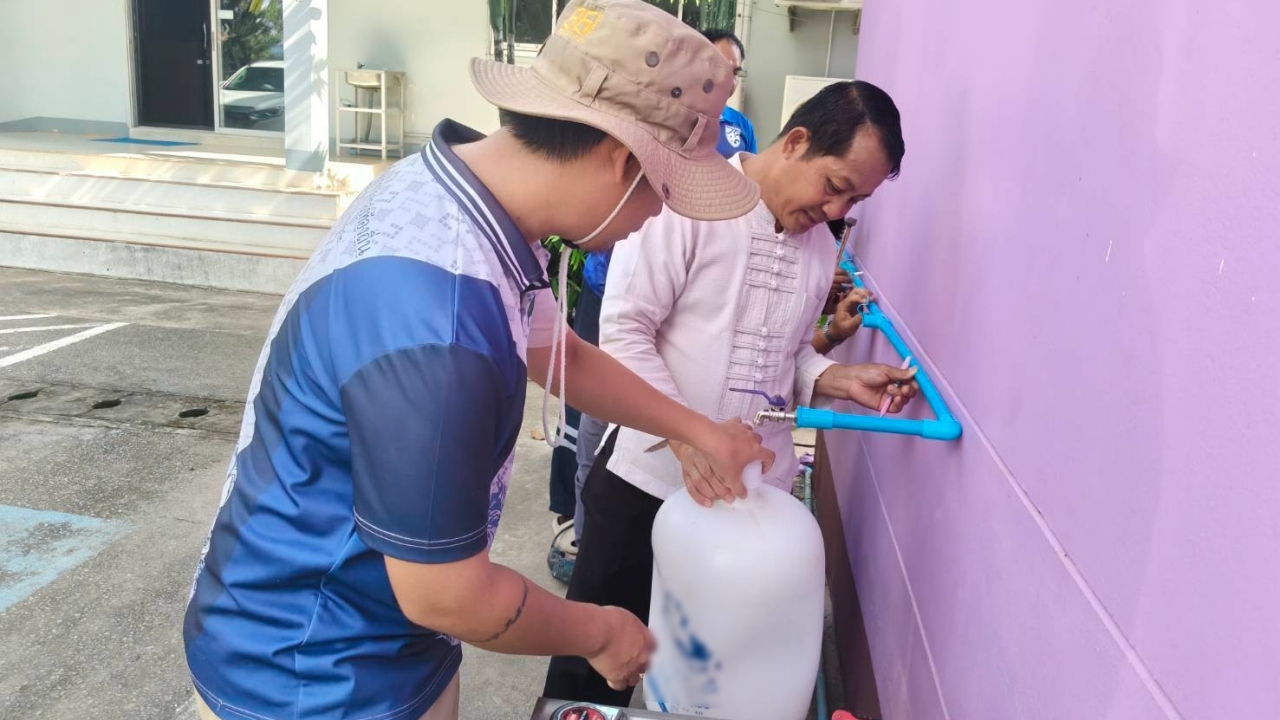
In Chiang Rai's Chiang Khong district, arsenic levels in the Kaen Nuea village water supply were found to be 41 times above the standard. Authorities have banned the use of this tap water for consumption and halted new groundwater well drilling. The municipality is distributing purchased tap water to address the immediate problem. The district chief has called a meeting to monitor the situation on 17 Nov 2026 GMT+7.
On 15 Nov 2026 GMT+7, reporters noted that toxic contamination in the river systems of Mae Sai district, Chiang Rai, continues to impact residents and the environment significantly.
Regarding this issue, on 14 Nov 2026 GMT+7, Mr. Chan Ta Klai, mayor of Huai So municipality, disclosed that arsenic and heavy metal contamination has been detected in groundwater in the Kaen Nuea community and other villages in Huai So subdistrict, Chiang Khong district. Geological and health departments reported that Huai So lies along a gold ore belt. In June, water samples were tested for 21 heavy metal parameters. Health department analysis found arsenic at 0.415 mg/L, 41 times over the standard, and fluoride at 6.37 mg/L, exceeding limits by 6.37 times. The municipality has acted swiftly to address arsenic contamination in Kaen Nuea’s water supply by flushing and replacing filter media, reducing arsenic levels by half to 0.2 mg/L (20 times the standard).
As an urgent measure, residents of Kaen Nuea have been notified not to consume the community tap water. Those in affected areas with high arsenic levels are invited to collect free drinking water at the Huai So municipal office, where RO filtration systems, certified safe by testing, provide water suitable for drinking, cooking, brushing teeth, and rinsing rice, preventing arsenic intake.

However, sustainable resolution at the source is crucial. Since Huai So is located along a gold ore belt, nearly all underground wells show varying arsenic contamination levels. New groundwater well drilling is currently suspended because arsenic contamination persists even in existing wells.
When asked why previous filtration systems installed in 4–5 villages did not remove heavy metals, the Huai So mayor explained that arsenic contamination was not detected at that time. The system was designed only to clarify water, adjust pH, remove rust, and reduce bacteria, meeting those standards but not engineered specifically to remove arsenic.
For a long-term solution, the municipality plans to reduce reliance on groundwater by switching to surface water sources. The plan involves addressing four villages in the Kaen area currently affected: Kaen Nuea (Village 3), Kaen Salong (Village 23), and Kaen (Village 14). Meetings with village heads concluded to source raw water from Huai Yaek Sai reservoir at Noen Sombun village (Village 8) to supply these three villages.
Huai Yaek Sai reservoir was recently transferred to municipal management. Coordination with military personnel will dredge and expand the reservoir’s capacity to about 540,000 cubic meters, up from under 500,000. Preliminary water tests found no arsenic or toxic contaminants, with sufficient volume to supply all four villages. On 16 Nov, a survey and design for an 8-kilometer water pipeline with a budget under 800,000 baht will be reviewed by the municipal council at the month’s end. Pipeline installation is expected to be completed and operational by next month.
Mr. Surachet Phuynoi, district chief of Chiang Khong, said a water management committee meeting for Chiang Khong will be held on 17 Nov 2026 GMT+7 to monitor the situation. Following an initial meeting addressing arsenic contamination in groundwater, the municipal water supply was tested and found free of arsenic contamination, despite sand dredging activities 10 km away in the Mekong River.

Chiang Khong district has established a committee to monitor water consumption safety. It is one of three Chiang Rai districts bordering the Mekong River where sediment heavy metal contamination has been detected. The committee monitors potential contamination entering the food chain and public health. Besides community water supplies near the Mekong, the committee surveyed community waterworks’ water quality, finding many failing standards and some with heavy metal excess. Samples are currently being sent for laboratory testing, with ongoing monitoring planned.