

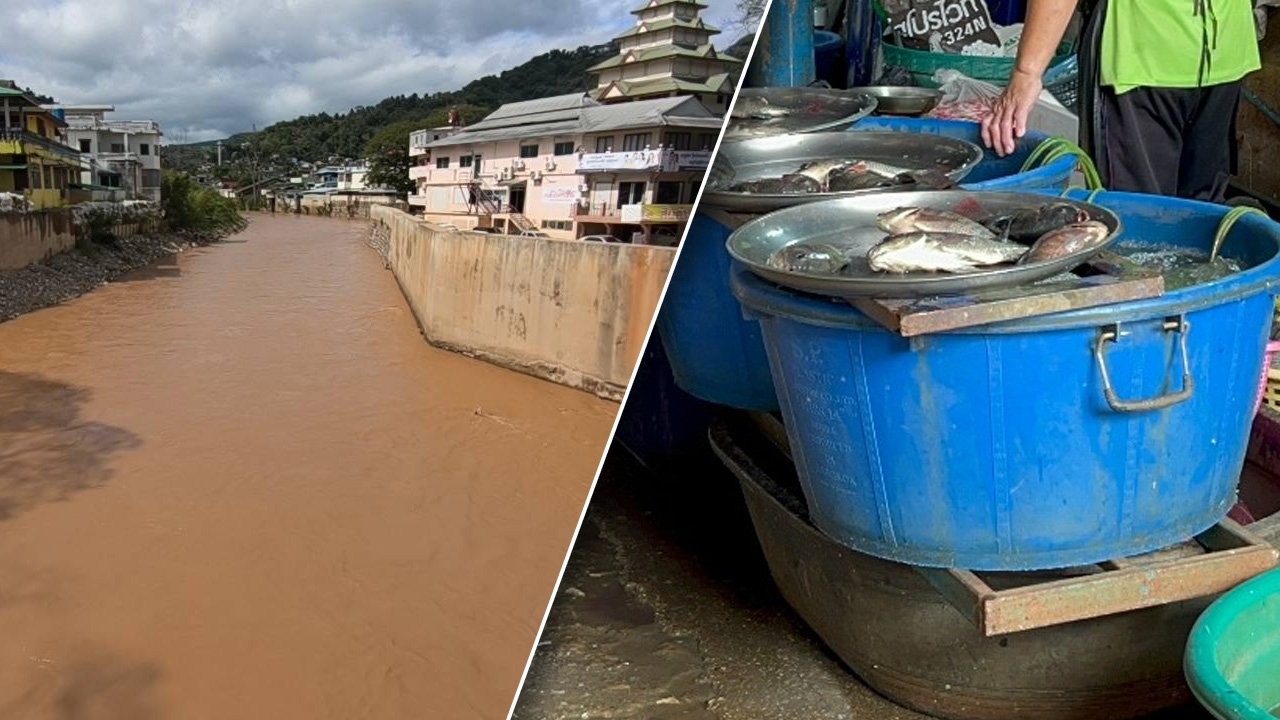
In Chiang Rai, Mae Sai residents are deeply concerned and avoid eating wild fish such as white fish and carp, instead opting to purchase farmed Nile tilapia. They remain hesitant about catfish and local vegetables. More than 90% still reluctantly use tap water sourced from the Sai River. They appeal to the government to cease repetitive inspections and take serious, concrete action to resolve the problem.
The impact of toxic contamination in the Sai River in Mae Sai district, Chiang Rai province, has begun to affect seafood traders at Boonyuen Fresh Market. Consumer concerns have caused fresh fish sales to drop by 20-30%, from about 300 kilograms daily to just over 200 kilograms. Vendors have adapted by transporting groundwater from their homes to maintain fish tanks instead of using tap water. Meanwhile, locals say they must still use tap water produced from the Sai River due to limited community groundwater sources, and they call on the government to urgently address the root cause after enduring this prolonged situation for over two years.
On 17 November 2026, reporters visited Boonyuen Fresh Market in Mae Sai district, Chiang Rai, to observe freshwater seafood trading. They found that vendors continue normal sales but admit that news about toxic contamination in natural water sources has clearly affected consumer confidence, especially among local Thai customers who now exercise more caution when selecting fish and seafood.
Mr. Sirichai Jaikas, 52, a fresh fish vendor at Boonyuen Market, said that overall business is still manageable but clearly impacted by contamination concerns. Thai customers have reduced their fish purchases, while about 70% of current customers are from neighboring countries and mostly continue buying as usual. Some concerned buyers regularly ask about the fish’s source.
The fish sold in the shop are farmed Nile tilapia and catfish from farms in Phan district, Chiang Rai, not wild-caught fish from the Sai River or local Mae Sai water sources. This has maintained the trust of regular customers who know the fish’s origin and continue to buy for consumption.
However, sales have declined from around 300 kilograms daily to just over 200 kilograms, a drop of approximately 20-30%. Besides contamination worries, economic downturns and rising prices for goods and fuel have also reduced consumers’ purchasing power.
Mr. Sirichai explained that to reassure customers, the shop pumps groundwater from home, transporting it by truck to maintain fish tanks instead of using tap water. Tap water is used only minimally for general cleaning. He affirmed that prices will remain stable despite increasing transportation and living costs.
Mr. Thewin Phinyochot, 43, a Mae Sai resident, reflected that although people are concerned about toxins in the Sai River, daily life still depends on this water source because groundwater and community wells are increasingly scarce. He estimates over 90% of locals still rely on tap water derived from the Sai River for both consumption and daily use.
Most residents purchase drinking water from major brands produced outside the area to avoid risks and ensure their families’ safety.
Regarding food purchases, villagers have adjusted habits by avoiding wild fish from the Sai River, such as white fish and carp, instead choosing farmed Nile tilapia from other areas. There is still some hesitation about catfish. Additionally, there is concern about home-grown vegetables, especially cauliflower and chili peppers, which may be irrigated with water from natural sources. However, most vegetables sold in Mae Sai markets come from the central market in Chiang Rai, allowing consumers to choose produce from outside the local area.
Mr. Thewin also expressed frustration with government agencies. Over the past two years, officials have repeatedly conducted on-site measurements and data collection, but locals have yet to see clear, concrete measures to resolve the issue. He urges the responsible agencies to act decisively rather than continuing repetitive inspections.
Meanwhile, Mr. Sirichai called on the government and relevant agencies to urgently and seriously resolve water quality problems in the Sai River. He stressed the need to manage economic impacts and reduce living costs, as the issue affects not only consumer confidence but also the livelihoods of vendors and the daily lives of local residents.
Voices from both vendors and residents in Mae Sai reflect that toxic contamination in the Sai River is not only a water quality issue but also threatens food security, consumer trust, and the local economy. People want clear, verifiable solutions so they can confidently resume their daily lives and work.