

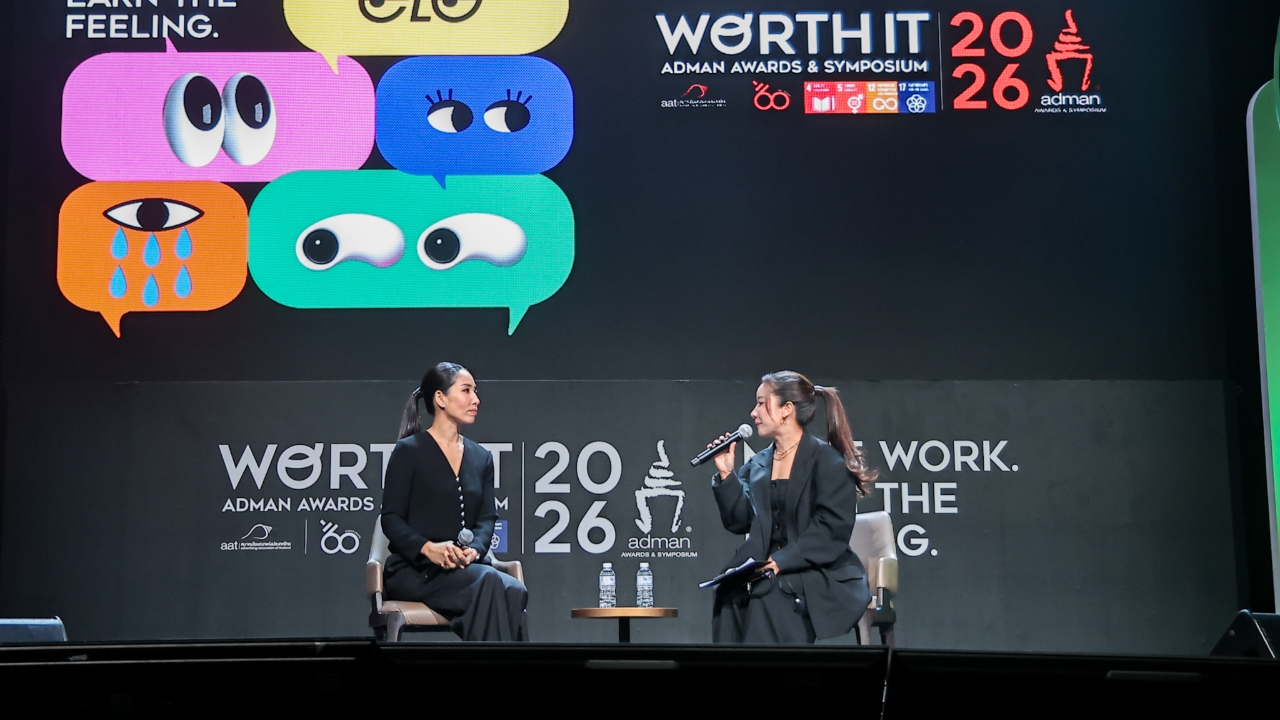
These days, whenever you open social media feeds, you often see news about beloved celebrities or organizations being exposed, prompting many to question who they can trust anymore. The "Trust Crisis" has become a major issue affecting all industries. Recently, at the ADMAN AWARDS & SYMPOSIUM 2026 under the theme "WORTH IT," Nik Jitsupa Watcharaphon, Co-CEO of Thairath TV and Thairath Online, shared insights on "The Journey of Trust: How Thairath Earned the Trust of All Thai People," deeply exploring the root causes and maintaining journalistic standards.
Nik opened by pointing out that society’s repeated feelings of “heartbreak” today do not stem from being deceived by strangers but from “being betrayed by people we know.”
In the past, mass communication had to go through mainstream media with filtering and verification processes. Today, everyone has devices, pages, and channels, allowing celebrities to fully control their social media narratives, selectively showing only certain sides. Social media thus becomes a tool for crafting images of virtue, sympathy, and daily emotional bonds without anyone questioning or investigating behind the scenes.

A clear example is cases of “foundations or celebrities claiming social causes” who use social media to raise hundreds of millions or billions in donations from fans, but later financial audits reveal lack of transparency or personal misuse. Another example is the “shocking scandals in the Buddhist clergy” where famous monks who taught and helped society, gaining nationwide faith and millions of followers, were arrested for embezzlement or illicit relationships.
“Social media makes us feel close and familiar with them, leading us to mistakenly replace ‘follower counts’ with ‘credibility’ and ‘likes’ with ‘evidence of truth.’”
When illusions are exposed, why does society remain divided with groups both disappointed and defending the wrongdoers?
Nik explained this as a key lesson of the Trust Crisis: these positive images were not built overnight but carefully crafted and accumulated over more than 10 years via social media. These individuals often personally embraced vulnerable people, with photographic evidence of aid through media becoming deeply ingrained memories.
When “emotional bonds built over decades” clash with “newly exposed truths,” many enter denial or respond with comments like “don’t abandon the fallen, they once did good.”

Furthermore, today’s trust crisis has surpassed fake news into an “Ethics Crisis.” Economic pressures and capitalism drive people to struggle for survival, neglecting social responsibility.
At the same time, algorithms, views, and drama trends tempt the creation of fake personas for profit. Some dark pages or influencer groups coordinate behind the scenes to steer social issues and apply systematic pressure campaigns.
In breaking illusions built over decades, Nik emphasized that mere criticism is insufficient. It requires “media institutions with equally or more solid trust” to act, because less credible media tackling these issues risk being accused of bullying good people.
Thairath’s sustained coverage of these issues is not about riding the drama wave but applying a “Systematic Approach” — an editorial process using verified facts, evidence, and financial trails to dismantle the constructed “good person” narrative and awaken society from illusions.

Behind Thairath’s work is the principle of “accuracy over speed.” High-impact news undergoes rigorous, comprehensive verification. They never trade their long-term reputation for short-term gains like views or quick wins.
On business and marketing, Nik said trust is a crucial asset and foundation, as all brands ask consumers to believe their promises about product or service quality. Trust challenges split into two main types:
To regain trust, brands must sincerely address root issues, communicate quickly and honestly, and apologize for mistakes. Then, the media’s role is crucial in presenting the truth through “verifiable journalistic lenses.”

Nik cited the case of a brand of inhalers once questioned over factory standards. After correcting all issues, the brand did not hire influencers for damage control but opened its factory for Thairath to inspect and document evidence.
Independent factual reporting by media helped society listen and reconsider. Importantly, media are not presenters or agencies defending brands but serve to reveal the truth.
Near the end of the panel, when Film asked how Thairath earned nationwide trust over 77 years, Nik gave a powerful answer that the key isn’t the organization’s age.
“The answer isn’t that we’ve existed for 77 years but what we have ‘repeatedly done over those 77 years.’”

The core is integrity—honesty, adherence to morality, ethics, professional standards, and the principle that actions speak louder than words. Thairath is not just skilled in communication but consistently acts with no hidden agenda.
Nik left this important lesson: trust is not something you can demand from others or conjure overnight with advertising money.
“Sustainable trust… doesn’t start from trying to make people believe but from standing firm… to do what is right.”
Ultimately, overcoming the trust crisis is a shared duty and responsibility for all sectors of society.
The Trust Crisis cannot be solved by communication campaigns alone but requires ethics, transparency, and verifiable actions. Media, brands, and consumers all share the responsibility to question and be accountable for what they communicate, to build and maintain long-term trust.