

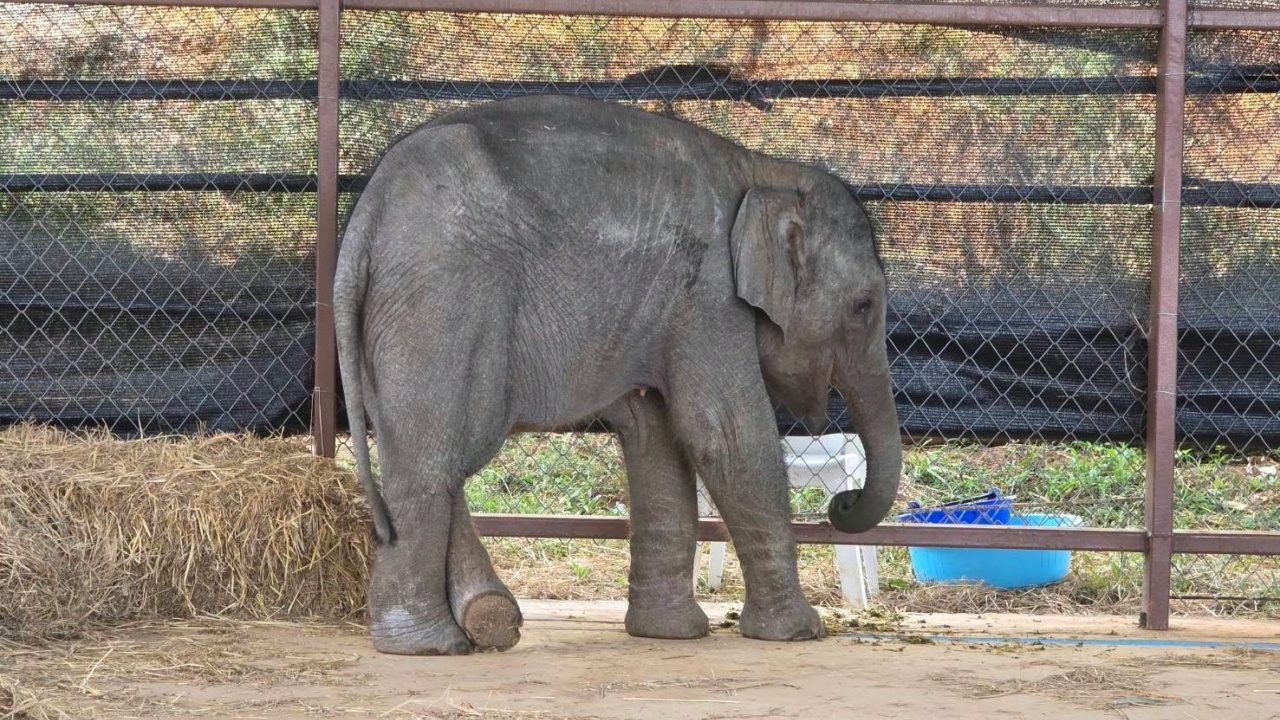
Update on the "Khao Soi Dao Wild Elephant Calf": the calf is healthy, steadily recovering, able to eat various natural foods, has begun losing fear of humans and follows staff. Efforts are being made to adjust its behavior to prevent tameness and fully preserve its wild instincts.
On 21 Nov 2026, the Khao Soi Dao Wildlife Breeding Station in Chanthaburi Province under the Department of National Parks, Wildlife and Plant Conservation reported on the health monitoring of a lost male wild elephant calf aged about 1–2 years. Overall, its health is strong with continuous improvement in nutrition, digestion, and behavioral adaptation.
Mr. Chumphon Khaopong, head of the Khao Soi Dao Wildlife Breeding Station, together with veterinarians including Dr. Supakan Kaewchoti, specialist veterinarian, Dr. Natthanon Panphet, expert veterinarian, and Mr. Siriwitch Supanek, practicing veterinarian, disclosed the care update on 21 Nov 2026. The calf currently has a good appetite, consuming 13.4 kilograms daily of various natural plants such as banana stalks, wild banana leaves, ripe bananas, bamboo leaves, kho-mong grass, and khaka grass. It has improved in using its nails to tear grass and its trunk to grasp food. Staff suspend food at a height to stimulate natural trunk-reaching feeding behavior, improving digestion. The calf defecates eight times with moist, round stools weighing 2.8 kilograms and urinates six times with clear yellow urine.
Regarding behavior and adaptation, the calf responds well to natural stimuli, emitting calls when sensing the scent of a mature wild male elephant (called 'Chang Sida') foraging about 70 meters from the enclosure. At 10:00 p.m., although startled by loud fireworks and firecrackers from a nearby resort, causing it to spread its ears for about 10 minutes, the calf calmed within 30 minutes and resumed eating and resting for 4–5 hours during the night.
However, because the calf has started to lose fear of humans and follows staff, caretakers have strictly changed feeding methods and reduced direct contact to prevent the calf from becoming tame and to maintain its wild animal instincts as fully as possible.
For medical care and animal welfare, the veterinary team continues to provide vitamin C, calcium, probiotics, and alfalfa to enhance nutrition and balance the digestive system. They also administer external parasite medication to reduce itching on the skin. Additionally, fires are lit to provide warmth during cooler weather, and the enclosure area is regularly cleaned to prevent insects and poisonous animals.
Staff at the Khao Soi Dao Wildlife Breeding Station and the veterinary team will continue close monitoring and evaluation to ensure the wild elephant calf remains healthy and recovers steadily.
Thanks to information from the Facebook page of the Department of National Parks, Wildlife and Plant Conservation.