

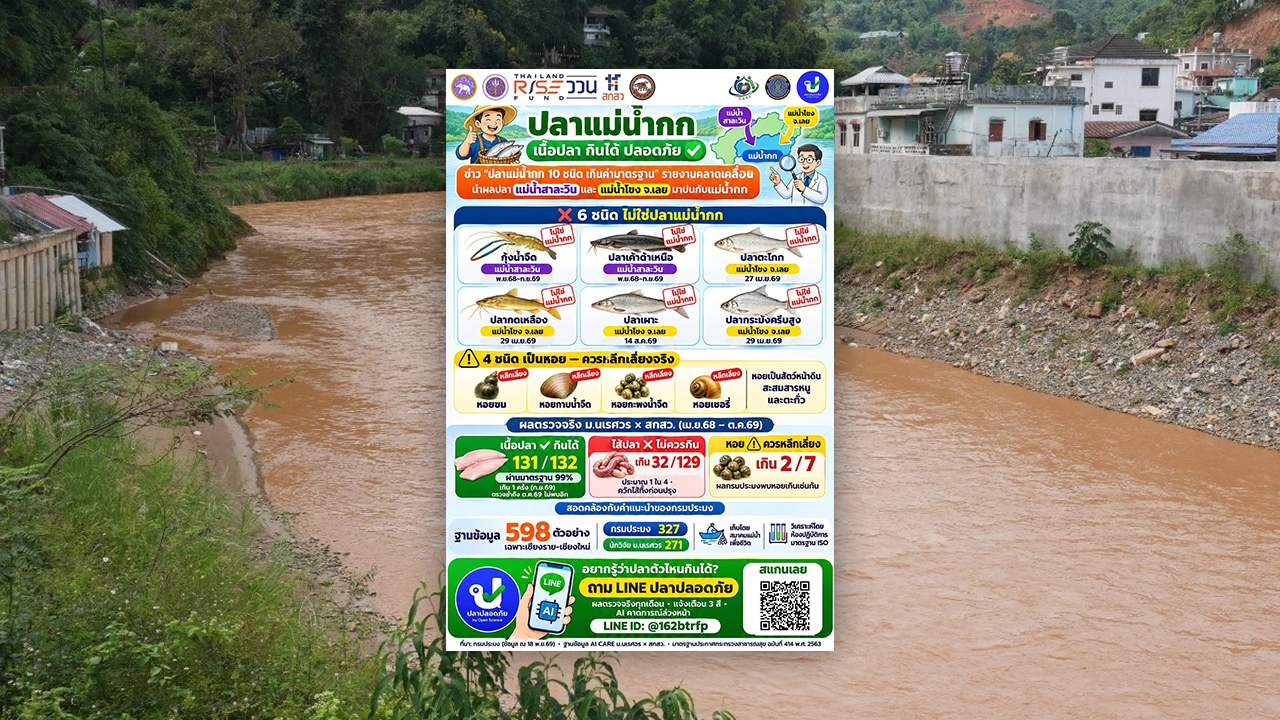
Results from testing 598 aquatic animal samples in Chiang Rai and Chiang Mai show that 99% of fish meat met standards. Authorities advised avoiding internal organs of fish and four shellfish species due to risks of accumulating arsenic and lead. The Science Promotion Office pointed out that reports of 10 Kok River fish species exceeding safety limits were inaccurate, as data from the Salawin and Mekong Rivers in Loei province were mixed with Kok River data, causing confusion.
On 24 Nov 2026, reporters reported that analysis of contaminants in aquatic animals from Chiang Rai and Chiang Mai provinces, totaling 598 samples, found that most fish meat met safety standards. Specifically, 131 of 132 samples, or 99%, passed the standards. However, about one in four fish internal organ samples showed contaminant levels exceeding standards, and 2 of 7 shellfish samples also exceeded limits. The public is advised to consume only fish meat and avoid fish internal organs and four types of shellfish to reduce risks from arsenic and lead.
Regarding circulated information about contaminants in aquatic animals, especially reports claiming that 10 fish species from the Kok River exceeded contaminant standards, analysis results from Naresuan University in cooperation with the Office of the Science Promotion Commission clarified that the data mistakenly combined samples from the Salawin and Mekong Rivers in Loei province with Kok River samples. This caused miscommunication and misunderstandings about the sample origins.
For the analysis of aquatic animals in Chiang Rai and Chiang Mai from April 2025 to October 2026, a total of 598 samples were tested—327 from the Department of Fisheries and 271 from Naresuan University researchers. Most fish meat samples met standards; of 132 fish meat samples, 131 passed, or 99%. One sample that had previously exceeded standards in September 2026 was retested in October 2026 and found to be within safe limits.
However, when examining other parts of aquatic animals, caution is advised. Of 129 fish internal organ samples, 32 (about one in four) exceeded contaminant standards. For shellfish, 2 of 7 samples exceeded limits. This indicates that different species and body parts of aquatic animals vary in their risk of accumulating contaminants.
Additionally, six non-fish aquatic animal species from the Kok River were included in the analysis: freshwater shrimp and Northern catfish from the Salawin River, and Takhok fish, Yellow catfish, farmed fish, and high-fin fish from the Mekong River in Loei province. Therefore, data should be clearly separated by water source and not generalized as all Kok River results.
Four shellfish species recommended to avoid consumption are apple snails, freshwater clams, freshwater mussels, and cherry mussels, as these bottom-dwelling animals are more likely to come into contact with and accumulate contaminants like arsenic and lead.

The public is advised to consume fish meat from sources with confirmed safety test results, avoid eating fish internal organs—especially intestines and internal organs—and avoid the four shellfish species mentioned. People should not catch or collect aquatic animals from waters with warnings or without confirmed safety results and should continuously monitor updates from relevant agencies.
People wishing to check which aquatic species are safe to consume can inquire via the LINE service "Safe Fish" by adding LINE ID: @162btrfp. This service compiles real analysis data updated monthly and provides early risk alerts to help the public make informed decisions about safely consuming aquatic animals.