

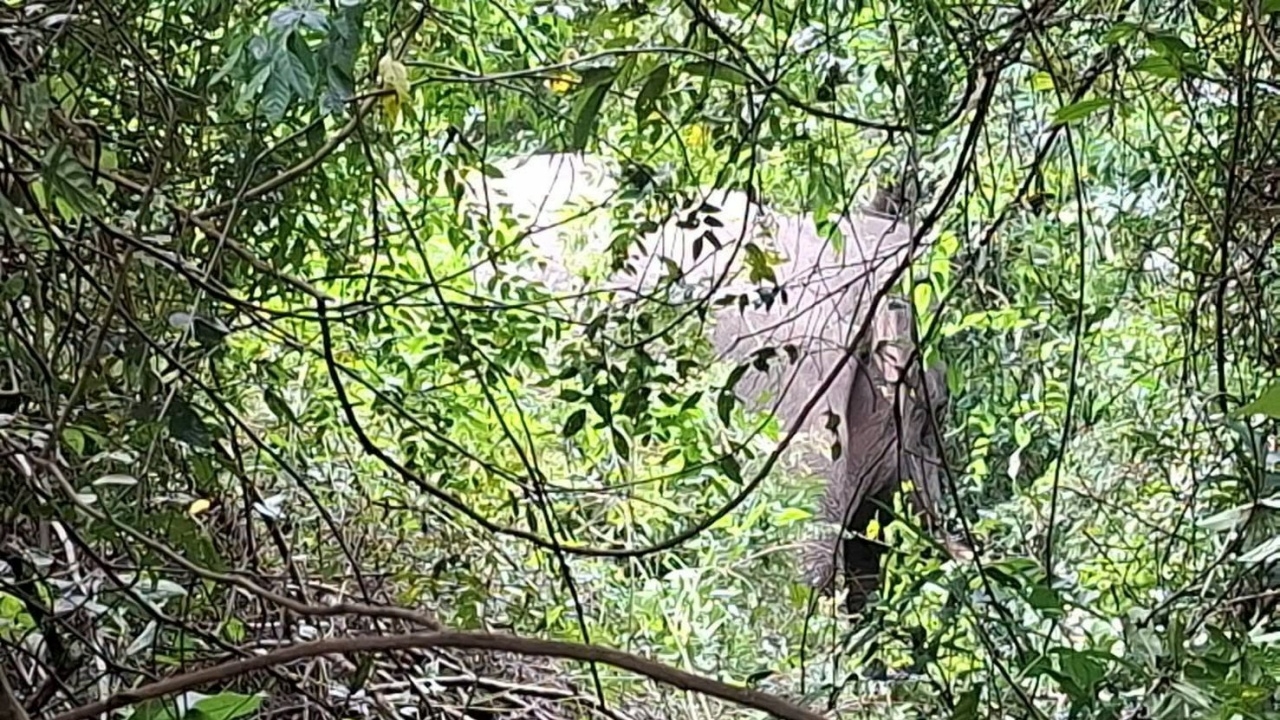
Taphraya National Park is closely monitoring a wild elephant injured in its right front leg after it was seen standing and moving with a three-legged gait. They are swiftly assessing the injury and preparing a veterinary team to provide assistance.
On 28 Nov 2026 at 09:00, Taphraya National Park reported progress on caring for and monitoring a wild elephant injured in its right front leg inside the forest about 50 meters from the road. The operations team inspected the area and has been continuously tracking the elephant’s condition to plan and evaluate safety before the veterinary team proceeds with treatment.
Initial checks by officials found the wild elephant alone inside the forest about 50 meters from the road. When standing and moving, it walked on three legs because it could not bear weight on its right front leg normally. However, external observation showed no open wounds or blood on that leg. Behaviorally, the elephant remained highly alert and cautious; it continuously growled warnings when staff approached closely, a natural defense instinct for an injured wild animal.
Currently, Taphraya National Park staff are closely and continuously monitoring the elephant to assess its physical condition and stress levels in detail. To reduce its anxiety and help it acclimate, staff have placed bananas, a favored food, for the elephant to eat. They are observing its behavioral responses. All data collected during monitoring will be key to planning with the veterinary team for safe diagnosis and treatment, protecting both the elephant and the staff involved.
Caring for injured wildlife in protected areas requires caution and thorough situation assessment, since approaching a large, still-alert wild animal may cause danger and increase its stress, potentially worsening its injury. Providing supplemental food and maintaining appropriate distance are important steps to create a conducive environment for the veterinary team’s intervention.
Taphraya National Park will continue to station staff to monitor the surrounding area to prevent the wild elephant from coming near the road, which could cause accidents or endanger passing people. They also aim to stop unauthorized persons from disturbing the elephant. The park is coordinating with the veterinary team by regularly reporting updates to determine the best timing for safely treating the elephant’s right front leg injury to restore its health as soon as possible.
Information from the Facebook page of the Department of National Parks, Wildlife and Plant Conservation.