

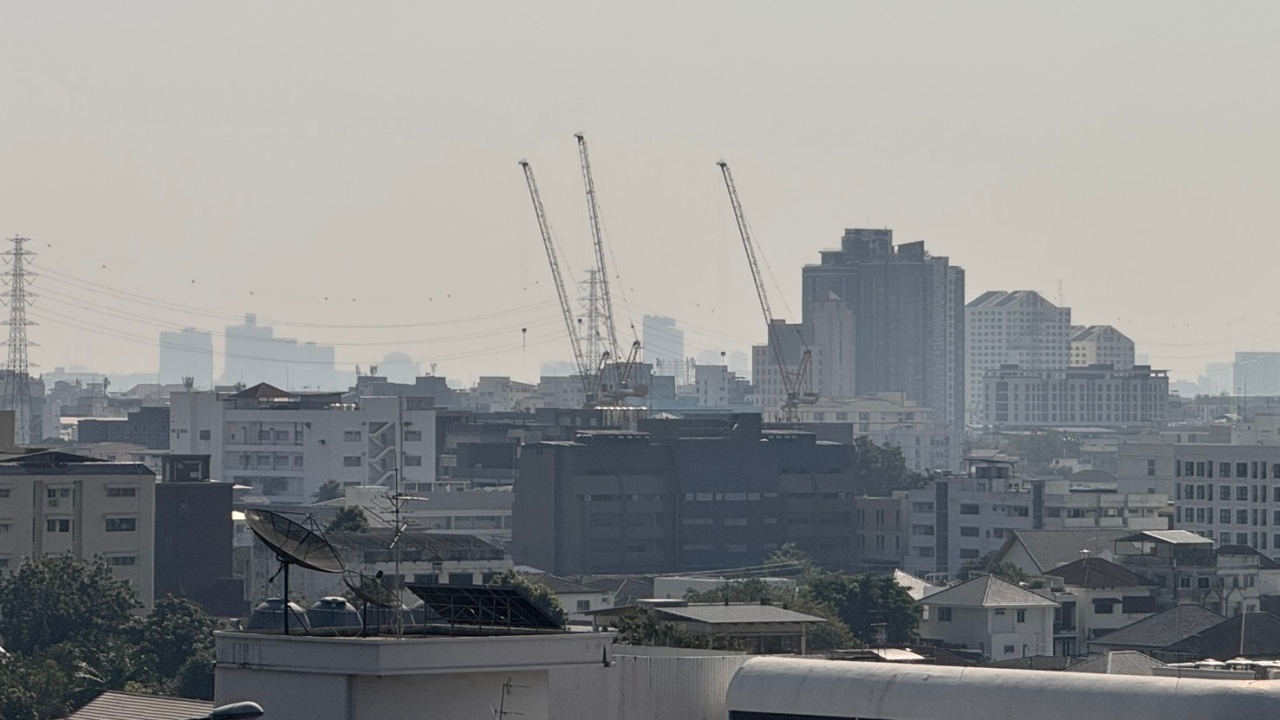
This morning, PM2.5 dust levels in many parts of Bangkok exceeded the standard, reaching levels that begin to impact health.
On 30 Dec 2025, the Bangkok Air Quality Data Center reported the PM2.5 dust situation in Bangkok as of 07:00, with the city's average at 41.8 micrograms per cubic meter (µg/m³), exceeding the standard of 37.5 µg/m³.
Top 12 districts with the highest PM2.5 levels in Bangkok:
1. Sathorn district: 56.9 µg/m³.
2. Chatuchak district: 53.9 µg/m³.
3. Bang Rak district: 52.9 µg/m³.
4. Bang Khun Thian district: 51.6 µg/m³.
5. Bang Bon district: 50.3 µg/m³.
6. Pathum Wan district: 47.9 µg/m³.
7. Chom Thong district: 47.8 µg/m³.
8. Phasi Charoen district: 47.5 µg/m³.
9. Nong Khaem district: 46.8 µg/m³.
10. Prawet district: 46.5 µg/m³.
11. Khlong Sam Wa district: 45.4 µg/m³.
12. Ratchathewi district: 45.2 µg/m³.
37.5 - 53.9 µg/m³. Overall: Levels beginning to affect health.
33.7 - 46.5 µg/m³. Overall: Levels beginning to affect health.
33.6 - 45.2 µg/m³. Overall: Levels beginning to affect health.
32.8 - 56.9 µg/m³. Overall: Levels beginning to affect health.
37.5 - 47.8 µg/m³. Overall: Levels beginning to affect health.
43 - 51.6 µg/m³. Overall: Levels beginning to affect health.
Dust levels tend to be rising, with overall air quality in the orange category, indicating the start of health impacts. Health recommendations for orange-level air quality are as follows: