

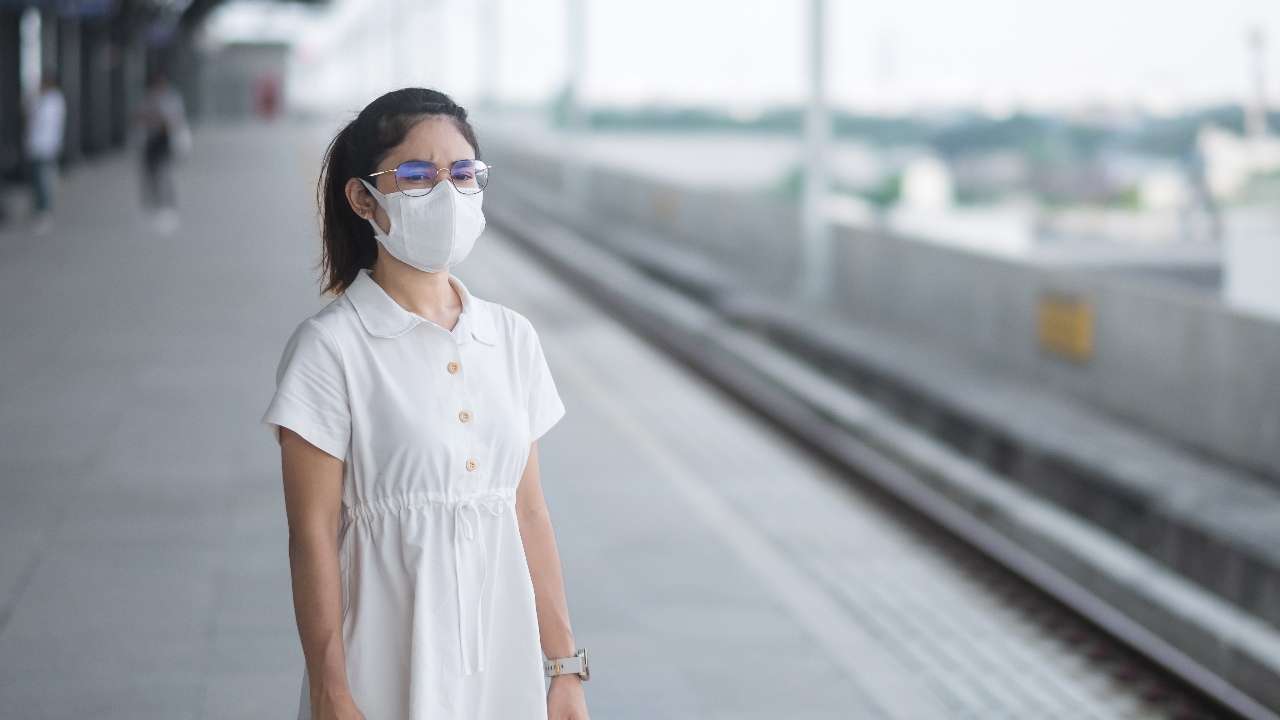
This morning in Bangkok, there was light rain in some areas. PM 2.5 levels have decreased but still exceed the standard at the orange level, indicating the beginning of health impacts in two areas.
On 21 Jan 2026, the Bangkok Air Quality Information Center reported PM 2.5 particulate matter levels from Bangkok air quality monitoring stations at 07:00. The 24-hour average PM 2.5 ranged from 20.3 to 48.2 micrograms per cubic meter (µg/m³), exceeding the standard at the orange level, which indicates early health impacts (standard limit is no more than 37.5 µg/m³). Two areas recorded such levels:
1. Pathumwan District, in front of Samyan Mitrtown shopping mall: measured at 48.2 µg/m³.
2. Lat Krabang District, in front of Nakharaphiban Hospital: measured at 39.5 µg/m³.
The air quality index from Bangkok monitoring stations is mostly at a moderate level.
The Meteorological Department forecasts that in Bangkok there will be morning fog and light rain in some areas.
Health advice: At orange air quality levels, early health effects may occur.
Related factors (forecasted weather conditions affecting PM 2.5): On 21-22 Jan 2026, ventilation is "weak," with a relatively closed atmospheric layer near the surface. Southern Bangkok remains influenced by southerly winds from the Gulf of Thailand, with chances of rain.
On 23-24 Jan, ventilation is "good" with strong winds expected. PM concentrations are forecasted to decrease. Today, morning fog and light rain in some areas are expected.
Satellite hotspot data from NASA shows no abnormal heat points indicating unusual surface heat in Bangkok.
The Bangkok Environment Office has coordinated with all relevant agencies to intensify operations according to the dust control action plan to mitigate the severity of PM 2.5 pollution and its health effects. Public participation is encouraged by changing behaviors and reducing dust-generating activities through "5 ways to reduce dust you can do": 1. Regularly clean your home by dust wiping; 2. Avoid burning trash and incense; 3. Plant trees to absorb pollution and trap dust; 4. Use public transport; 5. Turn off engines when parked and maintain vehicles to prevent excessive black smoke.
Alerts and public information encourage people to check air quality before leaving home via:
If the public notices pollution sources, they can report tips via Traffy Fondue.


