

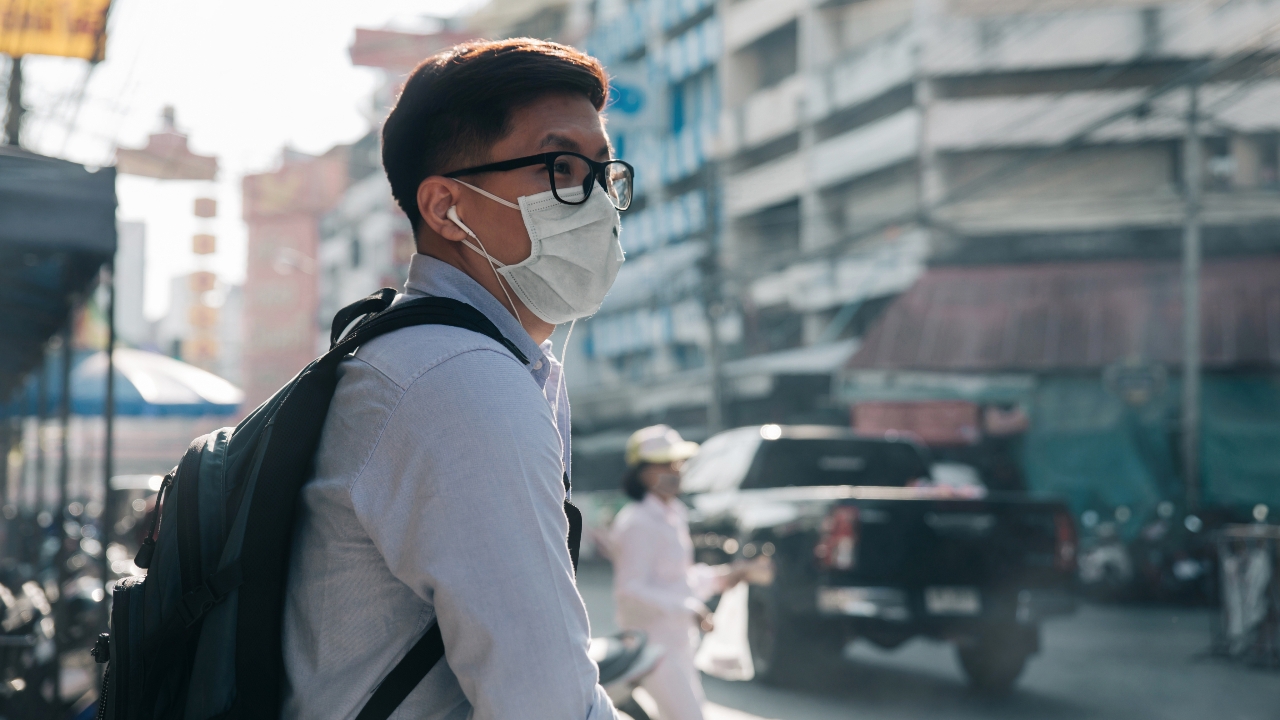
PM 2.5 dust levels in Bangkok today show a decreasing trend but still exceed the standard at the orange level, beginning to affect health in 8 areas.
On 23 Jan 2026, the Bangkok Air Quality Information Center reported the PM 2.5 dust situation from Bangkok's air quality monitoring stations at 07:00, showing the 24-hour average concentration of particulate matter no larger than 2.5 microns (PM 2.5).
The measurements ranged from 21.8 to 49.1 micrograms per cubic meter (µg/m³), exceeding the standard at the orange level, indicating a beginning impact on health (standard limit is 37.5 µg/m³). Eight areas recorded this level:
1. Lat Krabang District, in front of Nakharaphiban Hospital: 49.1 µg/m³.
2. Phra Khanong District, inside the Phra Khanong District Office: 43.1 µg/m³.
3. Bang Rak District, beside the police booth in front of Bang Rak Lovely Plaza: 40.5 µg/m³.
4. Ratchathewi District, inside the Ratchathewi District Office: 39.2 µg/m³.
5. Bang Phlat District, inside the Bang Phlat District Office: 38.9 µg/m³.
6. Prawet District, in front of Seacon Square Department Store: 38.4 µg/m³.
7. Pathum Wan District, in front of Samyan Mitrtown Mall: 38.0 µg/m³.
8. Khlong Sam Wa District, inside the Khlong Sam Wa District Office: 37.8 µg/m³.
The air quality index from Bangkok monitoring stations mostly remains at a moderate level.
The Meteorological Department forecasts for Bangkok: cool mornings with strong winds, and temperatures expected to drop by another 1-2 degrees Celsius.
Health advice: At orange air quality levels, health effects begin to emerge.
Avoid strenuous outdoor activities or exercise. Follow medical advice and seek medical attention promptly if symptoms occur.
Related factors (forecast of weather conditions affecting PM 2.5 levels based on meteorological conditions). From 23-24 Jan 2026, ventilation is expected to be "weak/good". Near-surface atmospheric layers are somewhat closed but with strong winds, so particulate matter concentrations are expected to decrease. Today’s forecast includes cool mornings, strong winds, and a temperature drop of 1-2 degrees Celsius.
Satellite hotspot data from NASA shows no abnormal heat sources detected over Bangkok, indicating no unusual surface heat contributing to pollution.
The Environment Office has coordinated with all relevant agencies to intensify actions according to the dust pollution mitigation plan to alleviate the severity of PM 2.5 dust and its potential health impact. The public and all sectors are encouraged to participate by changing behaviors and reducing activities that generate dust. The "5 Ways to Reduce Dust You Can Do" are: 1. Regularly clean the house by dusting; 2. Avoid burning trash and incense; 3. Plant trees to absorb pollution and trap dust; 4. Use public transportation; and 5. Turn off engines while parked and maintain vehicles to prevent excessive black smoke.
Warnings and public information encourage people to check air quality before leaving home through:
If citizens spot pollution sources, they can report information through Traffy Fondue.


